
Childhood in literature and art, with some observations on literature for children
Horace Elisha Scudder
THE CLASSIC COLLECTION · 1881
"Noah Webster" by Horace Elisha Scudder is a historical account written in the late 19th century. The book explores the life and contributions of Noah Webster, a pivotal figure in American education and lexicography, particularly noted for his efforts in creating an American spelling system and dictionary. Scudder's work delves into Webster's early life, his educational endeavors, and the profound influence he had on the American language and identity. The opening of the biography sets the stage by detailing Noah Webster's early life in West Hartford, Connecticut, where he was born into a family with deep roots in the community. The narrative describes the simplicity and hardships of rural life during the mid-18th century, which shaped his character and intellect. Scudder highlights Webster's education, from his time at the village school to his studies at Yale, and frames these experiences within the context of the American Revolution, suggesting that his formative years were characterized by a blend of scholarly pursuits and active participation in significant historical events. The groundwork laid in this opening chapter foreshadows Webster's later achievements in education and linguistics, providing readers with insights into how his upbringing and education influenced his lifelong mission to develop a distinctly American language.
Introduction adapted from the source catalogue; source summaries may be automatically generated.
Free to read · English · 56,953 words · No account needed
MAKE TIME FOR A GOOD BOOK
On by default. Untick to stop anonymous reading totals. Each page counts after 10 seconds in view. How this works.
Anonymous counting is on unless you have switched it off.
Johnson, Samuel, the Magnus Apollo of Lexicographers, 218; criticised by N. W., 219-225; N. W.'s preface compared with S. J.'s, 242; his Dictionary and N. W.'s compared, 246, 260-263, 273.
Jonas, Mr. Jacob Abbott's, a type, 14.
Kent, Chancellor, 137.
King, Rufus, 137, 138.
Language, a national, 202.
Lawyers in Connecticut, 18.
Lee, Charles, 6.
"Letter on the Value and importance of the American Commerce of Great Britain, addressed to a Gentleman of Distinction in London, A," by N. W., 142.
"Letter to the Governors," N. W.'s, quoted, 44.
Litchfield, N. W. reads law at, 9.
Livingston, Governor, of New Jersey, on copyright laws, 53, 83.
Lodge, H. C., quoted, 137.
Lord's Almanac, 25.
Lowth's "Short Introduction to the English Grammar," 41.
Lyman, Joseph, and the Hartford Convention, 146.
McFingal, Trumbull's, 102.
Madison, James, 55;
his correspondence with N. W., 114;
his connection with the French party, 132.
Mahn, Dr., 260.
Mansfield, Lord, on copyright laws, 61.
"Manual of Useful Studies" by N. W., 278.
Massachusetts legislature in connection with copyright laws, 55.
Massachusetts Magazine, The, 89.
Mein, John, and his bookstore, 22.
Mile stones and bridges, requiring toll from belles, 11.
Military life in New England, 20.
Miller, Ashur, N. W.'s class-mate, 4.
Miller v. Taylor, case of, 6.
"Minerva, American," N. W.'s paper, 130;
amount of work done on it by N. W., 142.
Mirabeau, quoted by N. W. 47.
Monarch, The, a title given to N. W. by two of his contemporaries, 79, 115.
Neutrals, N. W. on, 142-144.
New England in its educative influences, 12.
New England Primer, The, as a work of art, 40.
New Haven, visited by Washington and Lee, 6.
New Jersey in connection with copyright laws, 53, 55.
New Rochelle, 12.
Newspaper, the, in N. W.'s youth, 24;
its condition when he engaged in it, 111.
"New York Commercial Advertiser," 130.
New York legislature in connection with copyright laws, 54.
Orthography, N. W.'s supposed innovations in, 245-254.
Otis, Harrison Gray, 146.
Pardee, Rebecca, a friend of N. W., 11.
"Peculiar Doctrines of the Gospel explained and defended, The," by
N. W., 167.
Perkins, Nathan, N. W.'s teacher, 4;
what books he found at Yale College Library, 23.
Pickering, John, is to be instructed in N. W.'s speller, 73; later in life, appears as a critic of N. W., 225; goes to him for Americanisms, 264.
Pickering, Timothy, sits up late at night to read N. W.'s
Spelling-Book, 72.
"Porsenna in pursuit of the Kingdom of Felicity," 25.
Priestley, Joseph, lectures the young America, 104; and draws down upon himself a letter by N. W., 105.
Princeton, N. J., visit to, by N. W., 53.
"Prompter, The," by N. W., 153;
extracts from, 154-160.
Pronunciation, in different parts of the United States, 209; N. W.'s treatment of in his Dictionary, 255-257.
Quincy, Josiah, letter to, by N. W., 185.
Ramsay, Dr., draws down N. W.'s criticism of Johnson, 219.
"Remarks on the Manners, Government, and Debt of the United States,"
by N. W., 163, 202.
Your reading position is saved on this browser. Take it to another device with a library code. Reading pages adapt to text, rather than matching a printed edition.
Horace Elisha Scudder
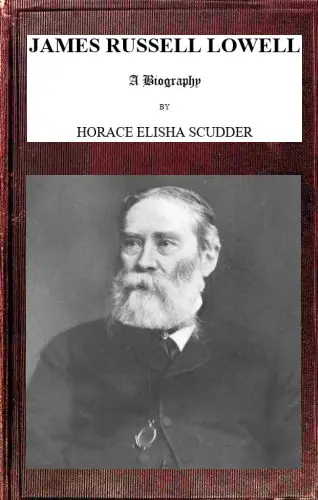
Horace Elisha Scudder
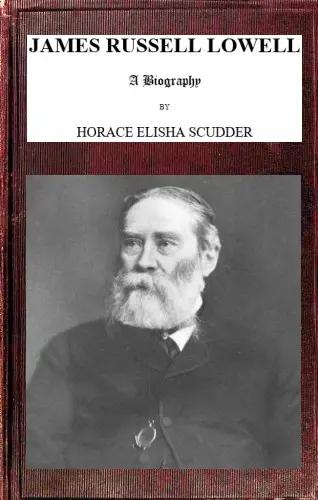
Horace Elisha Scudder
Horace Elisha Scudder
BEHIND THE BOOK
This eBook is for the use of anyone anywhere in the United States and most other parts of the world at no cost and with almost no restrictions whatsoever. You may copy it, give it away or re-use it under the terms of the Project Gutenberg License included with this eBook or online at www.gutenberg.org. If you are not located in the United States, you will have to check the laws of the country where you are located before using this eBook. Read the source licence.
The original source file, including credits and licence, is retained by this library. Request an original-format copy at no charge. Please include the book title and Project Gutenberg identifier #31238.
KEEP YOUR CURIOSITY GOING
Cécile Tormay

Moritz Busch
John L. Ransom
Frances Wright
Cécile Tormay

Mabel Potter Daggett