
Childhood in literature and art, with some observations on literature for children
Horace Elisha Scudder
THE CLASSIC COLLECTION · 1881
"Noah Webster" by Horace Elisha Scudder is a historical account written in the late 19th century. The book explores the life and contributions of Noah Webster, a pivotal figure in American education and lexicography, particularly noted for his efforts in creating an American spelling system and dictionary. Scudder's work delves into Webster's early life, his educational endeavors, and the profound influence he had on the American language and identity. The opening of the biography sets the stage by detailing Noah Webster's early life in West Hartford, Connecticut, where he was born into a family with deep roots in the community. The narrative describes the simplicity and hardships of rural life during the mid-18th century, which shaped his character and intellect. Scudder highlights Webster's education, from his time at the village school to his studies at Yale, and frames these experiences within the context of the American Revolution, suggesting that his formative years were characterized by a blend of scholarly pursuits and active participation in significant historical events. The groundwork laid in this opening chapter foreshadows Webster's later achievements in education and linguistics, providing readers with insights into how his upbringing and education influenced his lifelong mission to develop a distinctly American language.
Introduction adapted from the source catalogue; source summaries may be automatically generated.
Free to read · English · 56,953 words · No account needed
MAKE TIME FOR A GOOD BOOK
On by default. Untick to stop anonymous reading totals. Each page counts after 10 seconds in view. How this works.
Anonymous counting is on unless you have switched it off.
It is not an uncommon experience by which a young man strikes at once the note of his career, then appears to wander or experiment, and returns more surely to his original expression, following that steadily to the end. It was thus with Webster. His "Grammatical Institute," inclosing the perennial speller, was his first declaration; then he made ventures in different directions, but returned to studies in language, and finally embodied the results of his life-time in his great Dictionary. In reading biography, we wish to get at the ruling passion of the man; how often the man himself seems bewildered in his search for it, groping in this direction and in that, uncertain, to use Dr. Bushnell's vigorous phrase, if he has yet grasped the handle of his being. It cannot be said that Webster ever laid aside his special studies and resumed them after long intervals. His earliest and most characteristic work, "A Grammatical Institute," was always by him, and the Speller, which emerged from it, became of so much pecuniary importance that it could not fail to determine in many ways his occupation. The "Minerva" from the first had constant advertisements both of "A Grammatical Institute" and of the early volume of "Dissertations"; there were frequent announcements of new editions of the Spelling-Book, and of the rate at which it could be had in quantities. Country merchants began to lay in supplies of Webster's Spelling-Book, when they came to the nearest trading town, as confidently as they bought West India goods or English tools. Webster gave lectures, as he traveled north and south, upon the English language. His reputation was forming upon this line, and it is not unlikely that his partial failure in political and journalistic work was due to his identification with the occupation of a school-master. A more complete account would be that he did not do these things thoroughly well, because his strongest attraction was in another direction. He seems, through the twenty years or more which followed the first publication of his Spelling-Book, to have his hand close by the throttle-lever without knowing it. The practical demands of self-support no doubt controlled his inclinations, and forced him into one situation after another where his choice would not send him, and he spent these years in a struggle for maintenance. Then he was an impulsive, a generous, and an ambitious man. He loved society; he liked the stir of men and the bustle of management. As we have already seen, he was ready to venture all he had upon the stakes which his ardor set up. He took risks in publishing, which could be justified only by his own enthusiasm, and entertained himself with speculations in literature which were agreeable to contemplate, but often disastrous to realize. There is a half-despairing letter to Josiah Quincy[13] which discloses the hard lines of his practical life. Trumbull had jested at Webster's slight capital for house-keeping, and Webster himself reached points in his career where even Institutes and Dissertations seemed to fail him. The letter is dated at New Haven, February 12, 1811. He writes with some irritation, "My name has been so much bandied about that I am quite willing it should be seen and heard no more at present," and then passes to the more important matters in his mind: "I am engaged in a work which gives me great pleasure, and the tracing of language through more than twenty different dialects has opened a new and before unexplored field. I have within two years past made discoveries which, if ever published, must interest the literati of all Europe, and render it necessary to revise all the lexicons--Hebrew, Greek, and Latin--now used as classical books. But what can I do? My own resources are almost exhausted, and in a few days I shall sell my house to get bread for my children. All the assurances of aid which I had received in Boston, New York, etc., have failed, and I am soon to retire to a humble cottage in the country. To add to my perplexity, the political measures pursuing render it almost impossible to sell property, or to obtain money upon the best security. A few thousand dollars, for which I can give security, would place me in a condition in the country to live with comfort and pursue my studies; but even this cannot be obtained till the measures of Congress assume a more auspicious aspect. Adieu, dear sir. The little Band will no doubt do their duty, but what can be done against the army of slaves? Alexander Wolcott!! We must drink the cup of disgrace to the dregs! Yours, in low spirits,
Your reading position is saved on this browser. Take it to another device with a library code. Reading pages adapt to text, rather than matching a printed edition.
Horace Elisha Scudder
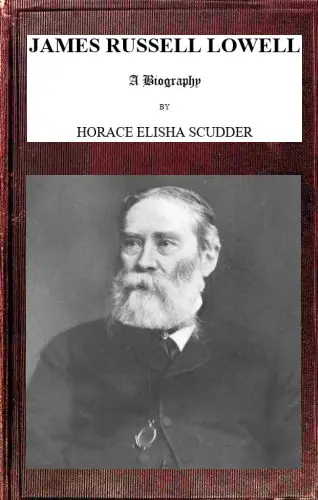
Horace Elisha Scudder
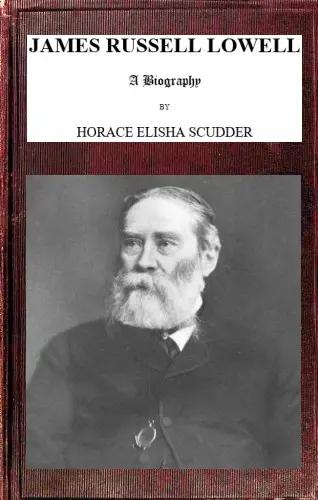
Horace Elisha Scudder
Horace Elisha Scudder
BEHIND THE BOOK
This eBook is for the use of anyone anywhere in the United States and most other parts of the world at no cost and with almost no restrictions whatsoever. You may copy it, give it away or re-use it under the terms of the Project Gutenberg License included with this eBook or online at www.gutenberg.org. If you are not located in the United States, you will have to check the laws of the country where you are located before using this eBook. Read the source licence.
The original source file, including credits and licence, is retained by this library. Request an original-format copy at no charge. Please include the book title and Project Gutenberg identifier #31238.
KEEP YOUR CURIOSITY GOING
Cécile Tormay

Moritz Busch
John L. Ransom
Frances Wright
Cécile Tormay

Mabel Potter Daggett