THE CLASSIC COLLECTION✦A Brief Account of the Rise and Progress of the People Called QuakersCLASSIC FREE BOOKS
A Brief Account of the Rise and Progress of the People Called Quakers
William Penn
THE CLASSIC COLLECTION · 1682
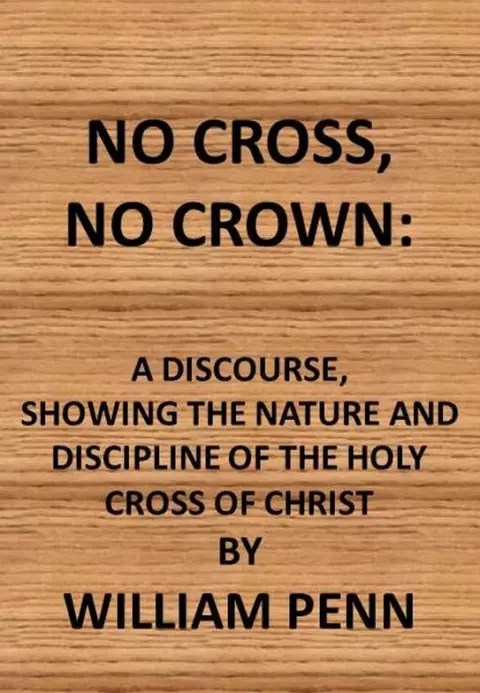
"No Cross, No Crown: A Discourse Shewing the Nature and Discipline of the Holy Cross of Christ" by William Penn is a religious treatise written in the mid-19th century. This work explores the Christian concept of self-denial and emphasizes the necessity of bearing the cross as part of true discipleship. It reflects on the importance of inner transformation and spiritual obedience, contrasting genuine faith with the superficial Christianity prevalent in society. The opening of the discourse establishes the author’s deep concern for the spiritual condition of Christians who neglect the essential tenets of their faith. Penn calls upon his readers to introspectively examine their lives, discussing the consequences of living in sin and the indifference towards personal commitment to Christ. He emphasizes that embracing the cross—a symbol of suffering and self-denial—is the only path to achieving true salvation and the eternal crown promised by God. Highly reflective and earnest, the beginning of the treatise sets the stage for an exploration of the struggle between worldly desires and the spiritual journey towards righteousness.
Introduction adapted from the source catalogue; source summaries may be automatically generated.
Free to read · English · 121,105 words · No account needed
MAKE TIME FOR A GOOD BOOK
On by default. Untick to stop anonymous reading totals. Each page counts after 10 seconds in view. How this works.
Anonymous counting is on unless you have switched it off.
VIII. By this short draught of what Christendom was, thou mayest see, O Christendom, what thou are not, and consequently what thou oughtest to be. But how comes it that from a Christendom that was thus meek, merciful, self-denying, suffering, temperate, holy, just, and good, so like to Christ, whose name she bore, we find a Christendom now that is superstitious, idolatrous, persecuting, proud, passionate, envious, malicious, selfish, drunken, lascivious, unclean, lying, swearing, cursing, covetous, oppressing, defrauding, with all other abominations known in the earth?
I lay this down as the undoubted reason of this degeneracy, to wit, the inward disregard of thy mind to the light of Christ shining in thee, that first showed thee thy sins and reproved them, and that taught and enabled thee to deny and resist them. For as thy fear towards God, and holy abstinence from unrighteousness, was, at first, not taught by the precepts of men, but by that light and grace which revealed the most secret thoughts and purposes of thine heart, and searched the most inward parts, setting thy sins in order before thee, and reproving thee for them, not suffering one unfruitful thought, word, or work of darkness to go unjudged; so when thou didst begin to disregard that light and grace, to be careless of that holy watch that was once set up in thine heart, and didst not keep sentinel there, as formerly, for God's glory and thy own peace, the restless enemy of man's good quickly took advantage of this slackness, and often surprised thee with temptations, whose suitableness to thy inclinations made his conquest over thee not difficult.
In short, thou didst omit to take up Christ's holy yoke, to bear thy daily cross; thou wast careless of thy affections, and kept no journal or check upon thy actions; but didst decline to audit accounts in thy own conscience, with Christ thy light, the great Bishop of thy soul and Judge of thy works, whereby the holy fear decayed and love waxed cold, vanity abounded, and duty became burdensome. Then up came formality, instead of the power of godliness; superstition, in place of Christ's institution: and whereas Christ's business was to draw on the minds of his disciples from an outward temple, and carnal rites and services, to the inward and spiritual worship of God, suitable to the nature of divinity, a worldly, human, pompous worship is brought in again, and a worldly priesthood, temple, and altar, are re-established. Now it was that the sons of God once more saw the daughters of men were fair, (Gen. vi. 2,) that is, the pure eye grew dim, which repentance had opened, that saw no comeliness out of Christ, and the eye of lust became unclosed again by the god of the world; and those worldly pleasures that make such as love them forget God, though once despised for the sake of Christ, began now to recover their old beauty and interest in thy affections, and from liking them, to be the study, care, and pleasure of thy life.
Your reading position is saved on this browser. Take it to another device with a library code. Reading pages adapt to text, rather than matching a printed edition.
BEHIND THE BOOK
This eBook is for the use of anyone anywhere in the United States and most other parts of the world at no cost and with almost no restrictions whatsoever. You may copy it, give it away or re-use it under the terms of the Project Gutenberg License included with this eBook or online at www.gutenberg.org. If you are not located in the United States, you will have to check the laws of the country where you are located before using this eBook. Read the source licence.
The original source file, including credits and licence, is retained by this library. Request an original-format copy at no charge. Please include the book title and Project Gutenberg identifier #44895.
KEEP YOUR CURIOSITY GOING

David Patterson (Spirit) Hatch

David Patterson (Spirit) Hatch

David Patterson (Spirit) Hatch

Edwin Abbott Abbott

Richard Watson
T. G. (Theophilus Gould) Steward