THE CLASSIC COLLECTION✦A Brief Account of the Rise and Progress of the People Called QuakersCLASSIC FREE BOOKS
A Brief Account of the Rise and Progress of the People Called Quakers
William Penn
THE CLASSIC COLLECTION · 1682
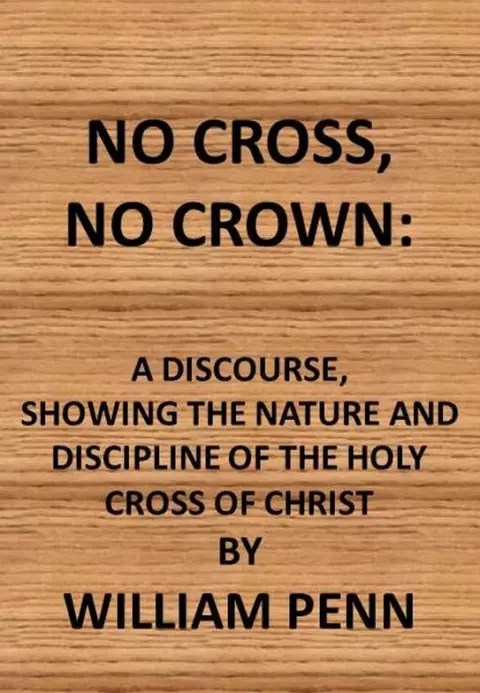
"No Cross, No Crown: A Discourse Shewing the Nature and Discipline of the Holy Cross of Christ" by William Penn is a religious treatise written in the mid-19th century. This work explores the Christian concept of self-denial and emphasizes the necessity of bearing the cross as part of true discipleship. It reflects on the importance of inner transformation and spiritual obedience, contrasting genuine faith with the superficial Christianity prevalent in society. The opening of the discourse establishes the author’s deep concern for the spiritual condition of Christians who neglect the essential tenets of their faith. Penn calls upon his readers to introspectively examine their lives, discussing the consequences of living in sin and the indifference towards personal commitment to Christ. He emphasizes that embracing the cross—a symbol of suffering and self-denial—is the only path to achieving true salvation and the eternal crown promised by God. Highly reflective and earnest, the beginning of the treatise sets the stage for an exploration of the struggle between worldly desires and the spiritual journey towards righteousness.
Introduction adapted from the source catalogue; source summaries may be automatically generated.
Free to read · English · 121,105 words · No account needed
MAKE TIME FOR A GOOD BOOK
On by default. Untick to stop anonymous reading totals. Each page counts after 10 seconds in view. How this works.
Anonymous counting is on unless you have switched it off.
For the light, which Satan cannot endure, and with which Christ had enlightened them, discovered him in all his approaches and assaults upon the mind; and the power they received through their inward obedience to the manifestations of that blessed light, enabled them to resist and vanquish him in all his stratagems. And thus it was that, where once nothing was examined, nothing went unexamined; every thought must come to judgment, and the rise and tendency of it be also well approved, before they allowed it any room in their minds. There was no fear of entertaining enemies for friends, whilst this strict guard was kept upon the very wicket of the soul. Now the old heavens and earth, that is, the old earthly conversation, and old carnal, that is Jewish or shadowy worship, passed away apace, and every day all things became new. He was no more a Jew that was one outwardly, nor that circumcision that was in the flesh; but he was the Jew that was one inwardly, and that circumcision which was of the heart, in the Spirit, and not in the letter, whose praise is not of man, but of God. (Rom. ii. 28, 29.)
VII. Indeed, the glory of the cross shined so conspicuously through the self-denial of their lives who daily bore it, that it struck the heathen with astonishment; and in a small time so shook their altars, discredited their oracles, struck the multitude, invaded the court, and overcame their armies, that it led priests, magistrates, and generals in triumph after it, as the trophies of its power and victory.
And, while this integrity dwelt with Christians, mighty was the presence, and invincible that power that attended them; it quenched fire, daunted lions, turned the edge of the sword, outfaced instruments of cruelty, convicted judges, and converted executioners. (Heb. xi. 32, to the end; Isaiah, xliii. 2; Daniel, iii. 12, to the end.) In fine, the way their enemies took to destroy, increased them; and, by the deep wisdom of God, they who in all their designs endeavoured to extinguish the truth were made great promoters of it. (Dan. vi. 16, to the end.) Now, not a vain thought, not an idle word, not an unseemly action was permitted; no, not an immodest look, no courtly dress, gay apparel, complimental respects, or personal honours: much less those lewd immoralities and scandalous vices, now in vogue with Christians, could find either example or connivance among them. Their care was not how to sport away their precious time, but how to redeem it, (Eph. v. 15, 16,) that they might have enough to work out their great salvation, which they carefully did, with fear and trembling: not with balls and masks, with playhouses, dancing, feasting, and gaming; no, no; to make sure of their heavenly calling and election was much dearer to them than the poor and trifling joys of mortality. For they having, with Moses, seen him that is invisible, and found that his loving-kindness was better than life, the peace of his Spirit than the favour of princes,--as they feared not Cæsar's wrath,--so they chose rather to sustain the afflictions of Christ's true pilgrims than enjoy the pleasures of sin that were but for a season; esteeming his reproaches of more value than the perishing treasures of the earth. And if the tribulations of Christianity were more eligible than the comforts of the world, and the reproaches of one than all the honour of the other, there was then surely no temptations in it that could shake the integrity of Christendom.
Your reading position is saved on this browser. Take it to another device with a library code. Reading pages adapt to text, rather than matching a printed edition.
BEHIND THE BOOK
This eBook is for the use of anyone anywhere in the United States and most other parts of the world at no cost and with almost no restrictions whatsoever. You may copy it, give it away or re-use it under the terms of the Project Gutenberg License included with this eBook or online at www.gutenberg.org. If you are not located in the United States, you will have to check the laws of the country where you are located before using this eBook. Read the source licence.
The original source file, including credits and licence, is retained by this library. Request an original-format copy at no charge. Please include the book title and Project Gutenberg identifier #44895.
KEEP YOUR CURIOSITY GOING

David Patterson (Spirit) Hatch

David Patterson (Spirit) Hatch

David Patterson (Spirit) Hatch

Edwin Abbott Abbott

Richard Watson
T. G. (Theophilus Gould) Steward