THE CLASSIC COLLECTION✦An outlaw’s diary: the CommuneCLASSIC FREE BOOKS
An outlaw’s diary: the Commune
Cécile Tormay
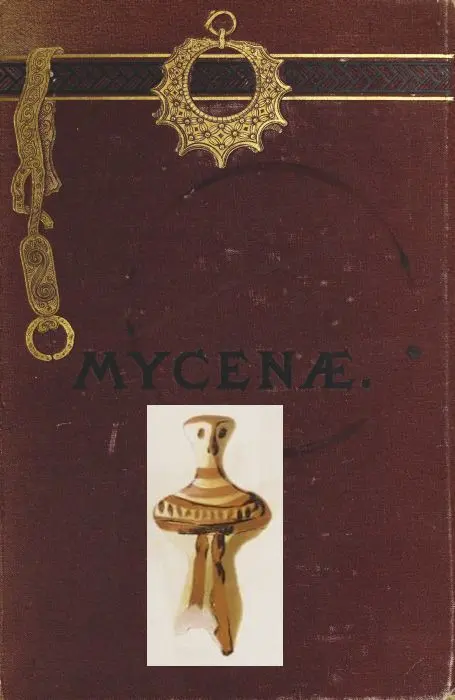
THE CLASSIC COLLECTION · 1877
"Mycenæ: A Narrative of Researches and Discoveries at Mycenæ and Tiryns" by Dr. Henry Schliemann is an archaeological account written in the late 19th century. The work documents Schliemann's excavations and findings in the ancient sites of Mycenæ and Tiryns, exploring the connections between these archaeological discoveries and the narratives found in Homeric texts. The book is likely to appeal to readers interested in archaeology, classical studies, and the historical significance of ancient Greek civilization. The opening of the text sets the stage for an in-depth exploration of Mycenæ’s archaeology, revealing the riches and historical context surrounding the site. In this initial portion, readers are introduced to Schliemann’s motivations for conducting the excavations, which stem from a desire to uncover the truth behind ancient Greek mythology and history. The preface by W.E. Gladstone emphasizes the importance of Schliemann's discoveries, hinting at the potential connections between the archaeological findings and the Homeric epics. As Schliemann presents his early observations, he lays the groundwork for a narrative that will intertwine scientific inquiry with classical literature, inviting the audience to engage with both the artifacts and the stories of the past.
Introduction adapted from the source catalogue; source summaries may be automatically generated.
Free to read · English · 123,175 words · No account needed
MAKE TIME FOR A GOOD BOOK
On by default. Untick to stop anonymous reading totals. Each page counts after 10 seconds in view. How this works.
Anonymous counting is on unless you have switched it off.
[61] To each object is attached a number denoting the exact depth in meters at which it was found; so e.g. 3½ M. means 3½ meters; each meter has about 3⅓ feet. I call particular attention to this. In order to retain the precision of these numbers, and to avoid the labour and chance of error in converting them into feet and inches, a comparative table of French and English measures is prefixed to the book.
[62] See p. 13, and the coloured Plate A, fig. c.
[63] These are exactly like the whorls found at Mycenæ. See No.
15.
[Illustration: No. 15. Stone Whorl, found at Mycenæ. (5 M.) Actual size.]]
[64] Professor Max Müller, in the 'Academy,' January 10, 1874.
[65] See 'Troy and its Remains,' p. 294.
[66] Ovid, Metam. V. 330.
[67] Mionnet, 'Descr. des Méd. Ant.' pl. lxi. 6.
[68] Millingen, 'Anc. Coins of Greek Cities,' tab. ii. 12.
[69] Pausanias, II. 22, 1, 2.
[70] Plut. Quæst. Conviv. III. 9, 2; Etym. Mag. 388, 56.
[71] Plut. Fr. Dædal. 3.
[72] Paus. II. 17, 1.
[73] Paus. II. 4, 7.
[74] Paus. IX. 3, 4; Hesych. s. v. ἄγαν χαλκεῖος.
[75] Herod. I. 31.
[76] Lucian, Θεῶν Διάλ. 3; Diod. Sic. I. 24, 25;
Herod. II. 41.
[77] Æsch. Suppl. 299; Apollod. II. 1, 3--
Κληδοῦχον Ἡρας φασὶ δωμάτων ποτὲ
᾽Ιὼ γενέσθαι τῇδ ἔν ᾽Αργείᾳ
χθονί,--.
[78] Creuzer, 'Symbolik,' II. 576.
[79] Prom. 573, seq. and Hygin. Fab. 145.
[80] Diod. Sic. I. 24, 25; Apollod. II. 1, 3; Hygin. 145.
[81] Herod. II. 41.
[82] Apollod. II. 1, 3; Æschyl. Prom., 585: πῶς δ'οὐ κλύω τῆς οὶστροδινήτου κόρης τῆς ᾽Ιναχείας.
[83] Paus. III. 18, 13.
[84] Eustath. ap. Dionys. Perieg. 92, 94, Ιὼ γὰρ ἡ σελήνη κατὰ τὴν τῶν ᾽Αργείων διάλεκτον, on which Heyne, ad Apollod. p. 100, says: "fuisse suspicor nomen hoc caputque feminæ cornutum symbolum Lunæ apud Argivos antiquissimum." See also Jablonsky, Panth. II. p. 4 ff.
[85] Apollod. II. 1, 1; Schol. Lykophr. 177; Schol. Apoll. Rhod.
IV. 263; Steph. Byz.
[86] Euseb. Chron. Pars I. pp. 96, 127, 130, ed. Aucher;
Augustin. de Civit. Dei, XVIII. 5.
[87] Diod. Sic. I. 11; Plut de Is. et Os. 52, compare c. 39; Macrob. Sat. I. 19; Ælian, Hist. Anim. X. 27.
[88] O. Müller, Dorier, I. 121; Steph. Byz.
s.v. Βυζάντιον.
[89] Paus. IX. 19, 4.
[90] Ovid. Metam. I. 630
[91] Apollod. II. 1, 3.
[92] Panofka, 'Argos Panoptes,' tab. ii. 4; Cadalvène, 'Recueil de Méd. Gr.' Pl. III. 1; Müller, 'Denkmäler,' XXX. 132; Duc de Luynes, 'Études Numismat.' pp. 22-25.
[Illustration: No. 16. Ruins of the Cyclopean Bridge at Mycenæ.[93]]
Your reading position is saved on this browser. Take it to another device with a library code. Reading pages adapt to text, rather than matching a printed edition.
BEHIND THE BOOK
This eBook is for the use of anyone anywhere in the United States and most other parts of the world at no cost and with almost no restrictions whatsoever. You may copy it, give it away or re-use it under the terms of the Project Gutenberg License included with this eBook or online at www.gutenberg.org. If you are not located in the United States, you will have to check the laws of the country where you are located before using this eBook. Read the source licence.
The original source file, including credits and licence, is retained by this library. Request an original-format copy at no charge. Please include the book title and Project Gutenberg identifier #56940.
KEEP YOUR CURIOSITY GOING
Cécile Tormay

Moritz Busch
John L. Ransom
Frances Wright
Cécile Tormay

Mabel Potter Daggett