THE CLASSIC COLLECTION✦An outlaw’s diary: the CommuneCLASSIC FREE BOOKS
An outlaw’s diary: the Commune
Cécile Tormay
THE CLASSIC COLLECTION · 1877
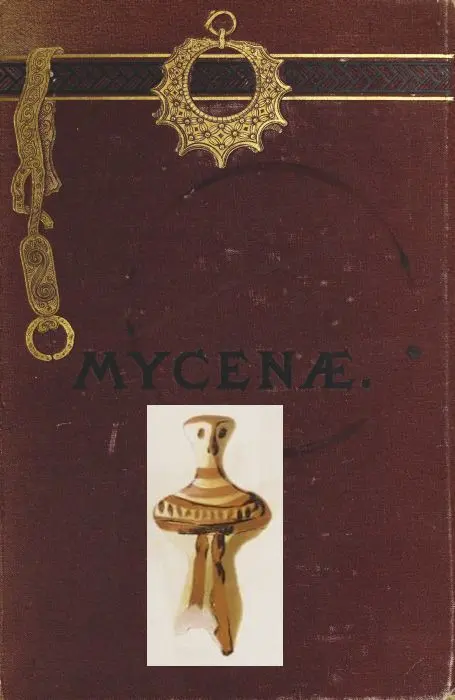
"Mycenæ: A Narrative of Researches and Discoveries at Mycenæ and Tiryns" by Dr. Henry Schliemann is an archaeological account written in the late 19th century. The work documents Schliemann's excavations and findings in the ancient sites of Mycenæ and Tiryns, exploring the connections between these archaeological discoveries and the narratives found in Homeric texts. The book is likely to appeal to readers interested in archaeology, classical studies, and the historical significance of ancient Greek civilization. The opening of the text sets the stage for an in-depth exploration of Mycenæ’s archaeology, revealing the riches and historical context surrounding the site. In this initial portion, readers are introduced to Schliemann’s motivations for conducting the excavations, which stem from a desire to uncover the truth behind ancient Greek mythology and history. The preface by W.E. Gladstone emphasizes the importance of Schliemann's discoveries, hinting at the potential connections between the archaeological findings and the Homeric epics. As Schliemann presents his early observations, he lays the groundwork for a narrative that will intertwine scientific inquiry with classical literature, inviting the audience to engage with both the artifacts and the stories of the past.
Introduction adapted from the source catalogue; source summaries may be automatically generated.
Free to read · English · 123,175 words · No account needed
MAKE TIME FOR A GOOD BOOK
On by default. Untick to stop anonymous reading totals. Each page counts after 10 seconds in view. How this works.
Anonymous counting is on unless you have switched it off.
Masks of gold:
a child's, in the 3rd Sepulchre, 198;
on the faces of three bodies in the 4th Sepulchre, 219-221;
a fourth like a lion's head, beside another of the bodies, 222
(Cut, p. 211);
discussion of burial with masks, 222, 223;
on two of the bodies in the 1st Sepulchre, 311, 312
(Cuts, pp. 289, 333).
Medals. (See COINS.)
Megapenthes, son of Prœtus, Tiryns, ceded to Perseus by, 6.
Metals, found at Tiryns, only lead and one bronze figure, 14; found at Mycenæ, 74, 75, 77.
Moulds, for casting ornaments, 108, 109.
Mure, Col., cited, 45 n.
Mycenæ, arrival at, 24;
importance of excavations at the capital of Agamemnon, 28;
topography of, 24 f.;
Acropolis, 28 f.;
the lower city, 39;
the suburb, 40;
confused with Argos, 36-38;
history, 53 f.;
decline, 56;
besieged by the Argives and Cleoneans, 56;
its surrender and destruction (B.C. 468), 56, 57;
Homeric epithets of Mycenæ, 57;
remains described by Pausanias, and true interpretation of the
passage, 59, 60, 335;
shafts sunk in 1874, 61;
excavations begun in 1876, ibid.;
its re-occupation unknown to the ancients, 63.
Nails, bronze, in the walls of the Treasury at Atreus, for holding the lining plates, 44.
Needle of ivory, 153.
Nestor's goblet, in Homer, compared with one found in the 4th
Sepulchre, 235-237.
Orestes kills Ægisthus and Clytemnestra; probably the last of the Pelopid dynasty at Mycenæ; reigned in Arcadia and Sparta, 55.
Oyster shells, found in 1st Sepulchre, 332.
Painted vases. (See POTTERY; VASES.)
Palace:
Cyclopean house-walls, supposed to be the Royal Palace of Mycenæ,
130 f.;
the substructions probably supported a wooden building, 288.
Palæocastron, the modern name of Tiryns, 2.
Pausanias, his description of the tombs of Agamemnon and his
companions, 59;
general misunderstanding, and true meaning, of the passage, 60,
61, et passim.
Pebbles, layers of, below and above the bodies, to aid in ventilating the funeral pyres, and bearing marks of fire, in all the Sepulchres, 155, 164, 213, 214, 291, 294, 337.
Pelopids, dynasty of the, at Mycenæ, 54, 55;
its probable end under Orestes, ibid.
Perseus, builder of Mycenæ, 6, 53;
Tiryns given to Electryon by, 6;
his dynasty, 53.
Pigeons of gold, on the heads and arms of female figures, 180;
on the handles of a goblet, 236;
on a model of a temple, 267.
Pins of gold, 4th Sepulchre, 249, 250.
Plates, large, thick, round, of gold, with patterns in repoussé work, below, above, and round the bodies in the 3rd Sepulchre, 165 f.; in the 1st Sepulchre, 318, 319; smaller round plates of sword-sheaths, 219, 302-303; quadrangular plates with intaglio work, 302, 303, 308-311.
Plundered body in 1st Sepulchre, 295.
Porter's lodge at Mycenæ, 62.
Pottery, Tirynthian archaic, 14, 15, 16, 17;
Mycenean painted, 65, 66, 67, 68, 69, 120;
geometrical, 103 f., 120, 141;
hand-made and wheel-made, 137, 158, 159, 160, 210, 340, &c.
(Comp. TERRA-COTTAS.)
Prœtus, the founder of Tiryns, 6.
Quarry, of Tiryns, 4;
of Mycenæ, at Charvati, 41, 117.
Rapier-like swords, 4th Sepulchre, 283.
Rema, modern name of the river Charadrus, 24.
Reservoirs, twelve in the Acropolis of Mycenæ, 80, 99, 100, 117 n.
Ribbons of gold, 249, 327.
Rings, of bronze, plain and engraved, 142;
of gold, plain and ornamented, 250, 353, 354;
of silver, ibid.
(See SIGNET-RINGS.)
Your reading position is saved on this browser. Take it to another device with a library code. Reading pages adapt to text, rather than matching a printed edition.
BEHIND THE BOOK
This eBook is for the use of anyone anywhere in the United States and most other parts of the world at no cost and with almost no restrictions whatsoever. You may copy it, give it away or re-use it under the terms of the Project Gutenberg License included with this eBook or online at www.gutenberg.org. If you are not located in the United States, you will have to check the laws of the country where you are located before using this eBook. Read the source licence.
The original source file, including credits and licence, is retained by this library. Request an original-format copy at no charge. Please include the book title and Project Gutenberg identifier #56940.
KEEP YOUR CURIOSITY GOING
Cécile Tormay

Moritz Busch
John L. Ransom
Frances Wright
Cécile Tormay

Mabel Potter Daggett