THE CLASSIC COLLECTION✦An outlaw’s diary: the CommuneCLASSIC FREE BOOKS
An outlaw’s diary: the Commune
Cécile Tormay
THE CLASSIC COLLECTION · 1877
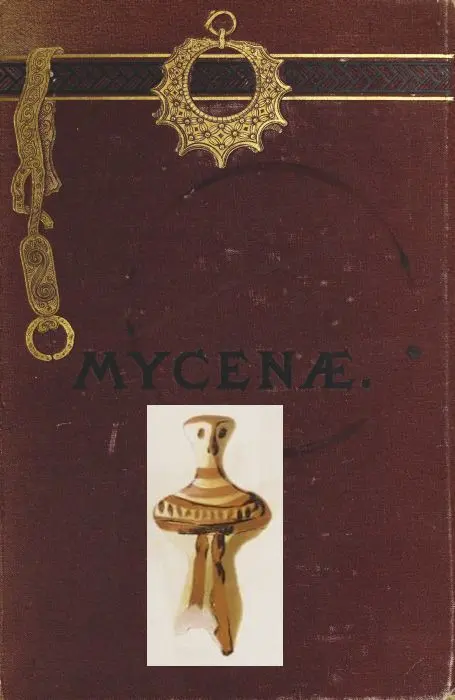
"Mycenæ: A Narrative of Researches and Discoveries at Mycenæ and Tiryns" by Dr. Henry Schliemann is an archaeological account written in the late 19th century. The work documents Schliemann's excavations and findings in the ancient sites of Mycenæ and Tiryns, exploring the connections between these archaeological discoveries and the narratives found in Homeric texts. The book is likely to appeal to readers interested in archaeology, classical studies, and the historical significance of ancient Greek civilization. The opening of the text sets the stage for an in-depth exploration of Mycenæ’s archaeology, revealing the riches and historical context surrounding the site. In this initial portion, readers are introduced to Schliemann’s motivations for conducting the excavations, which stem from a desire to uncover the truth behind ancient Greek mythology and history. The preface by W.E. Gladstone emphasizes the importance of Schliemann's discoveries, hinting at the potential connections between the archaeological findings and the Homeric epics. As Schliemann presents his early observations, he lays the groundwork for a narrative that will intertwine scientific inquiry with classical literature, inviting the audience to engage with both the artifacts and the stories of the past.
Introduction adapted from the source catalogue; source summaries may be automatically generated.
Free to read · English · 123,175 words · No account needed
MAKE TIME FOR A GOOD BOOK
On by default. Untick to stop anonymous reading totals. Each page counts after 10 seconds in view. How this works.
Anonymous counting is on unless you have switched it off.
[35] Colonel Leake states ('Travels in the Morea,' Vol. II. p. 351) that the principal entrance of Tiryns is on the south side, adjacent to the south-east angle. He is right if he speaks of the present day, for there has indeed been made at that point in modern times a zigzag roadway, leading up the steep slope; but there was most decidedly no gate or entrance whatever here in ancient times.
[36] Aristotle and Theophrastus, ap. Plin. H. N. VII. 56. Pliny says that the former of these authors attributes the building of towers to the Cyclopes, the latter to the Tirynthians.
[37] Paus. IX. 36.
[38] Iliad, II. 559:--Οἳ δ᾽ ῎Αργος τ᾽ εἶχον Τίρυνθά τε τειχιόοεσσαν.
[39] Pind. Ol. XI. 40; Ovid, Met. VII. 410; Virgil, Æn.
VII. 662.
[40] Herodot. IX. 28.
[41] Herodot. VI. 83.
[42] Paus. II. 17, 5; VIII. 27, 1.
[43] VIII. p. 373.
[44] Il. 15, 9.
[45] Apud Athenæum, VI. 261.
[46] Theophrastus adds that, desirous to get rid of their propensity to laugh, the Tirynthians consulted the oracle at Delphi, and got the god's answer that, if they could sacrifice an ox to Poseidon and throw it into the sea, without laughing, the evil would at once cease. The Tirynthians, who feared to fail in the execution of the god's command, forbad the children to be present at the sacrifice. But one of them having heard this, and having mixed in the crowd, they cried out at him to drive him away, on which he exclaimed, "How, are you afraid that I shall upset your sacrifice?" This excited universal laughter, and they became convinced that the god intended to show them by experience that an inveterate evil custom cannot be remedied.
[47] Max Müller, 'Essays,' II. 79.
[48] Aristot. Meteorol. I. 14.
[49] The exact depths are indicated by the proportional numbers
appended to the sectional plans of the excavations in the margin of Plan
A.
[50] See Nos. 2-7, and the coloured Plate A, figs. a, b.
[51] See Nos. 8-11 on p. 12, and the coloured Plate A, fig. d.
[52] To these may be added the Syrian and Phœnician Ashtoreth.
"Astarte, queen of heaven, with crescent horns, To whose bright image nightly, by the moon, Phœnician virgins paid their vows and songs."--
Milton, Par. Lost, Bk. I. vv. 439-441.
[53] See note A.--"HERA BOÖPIS," at the end of this chapter.
[54] See Bunsen's 'Egypt,' Vol. I. p. 420 (Transl.).
[55] Il. III. 144.
[56] Il. VII. 10.
[57] Il. XVIII. 40.
[58] See the coloured Plate A, fig. c.
[59] Published by Dr. G. Hirschfeld ('Vasi Arcaici Ateniesi, estratto dagli Annali dell' Instituto di Corr. Archeol.,' 1872. Roma).
[60] Such as the goblet represented on p. 70, No. 83.
Your reading position is saved on this browser. Take it to another device with a library code. Reading pages adapt to text, rather than matching a printed edition.
BEHIND THE BOOK
This eBook is for the use of anyone anywhere in the United States and most other parts of the world at no cost and with almost no restrictions whatsoever. You may copy it, give it away or re-use it under the terms of the Project Gutenberg License included with this eBook or online at www.gutenberg.org. If you are not located in the United States, you will have to check the laws of the country where you are located before using this eBook. Read the source licence.
The original source file, including credits and licence, is retained by this library. Request an original-format copy at no charge. Please include the book title and Project Gutenberg identifier #56940.
KEEP YOUR CURIOSITY GOING
Cécile Tormay

Moritz Busch
John L. Ransom
Frances Wright
Cécile Tormay

Mabel Potter Daggett