THE CLASSIC COLLECTION✦An outlaw’s diary: the CommuneCLASSIC FREE BOOKS
An outlaw’s diary: the Commune
Cécile Tormay
THE CLASSIC COLLECTION · 1877
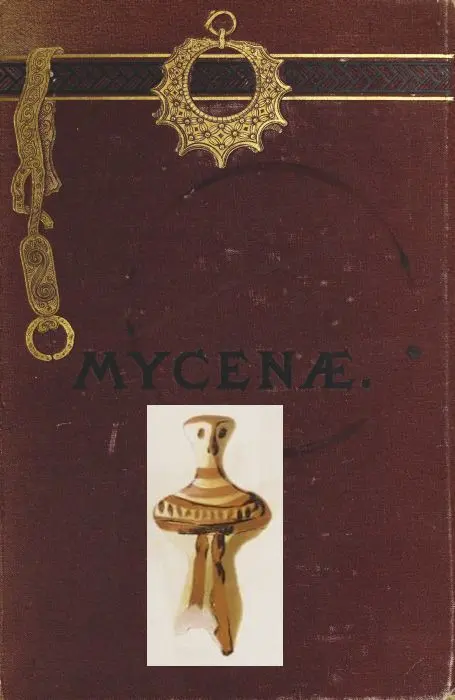
"Mycenæ: A Narrative of Researches and Discoveries at Mycenæ and Tiryns" by Dr. Henry Schliemann is an archaeological account written in the late 19th century. The work documents Schliemann's excavations and findings in the ancient sites of Mycenæ and Tiryns, exploring the connections between these archaeological discoveries and the narratives found in Homeric texts. The book is likely to appeal to readers interested in archaeology, classical studies, and the historical significance of ancient Greek civilization. The opening of the text sets the stage for an in-depth exploration of Mycenæ’s archaeology, revealing the riches and historical context surrounding the site. In this initial portion, readers are introduced to Schliemann’s motivations for conducting the excavations, which stem from a desire to uncover the truth behind ancient Greek mythology and history. The preface by W.E. Gladstone emphasizes the importance of Schliemann's discoveries, hinting at the potential connections between the archaeological findings and the Homeric epics. As Schliemann presents his early observations, he lays the groundwork for a narrative that will intertwine scientific inquiry with classical literature, inviting the audience to engage with both the artifacts and the stories of the past.
Introduction adapted from the source catalogue; source summaries may be automatically generated.
Free to read · English · 123,175 words · No account needed
MAKE TIME FOR A GOOD BOOK
On by default. Untick to stop anonymous reading totals. Each page counts after 10 seconds in view. How this works.
Anonymous counting is on unless you have switched it off.
Rock crystal, objects of, 200, 210;
polished segment of a sphere, 213.
Royal tombs. (See SEPULCHRES.)
Sardonyx, lentoid gem of, 202.
Scales of gold, 197.
Sceptres, of silver plated with gold, 201;
rock-crystal knob of a sceptre-handle, 200;
handles, 251;
splendid handle of a sceptre, 286, 287.
Sculpture on tombstones at Mycenæ. (See TOMBSTONES.)
Seal-rings;
of bronze, 142;
of silver, 203.
(See SIGNET-RINGS.)
Sepulchral Slabs, or Stêlæ. (See TOMBSTONES.)
Sepulchres, the Royal, at Mycenæ; described by Pausanias from tradition only, 59, 102; their position in the Acropolis unique, 101; traditional reverence for them, 337, 343; their site indicated by tombstones renewed from time to time, as they got covered with débris, 101 f., 337, 341; the sacred Agora, erected as an enclosure round them, in honour of the deceased heroes, probably when the monuments were renewed, 128, 129, 340: --discovery of the First Sepulchre, 151; work interrupted, 154; resumed, 293; the sepulchre described, 294 (comp. BODIES): --discovery and description of the Second Sepulchre, 154; --of the Third, 161; --of the Fourth, 212; --of the Fifth, 290. Evidence of the simultaneous burial of the bodies in each sepulchre, and probably in all, 336; agreement of the sepulchres with the tradition of the burial of Agamemnon and his companions, Chap. X. passim.
Shoulder belts, of gold, in the 4th Sepulchre, 243, 244;
one with a piece of a bronze sword attached,
1st Sepulchre, 298, 299;
too slender to have been ever used, 300.
Signet-rings:
one of white onyx, engraved in intaglio, in the supposed Royal
Palace, 131, 132;
two of gold, with intaglios of a stag-hunt and a combat, 4th
Sepulchre, 223-227;
too small for any but female fingers, 227;
two of gold, with wonderful symbolic intaglios, from the tomb south
of the Agora, 354-360;
correspondence of the first to a scene in Homer's "Shield of
Achilles," 359, 360.
Skeleton of a man, found at Tiryns, 18;
skeletons above the 3rd Sepulchre, 164.
Slabs, double parallel circle of, 87, 88.
(See AGORA.)
Spiral ornamentation, characteristic of Mycenean art, 82, 99,
et passim.
Stag, of silver and lead, 257.
Stêlæ, sepulchral. (See TOMBSTONES.)
Sthenelus, son of Perseus, 53.
Stilettos of opal, for needlework, 143.
Stone bench round the Agora. (See AGORA.)
Stone implements, none at Tiryns, 14;
at Mycenæ, 76;
knives and arrow-heads of obsidian, 158, 272.
Streets of Mycenæ, 57.
Suastika, the sign 卍, 77, 165.
Suspension, vases with tubular holes for, found at Mycenæ as
well as Troy, 158.
Swords of bronze: two-edged, from the (supposed) Royal Palace, 144; a heap of, in 4th Sepulchre, with the gold ornaments of their handles and sheaths, 219; 46 more in 4th Sepulchre, 278; 10 of these short one-edged, 279; two-edged, with a ridge on each side, gilt, studded, and otherwise ornamented, 280-283, 302-304, 306, 307; their extreme narrowness, and the enormous length of some, 283, 304.
Sword-handles, wooden, gilt, and ornamented with gold-plates, studs, and nails, 219; covers of gold-plate belonging to, 269-271, 305; knobs of alabaster, 219, 281, 282; one plated with gold, richly ornamented, and containing a piece of the bronze sword, 307, 308.
Your reading position is saved on this browser. Take it to another device with a library code. Reading pages adapt to text, rather than matching a printed edition.
BEHIND THE BOOK
This eBook is for the use of anyone anywhere in the United States and most other parts of the world at no cost and with almost no restrictions whatsoever. You may copy it, give it away or re-use it under the terms of the Project Gutenberg License included with this eBook or online at www.gutenberg.org. If you are not located in the United States, you will have to check the laws of the country where you are located before using this eBook. Read the source licence.
The original source file, including credits and licence, is retained by this library. Request an original-format copy at no charge. Please include the book title and Project Gutenberg identifier #56940.
KEEP YOUR CURIOSITY GOING
Cécile Tormay

Moritz Busch
John L. Ransom
Frances Wright
Cécile Tormay

Mabel Potter Daggett