
Life of Harriet Beecher Stowe Compiled From Her Letters and Journals by Her Son Charles Edward Stowe
Harriet Beecher Stowe
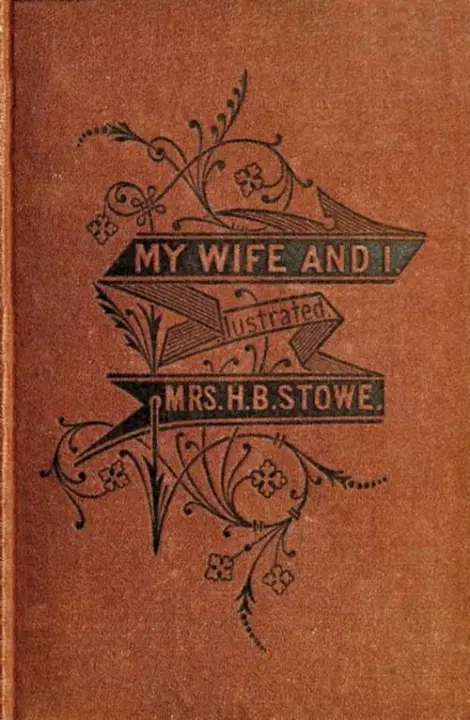
THE CLASSIC COLLECTION · 1871
"My Wife and I: Or, Harry Henderson's History" by Harriet Beecher Stowe is a novel written in the late 19th century. The story centers around Harry Henderson, a reflective young man from New Hampshire, as he navigates the complexities of love, marriage, and personal growth. Through Harry's experiences, the author explores themes of childhood innocence, romantic ideals, and the evolution of human relationships against the backdrop of societal changes. The opening of the novel introduces Harry's childhood and his longing for companionship, particularly focusing on his deep connection with a girl named Susie. From a young age, Harry feels isolated in his large family and finds solace in his imaginary relationship with Susie, whom he considers his "child-wife." This chapter recounts the purity and joys of their childhood friendship, highlighting key moments filled with innocence and adventure as they navigate the challenges of growing up. Harry's strong feelings for Susie are soon complicated by the harsh realities of life, marked by her untimely death, which profoundly impacts his perspective on love and the bonds that define our lives. Thus, the story begins with a poignant reflection on the simplicity of young love, setting the stage for Harry's journey into adulthood.
Introduction adapted from the source catalogue; source summaries may be automatically generated.
Free to read · English · 163,597 words · No account needed
MAKE TIME FOR A GOOD BOOK
On by default. Untick to stop anonymous reading totals. Each page counts after 10 seconds in view. How this works.
Anonymous counting is on unless you have switched it off.
At this moment the door-bell rung, and the waiter brought in a letter on a silver salver. Both ladies pounced upon it, and Aunt Maria saying, "It's to you, from Sydney," eagerly broke it open and began reading.
"I should think, sister," said Mrs. Van Arsdel, in an injured tone, "I might be allowed the first reading of my own letters."
"Oh, pshaw, don't be so peevish," said Aunt Maria, pushing it petulantly toward her. "If you don't want me to take any interest in your affairs I'm sure I don't see why I should. I'll go, and you may manage them yourself."
"But, Maria," said poor Mrs. Van Arsdel, apologetically, "one naturally has the wish to see one's own letters first."
"Well, mercy on us, child, don't be in a passion about it," said Aunt Maria, "you've got your letter, haven't you? Do read it, and you'll see it's just as I thought. That girl has offended him with her airs and graces, and he is just on the point of giving her up."
"But, you see, he says that he still desires to propose to her," said Mrs. Van Arsdel, reading, "only that as her manner to him is so marked he does not wish to expose himself to another refusal."
"Well," said Aunt Maria, "now you see, Nelly, after all, that letter leaves the game in Eva's own hands. If now she will behave herself and let you invite him to an interview and treat him properly, it can all be settled. The letter, in fact, amounts to a proposal in form. Now, Nelly, that girl must be made to behave herself. I wish I could put some pluck into you; you must be decided with her."
"It's of no use, sister, you don't know Eva. She's an easy child to be coaxed, but she has a terrible will of her own. The only way to manage her is through her affections. I can't bear to cross her, for she always was a good child."
"Well, then, tell her just how critical the state of the family is. She may have it in her power to save her father from failure. It may be just life or death with us all. Put it to her strongly. It would be a pretty thing, indeed, if instead of being mistress of Clairmont and that place at Newport, we should all be driven to take second-rate houses and live like nobodies, just for her foolish fancies. You ought to frighten her, Nelly. Set it out strongly. Appeal to her affections."
"Well, I shall do my best," said Mrs. Van Arsdel.
Your reading position is saved on this browser. Take it to another device with a library code. Reading pages adapt to text, rather than matching a printed edition.
Harriet Beecher Stowe

Harriet Beecher Stowe
Harriet Beecher Stowe

Harriet Beecher Stowe
BEHIND THE BOOK
This eBook is for the use of anyone anywhere in the United States and most other parts of the world at no cost and with almost no restrictions whatsoever. You may copy it, give it away or re-use it under the terms of the Project Gutenberg License included with this eBook or online at www.gutenberg.org. If you are not located in the United States, you will have to check the laws of the country where you are located before using this eBook. Read the source licence.
The original source file, including credits and licence, is retained by this library. Request an original-format copy at no charge. Please include the book title and Project Gutenberg identifier #47874.
KEEP YOUR CURIOSITY GOING
Coulson Kernahan

Maurice Baring
Frances Wright
Cécile Tormay

Frederic Jesup Stimson

W. H. P. (William Henry Pope) Jarvis