
Life of Harriet Beecher Stowe Compiled From Her Letters and Journals by Her Son Charles Edward Stowe
Harriet Beecher Stowe
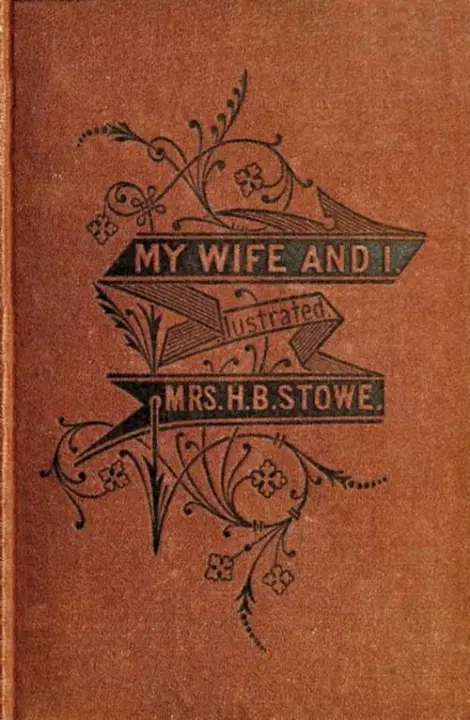
THE CLASSIC COLLECTION · 1871
"My Wife and I: Or, Harry Henderson's History" by Harriet Beecher Stowe is a novel written in the late 19th century. The story centers around Harry Henderson, a reflective young man from New Hampshire, as he navigates the complexities of love, marriage, and personal growth. Through Harry's experiences, the author explores themes of childhood innocence, romantic ideals, and the evolution of human relationships against the backdrop of societal changes. The opening of the novel introduces Harry's childhood and his longing for companionship, particularly focusing on his deep connection with a girl named Susie. From a young age, Harry feels isolated in his large family and finds solace in his imaginary relationship with Susie, whom he considers his "child-wife." This chapter recounts the purity and joys of their childhood friendship, highlighting key moments filled with innocence and adventure as they navigate the challenges of growing up. Harry's strong feelings for Susie are soon complicated by the harsh realities of life, marked by her untimely death, which profoundly impacts his perspective on love and the bonds that define our lives. Thus, the story begins with a poignant reflection on the simplicity of young love, setting the stage for Harry's journey into adulthood.
Introduction adapted from the source catalogue; source summaries may be automatically generated.
Free to read · English · 163,597 words · No account needed
MAKE TIME FOR A GOOD BOOK
On by default. Untick to stop anonymous reading totals. Each page counts after 10 seconds in view. How this works.
Anonymous counting is on unless you have switched it off.
"Henderson," said Bolton to me, one day, "how long are you engaged on
the Democracy?"
"Only for this year," said I.
"Because," said he, "I have something to propose to you which I hope may prove a better thing. Hestermann & Co. sent for me yesterday in secret session. The head manager of their whole set of magazines and papers has resigned, and is going to travel in Europe, and they want me to take the place."
"Good! I am heartily glad of it," said I. "I always felt that you were not in the position that you ought to have. You will accept, of course."
"Whether I accept or not depends on you," he replied.
"I cannot understand," said I.
"In short, then," said he, "the responsibility is a heavy one, and I cannot undertake it without a partner whom I can trust as myself--I mean," he added, "whom I can trust more than myself."
"You are a thousand times too good," said I. "I should like nothing better than such a partnership, but I feel oppressed by your good opinion. Are you sure that I am the one for you?"
"I think I am," said he, "and it is a case where I am the best judge; and it offers to you just what you want--a stable position, independence to express yourself, and a good income. Hestermann & Co. are rich, and wise enough to know that liberality is the best policy."
"But," said I, "their offers are made to you, and not to me."
"Well, of course, their acquaintance with me is of old standing; but I have spoken to them of you, and I am to bring you round to talk with them to-morrow; but, after all, the whole power of arranging is left with me. They put a certain sum at my disposal, and I do what I please with it. In short," he said, smiling, "I hold the living, and you are my curate. Well," he added, "of course you need time to think matters over; here is paper on which I have made a little memorandum of an arrangement between us; take it and dream on it, and let me know to-morrow what you think of it."
I went to my room and unfolded the agreement, and found the terms liberal beyond all my expectations. In fact, the income of the principal was awarded to me, and that of the subordinate to Bolton.
I took the paper the next evening to Bolton's room. "Look here, Bolton," said I, "these terms are simply absurd."
"How so?" he said, lifting his eyes tranquilly from his book. "What's
the matter with them?"
Your reading position is saved on this browser. Take it to another device with a library code. Reading pages adapt to text, rather than matching a printed edition.
Harriet Beecher Stowe

Harriet Beecher Stowe
Harriet Beecher Stowe

Harriet Beecher Stowe
BEHIND THE BOOK
This eBook is for the use of anyone anywhere in the United States and most other parts of the world at no cost and with almost no restrictions whatsoever. You may copy it, give it away or re-use it under the terms of the Project Gutenberg License included with this eBook or online at www.gutenberg.org. If you are not located in the United States, you will have to check the laws of the country where you are located before using this eBook. Read the source licence.
The original source file, including credits and licence, is retained by this library. Request an original-format copy at no charge. Please include the book title and Project Gutenberg identifier #47874.
KEEP YOUR CURIOSITY GOING
Coulson Kernahan

Maurice Baring
Frances Wright
Cécile Tormay

Frederic Jesup Stimson

W. H. P. (William Henry Pope) Jarvis