
Life of Harriet Beecher Stowe Compiled From Her Letters and Journals by Her Son Charles Edward Stowe
Harriet Beecher Stowe
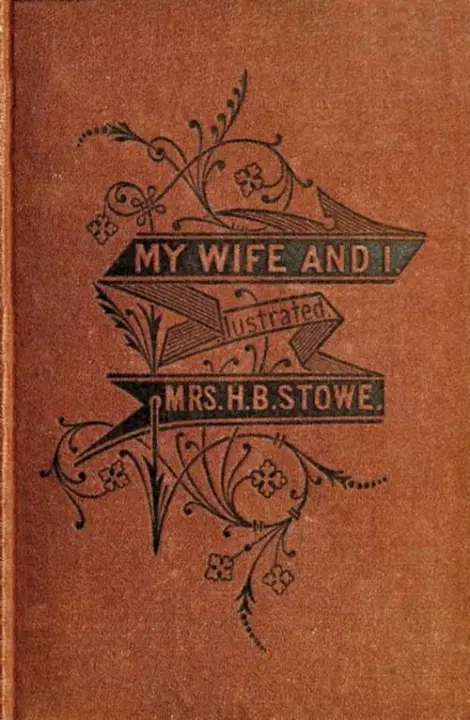
THE CLASSIC COLLECTION · 1871
"My Wife and I: Or, Harry Henderson's History" by Harriet Beecher Stowe is a novel written in the late 19th century. The story centers around Harry Henderson, a reflective young man from New Hampshire, as he navigates the complexities of love, marriage, and personal growth. Through Harry's experiences, the author explores themes of childhood innocence, romantic ideals, and the evolution of human relationships against the backdrop of societal changes. The opening of the novel introduces Harry's childhood and his longing for companionship, particularly focusing on his deep connection with a girl named Susie. From a young age, Harry feels isolated in his large family and finds solace in his imaginary relationship with Susie, whom he considers his "child-wife." This chapter recounts the purity and joys of their childhood friendship, highlighting key moments filled with innocence and adventure as they navigate the challenges of growing up. Harry's strong feelings for Susie are soon complicated by the harsh realities of life, marked by her untimely death, which profoundly impacts his perspective on love and the bonds that define our lives. Thus, the story begins with a poignant reflection on the simplicity of young love, setting the stage for Harry's journey into adulthood.
Introduction adapted from the source catalogue; source summaries may be automatically generated.
Free to read · English · 163,597 words · No account needed
MAKE TIME FOR A GOOD BOOK
On by default. Untick to stop anonymous reading totals. Each page counts after 10 seconds in view. How this works.
Anonymous counting is on unless you have switched it off.
"I can account for that," said I. "A man among the Quakers is restricted and held in, and hasn't as much to cultivate and develop him as ordinary men in the world; whereas, woman, among the Quakers, has her sphere widened and developed."
At this moment our conversation was interrupted by the entrance of Jim Fellows. He seemed quite out of breath and excited, and had no sooner passed the compliments of the evening, than he began.
"Well," said he, "Hal, I have just come from the Police Court, where there's a precious row. Our friend Dacia Dangyereyes is up for blackmailing and swindling; and there's a terrible wash of dirty linen going on. I was just in time to get the very earliest notes for our paper."
"Good!" said Mr. Van Arsdel. "I hope the creature is caught at last."
"Never believe that," said Jim. "She has as many lives as a cat. They never'll get a hold on her. She'll talk 'em all round."
"Disgusting!" said Ida.
"Ah!" said Jim, "it's part of the world as it goes. She'll come off with flying colors, doubtless, and her cock's feathers will be flaunting all the merrier for it."
"How horribly disagreeable," said Eva, "to have such women around. It makes one ashamed of one's sex."
"I think," said Ida, "there is not sufficient resemblance to a real woman in her to make much trouble on her account. She's an amphibious animal, belonging to a transition period of human society."
"Well," said Jim, "if you'll believe it, Mrs. Cerulean and two or three of the ladies of her set are actually going to invite Dacia to their salon, and patronize her."
"Impossible!" said Ida, flushing crimson; "it cannot be!"
"Oh, you don't know Mrs. Cerulean," said Jim; "Dacia called on her with her newspaper, and conducted herself in a most sweet and winning manner, and cast herself at her feet for patronage; and Mrs. Cerulean, regarding her through those glory spectacles which she usually wears, took her up immediately as a promising candidate for the latter-day. Mrs. Cerulean don't see anything in Dacia's paper that, properly interpreted, need make any trouble; because, you see, as she says, everything ought to be love, everywhere, above and below, under and over, up and down, top and side and bottom, ought to be love, LOVE. And then when there's general all-overness and all-throughness, and an entire mixed-up-ativeness, then the infinite will come down into the finite, and the finite will overflow into the infinite, and, in short, Miss Dacia's cock's feathers will sail right straight up into heaven, and we shall see her cheek by jowl with the angel Gabriel, promenading the streets of the new Jerusalem. That's the programme. Meanwhile, Dacia's delighted. She hadn't the remotest idea of being an angel, or anything of the sort; but since good judges have told her she is, she takes it all very contentedly."
Your reading position is saved on this browser. Take it to another device with a library code. Reading pages adapt to text, rather than matching a printed edition.
Harriet Beecher Stowe

Harriet Beecher Stowe
Harriet Beecher Stowe

Harriet Beecher Stowe
BEHIND THE BOOK
This eBook is for the use of anyone anywhere in the United States and most other parts of the world at no cost and with almost no restrictions whatsoever. You may copy it, give it away or re-use it under the terms of the Project Gutenberg License included with this eBook or online at www.gutenberg.org. If you are not located in the United States, you will have to check the laws of the country where you are located before using this eBook. Read the source licence.
The original source file, including credits and licence, is retained by this library. Request an original-format copy at no charge. Please include the book title and Project Gutenberg identifier #47874.
KEEP YOUR CURIOSITY GOING
Coulson Kernahan

Maurice Baring
Frances Wright
Cécile Tormay

Frederic Jesup Stimson

W. H. P. (William Henry Pope) Jarvis