
Life of Harriet Beecher Stowe Compiled From Her Letters and Journals by Her Son Charles Edward Stowe
Harriet Beecher Stowe
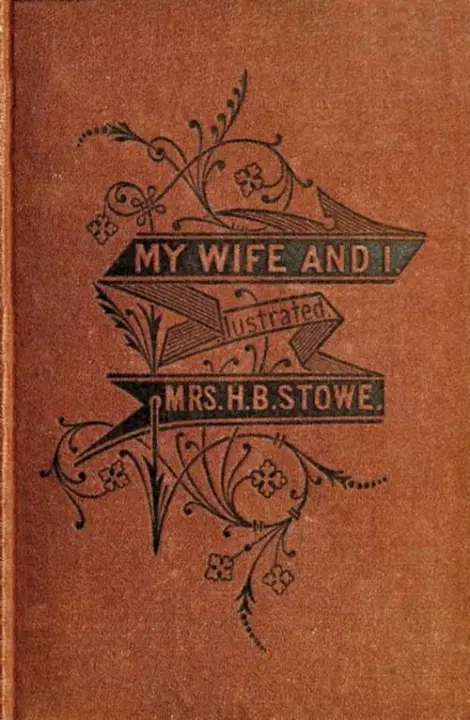
THE CLASSIC COLLECTION · 1871
"My Wife and I: Or, Harry Henderson's History" by Harriet Beecher Stowe is a novel written in the late 19th century. The story centers around Harry Henderson, a reflective young man from New Hampshire, as he navigates the complexities of love, marriage, and personal growth. Through Harry's experiences, the author explores themes of childhood innocence, romantic ideals, and the evolution of human relationships against the backdrop of societal changes. The opening of the novel introduces Harry's childhood and his longing for companionship, particularly focusing on his deep connection with a girl named Susie. From a young age, Harry feels isolated in his large family and finds solace in his imaginary relationship with Susie, whom he considers his "child-wife." This chapter recounts the purity and joys of their childhood friendship, highlighting key moments filled with innocence and adventure as they navigate the challenges of growing up. Harry's strong feelings for Susie are soon complicated by the harsh realities of life, marked by her untimely death, which profoundly impacts his perspective on love and the bonds that define our lives. Thus, the story begins with a poignant reflection on the simplicity of young love, setting the stage for Harry's journey into adulthood.
Introduction adapted from the source catalogue; source summaries may be automatically generated.
Free to read · English · 163,597 words · No account needed
MAKE TIME FOR A GOOD BOOK
On by default. Untick to stop anonymous reading totals. Each page counts after 10 seconds in view. How this works.
Anonymous counting is on unless you have switched it off.
"And I tell Eva she can't do it," said Mrs. Van Arsdel. "Eva is always over-doing; she worked herself to death in a mission class last year. The fact is, one can't do these things, and go into society."
"But what's the use of society, mamma?" said Eva.
"Oh, well; we can't all turn into monks and nuns, you know; and that's what these modern High Church doings would bring us to. I'm a good, old-fashioned Episcopalian; I believe in going to church on Sundays--and that's all we used to hear about."
"Do you know, Mr. Fellows, I saw you at St. Alban's," said Miss Alice.
"On your knees, too," said Miss Eva.
"Do you believe in bowing to the altar?" said a third; "I think it's
quite Popish."
"Girls, what are going to be worn for hats this spring? have you been to Madame De Tullerigs? I declare it's a shame! but Lent is just the busiest time about one's clothes, one must have everything ready for Easter, you know. How do you like the new colors, Mr. Fellows?"
"What! the hell-fire colors?" said Jim.
"Oh, horrors! You dreadful creature, you ought to be ashamed of yourself!" screamed in four or five voices.
"Am ashamed--sackcloth and ashes, and all that; eat nothing but
codfish," said Jim. "But that's what they call 'em, any way--hell-fire
colors."
"I never did hear such a profane creature. Girls, isn't he dreadful?"
"I say, Miss Alice," said Jim, "do you go to confession up there?
'Cause, you see, if that thing is getting about, I think I'll turn
priest."
"I think you ought to go to confession," said she.
"I shall in the good times coming, when we have lady priests."
"Oh, Mr. Henderson, do you believe in women's rights?"
"Certainly."
"Well, for my part, I have all the rights I want," said Miss Alice.
"I should think you did," said Jim Fellows; "but it's hard on us."
"Well, I think that is all infidelity," said another--"goes against the Bible. Do you think women ought to speak in public?"
"Ristori and Fanny Kemble, for instance," said I.
"Oh, well--they are speaking other people's words; but their own?"
"Why not as well as in private?"
"Oh, because--why, I think it's dreadful; don't you?"
"I can't perceive why. I am perfectly charmed to hear women speak, in public or private, who have anything good or agreeable to say."
"But the publicity is so shocking!"
"Is it any more public than waltzing at the great public balls?"
"Oh, well, I think lecturing is dreadful; you'll never convince me. I hate all those dreadful, raving, tearing, stramming women."
Your reading position is saved on this browser. Take it to another device with a library code. Reading pages adapt to text, rather than matching a printed edition.
Harriet Beecher Stowe

Harriet Beecher Stowe
Harriet Beecher Stowe

Harriet Beecher Stowe
BEHIND THE BOOK
This eBook is for the use of anyone anywhere in the United States and most other parts of the world at no cost and with almost no restrictions whatsoever. You may copy it, give it away or re-use it under the terms of the Project Gutenberg License included with this eBook or online at www.gutenberg.org. If you are not located in the United States, you will have to check the laws of the country where you are located before using this eBook. Read the source licence.
The original source file, including credits and licence, is retained by this library. Request an original-format copy at no charge. Please include the book title and Project Gutenberg identifier #47874.
KEEP YOUR CURIOSITY GOING
Coulson Kernahan

Maurice Baring
Frances Wright
Cécile Tormay

Frederic Jesup Stimson

W. H. P. (William Henry Pope) Jarvis