THE CLASSIC COLLECTION✦A dead man’s diaryCLASSIC FREE BOOKS
A dead man’s diary
Coulson Kernahan
THE CLASSIC COLLECTION · 1899
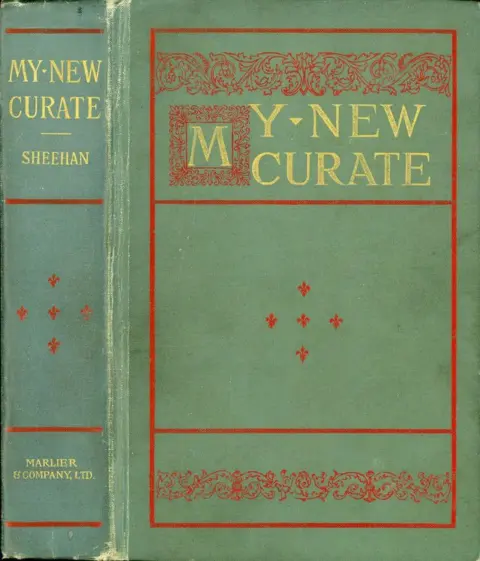
"My New Curate" by Patrick Augustine Sheehan is a novel written in the early 20th century. The story centers around Father Dan, a parish priest in an Irish village, and his experiences as he receives a new curate, Father Letheby, whose modern and energetic approach to ministry contrasts sharply with Father Dan's more traditional and resigned existence. The narrative explores themes of faith, the hardships of rural life, and the relationship between clergy and their parishioners. At the start of the book, the reader is introduced to the emotional departure of Father Dan’s old curate, Father Laverty, who leaves the parish for a new assignment. The accompanying sadness sets the tone for Father Dan's reflections on his life and the challenges that lie ahead with a new, unknown curate. Father Letheby arrives with enthusiasm and a passion to invigorate the parish, and his modern ideas quickly clash with the established leniency of the local community. This friction in expectations creates an engaging dynamic, hinting at the transformation both priests may undergo as they navigate their differences and the realities of their shared responsibilities.
Introduction adapted from the source catalogue; source summaries may be automatically generated.
Free to read · English · 107,499 words · No account needed
MAKE TIME FOR A GOOD BOOK
On by default. Untick to stop anonymous reading totals. Each page counts after 10 seconds in view. How this works.
Anonymous counting is on unless you have switched it off.
"It was a bitter fate," he said to himself, "and I called her 'Bittra' in my rage. I must change that name."
He started, for the door opened and Bittra came in, immediately followed by the servant with tea.
"We've got a new neighbor, mignonne," he said, as he broke up his toast, "and must call immediately. Can you guess?"
"No, father," she said; but it fitted in with her apprehensions and made
her shudder.
"Neither can I," he said, laughing. "But I have got mysterious hints
that indicate a neighbor."
"Judith again," said Bittra. "She can never be explicit."
Then, after a long pause, she said, as if communing with herself:--
"I don't like new acquaintances. They are pretty certain to be troublesome. Can't we live for one another, father?"
"Gladly, my child," he said, darkly, "but what can you do? Life is warp and woof. It must be held together somehow. And the woof is what we call society."
"Father," she said timidly, "there will be a station at the glen in the morning. Might I ask the priests to breakfast here?"
"By all means," he replied, "it will be better than a dejeuner in a room with two beds, and a squalling baby, with the bread taken from the blankets, and the butter from the top of the dresser."
"Ah, no, pap, 't is never so bad as that. They do their best, poor
things--"
"All right," he cried. "Bring up their reverences. There are two or three sole brought up from the yacht."
It was rather a remarkable station, that at Glencarn, although we did not accept Miss Campion's invitation. I was rather apprehensive of the effect these country stations would have on my fastidious curate; and I narrowly watched him, as we left our car on the hills, and strode through soft yellow mud and dripping heather to some mountain cabin. And I think there was a little kindly malice in my thoughts when I allowed him enter first, and plunge into the night of smoke that generally filled these huts. Then the saying of Mass on a deal table, with a horse collar overhead, and a huge collie dog beneath, and hens making frantic attempts to get on the altar-cloth,--I smiled to myself, and was quite impatient to know what effect all these primitive surroundings would have on such refinement and daintiness. "He'll never stand it," I thought, "he'll pitch up the whole thing, and go back to England." As usual, I was quite wrong. Where I anticipated disgust, there were almost tears of delight and sympathy; where I expected indignation, I found enthusiasm.
Your reading position is saved on this browser. Take it to another device with a library code. Reading pages adapt to text, rather than matching a printed edition.
BEHIND THE BOOK
This eBook is for the use of anyone anywhere in the United States and most other parts of the world at no cost and with almost no restrictions whatsoever. You may copy it, give it away or re-use it under the terms of the Project Gutenberg License included with this eBook or online at www.gutenberg.org. If you are not located in the United States, you will have to check the laws of the country where you are located before using this eBook. Read the source licence.
The original source file, including credits and licence, is retained by this library. Request an original-format copy at no charge. Please include the book title and Project Gutenberg identifier #20295.
KEEP YOUR CURIOSITY GOING
Coulson Kernahan

Maurice Baring
Frances Wright
Cécile Tormay

Frederic Jesup Stimson

W. H. P. (William Henry Pope) Jarvis