THE CLASSIC COLLECTION✦A dead man’s diaryCLASSIC FREE BOOKS
A dead man’s diary
Coulson Kernahan
THE CLASSIC COLLECTION · 1899
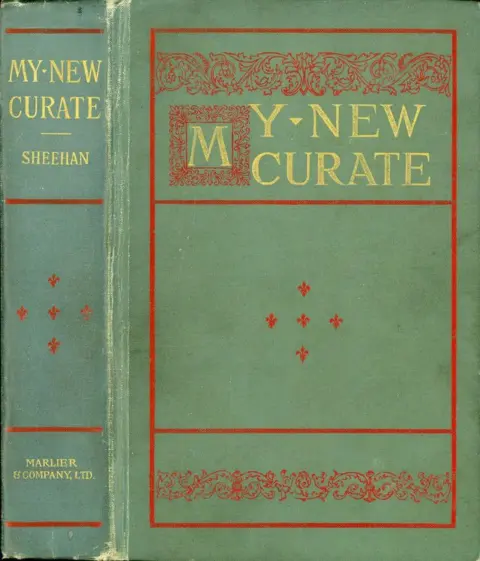
"My New Curate" by Patrick Augustine Sheehan is a novel written in the early 20th century. The story centers around Father Dan, a parish priest in an Irish village, and his experiences as he receives a new curate, Father Letheby, whose modern and energetic approach to ministry contrasts sharply with Father Dan's more traditional and resigned existence. The narrative explores themes of faith, the hardships of rural life, and the relationship between clergy and their parishioners. At the start of the book, the reader is introduced to the emotional departure of Father Dan’s old curate, Father Laverty, who leaves the parish for a new assignment. The accompanying sadness sets the tone for Father Dan's reflections on his life and the challenges that lie ahead with a new, unknown curate. Father Letheby arrives with enthusiasm and a passion to invigorate the parish, and his modern ideas quickly clash with the established leniency of the local community. This friction in expectations creates an engaging dynamic, hinting at the transformation both priests may undergo as they navigate their differences and the realities of their shared responsibilities.
Introduction adapted from the source catalogue; source summaries may be automatically generated.
Free to read · English · 107,499 words · No account needed
MAKE TIME FOR A GOOD BOOK
On by default. Untick to stop anonymous reading totals. Each page counts after 10 seconds in view. How this works.
Anonymous counting is on unless you have switched it off.
Bittra Campion sat in the large drawing-room, with the high, broad windows, that looked over a dun, brown moorland, to where the sea-line threw its clear curve athwart the sky. She was working quietly at some little garment for a poor peasant girl or half-clad boy in the mountains; but over her gentle and usually placid face stole a look of apprehension, as if a shadow of coming evil was thrown forward by the undefined future. Yet why should she fear, who hated no one, but poured her love abroad upon all? Ah, why? is it not upon the gentle and the kind that the hailstones of destiny beat oftenest, as if they felt that here, and not upon the rugged and the stern, their pitiless strength should succeed? From time to time, Bittra looked to the door, or paused in her work, to listen for a footstep. At last it came,--her father's heavy step, as he strode across the corridor, and the doors slammed behind him.
"All alone, mignonne," he said. "A penny, nay, a pound for your
thoughts."
"Agreed, father," she said eagerly, "I want a pound rather badly just
now."
"Some new idiot discovered in the hills," he said, "or some disreputable tramp with a good imagination. You shall have it, Bittra," he said, coming over, and gently stroking her hair. He looked down fondly upon her, and said, suddenly changing his voice:--
"I am hungry as a hawk, Bittra; would you get me some tea?"
She rose to meet his wishes, and as her tall, beautiful figure passed from the room, he said to himself:--
"God, how like her mother!"
He threw himself on a sofa, and looked out over the moor. But he saw--
A long, low island, with the plumes of palms crowning the hill; and beneath, the white waves creeping up the coral crests to mingle with the lazy waters of the lagoon. A cottage, shaded with palms, close down by the beach, with magnolias clustering round the windows, and orchids far back in the moist shades, and creeping vines tangled in and out amongst the palms, and a strong sun, going down in an orange and crimson sky, and a cool, welcome breeze from the sea, that just lifts up the fans of the palms, and a stray curl on the forehead of a girl--for she was hardly more than a girl--who sat out on the tiny lawn, and at her feet the young naval officer, who had carried off his bride at the last season at the Castle and brought her here under southern skies, and believed that this was the world--and heaven. His ship lay at anchor on the eastern side; and here they were stationed for weeks, it may be for months, away from civilization and all its nuisances, and alone with Nature and the children of Nature, who came by degrees to love at least the gentle lady who was so kind to them and their brown babies. Alas for human happiness! One short year, and he was a widower, with the charge of a little babe.
Your reading position is saved on this browser. Take it to another device with a library code. Reading pages adapt to text, rather than matching a printed edition.
BEHIND THE BOOK
This eBook is for the use of anyone anywhere in the United States and most other parts of the world at no cost and with almost no restrictions whatsoever. You may copy it, give it away or re-use it under the terms of the Project Gutenberg License included with this eBook or online at www.gutenberg.org. If you are not located in the United States, you will have to check the laws of the country where you are located before using this eBook. Read the source licence.
The original source file, including credits and licence, is retained by this library. Request an original-format copy at no charge. Please include the book title and Project Gutenberg identifier #20295.
KEEP YOUR CURIOSITY GOING
Coulson Kernahan

Maurice Baring
Frances Wright
Cécile Tormay

Frederic Jesup Stimson

W. H. P. (William Henry Pope) Jarvis