THE CLASSIC COLLECTION✦An outlaw’s diary: the CommuneCLASSIC FREE BOOKS
An outlaw’s diary: the Commune
Cécile Tormay
THE CLASSIC COLLECTION · 1909
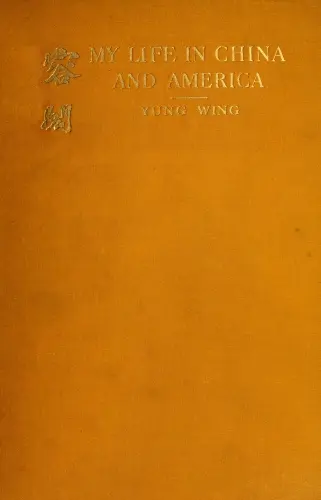
"My Life in China and America" by Yung Wing is a memoir written in the early 20th century. This work chronicles the author's experiences growing up in China, pursuing education in the United States, and his subsequent return to China, highlighting his efforts to reform Chinese education. The narrative aims to weave the story of personal growth and cultural exchange while aiming for the enlightenment and betterment of China through Western ideals and education. The opening of the memoir introduces Yung Wing's early life in Nam Ping, near Macao, where he begins his education under the guidance of Mrs. Gutzlaff. It describes his family's decision to send him to a foreign school, which set the stage for his extraordinary journey. Yung Wing reflects on his initial impressions of the school, his interactions with Mrs. Gutzlaff, and the influence of their relationship on his life. He recounts early childhood escapades, such as his attempt to escape from the confines of the school, and ultimately lays the groundwork for his later academic pursuits in American institutions, which would significantly shape his identity and ambitions.
Introduction adapted from the source catalogue; source summaries may be automatically generated.
Free to read · English · 62,380 words · No account needed
MAKE TIME FOR A GOOD BOOK
On by default. Untick to stop anonymous reading totals. Each page counts after 10 seconds in view. How this works.
Anonymous counting is on unless you have switched it off.
Tsang Kwoh Fan, viceroy, 137;
defeated by Taiping rebels (1862), 138;
his plans for Yung Wing, 139;
drills army and brings to extinction Taiping rebellion, 141, 147;
supreme power of China, 142;
personal characteristics, 142, 145, 146;
interview with Yung Wing, 143;
created duke by Dowager Empress, 147;
plans for introducing Western machinery into China, 149, 153;
commissions Yung Wing to make first purchase, 154;
capture of Nanking, 164;
makes Chu Chow headquarters, 164;
Nienfi rebellion ended (1867), 168;
visits Kiang Nan Arsenal, 168;
Imperial commissioner for settlement of Tsientsin massacre, 178, 180;
furthers Yung Wing’s educational scheme, 180, 183;
returns to headquarters at Nanking (1870), 182;
death (1871), 186, 273;
summing up of character and comparison with Li Hung Chang, 187;
Chang Chi Tung compared with, 228, 230;
also 76, 77, 104.
Tsang Tai Sun, interpreter for Chinese Educational Commission, 183, 197;
also 96.
Tsang Mew, friend of Yung Wing, 125.
Tsientang River, its periodical bore, 81.
Tung Ting Lake, 89.
Twichell, Rev. Joseph H., accompanies Yung Wing to Peru, 194; protest against breaking up of Chinese Educational Commission, 211; also 227.
Ung Tung Hwo, tutor to Emperor Kwang Su, 233; champions Yung Wing’s banking scheme, 234; collusion with Shing Sun Whei and system of graft, 235.
Union Chapel, Shanghai, 66.
U. S. government, timely intervention to prevent partitionment, 73.
Urh Woo, Chinese boat, 82.
Victoria Colony, 15.
Vrooman, Rev. ----, headquarters
at Ham Ha Lau, 52.
Wen Seang, prime minister of China, 171;
death of mother and period of mourning, 175;
his death (1868), 170.
West Lake, or Si-Hoo, Hangchau, 80.
West Point Military Academy, Chinese students refused admission, 207.
Wha Yuh Ting, 143.
Whang Wen Shiu, president of Tsung Li Yamun, (Foreign Affairs), 220.
Whipple, Capt., of ship Eureka, 43.
Whitworth’s machine shop, London, 156.
Williams, S. Wells, work on dictionary, 114.
Willow trees at Auburn, N. Y., planted by S. R. Brown, 22.
Wong Foon, decision to pursue further course of study
referred to patrons in Hong Kong, 31;
graduates from Monson Academy and enters University of Edinburgh, 32;
return to China (1857), 33;
death (1879), 33;
also 13, 18, 20, 28, 31.
Wong Kai Keh, assistant commissioner at St. Louis Exposition, 232.
Wong Shing, scholar in Morrison school, 13, 18, 20, 28, 31.
Woo-Sik, Chinese city, 79.
Woo-Sik-Kwei, Chinese boat, 79, 80.
Woo Tsze Tung, comes to U. S. in retinue of Chin Lan Pin (1876), 200; member of Chinese Educational Commission (1876), 201; attitude toward work of the Commission, 204; instrumental in recalling students (1881), 210, 219.
Wuhu, treaty port, 83, 126.
Wuhu River, 126.
Yang Liu Tung, tea district, 91.
Yangtze-Kiang River, 84, 89, 91.
Yeh Ming Hsin, Viceroy, drastic measures to suppress
rebellion in Kwang Tung province, 53;
appointed viceroy (1854), 55;
capture and banishment, 56.
Yeh Shu Tung, teacher for Chinese Educational Commission, 183; coolie question in Cuba, 197, 206; appointed secretary to Chinese Legation, 198.
Yellow River, Inundation of, 75.
Ying Wong, Chin’s opinion of, 104.
Young, John R., protest against breaking up of Chinese
Educational Commission, 211.
Yuh-Shan, city, 83, 86.
Your reading position is saved on this browser. Take it to another device with a library code. Reading pages adapt to text, rather than matching a printed edition.
BEHIND THE BOOK
This eBook is for the use of anyone anywhere in the United States and most other parts of the world at no cost and with almost no restrictions whatsoever. You may copy it, give it away or re-use it under the terms of the Project Gutenberg License included with this eBook or online at www.gutenberg.org. If you are not located in the United States, you will have to check the laws of the country where you are located before using this eBook. Read the source licence.
The original source file, including credits and licence, is retained by this library. Request an original-format copy at no charge. Please include the book title and Project Gutenberg identifier #54635.
KEEP YOUR CURIOSITY GOING
Cécile Tormay

Moritz Busch
John L. Ransom
Frances Wright
Cécile Tormay

Mabel Potter Daggett