THE CLASSIC COLLECTION✦An outlaw’s diary: the CommuneCLASSIC FREE BOOKS
An outlaw’s diary: the Commune
Cécile Tormay
THE CLASSIC COLLECTION · 1909
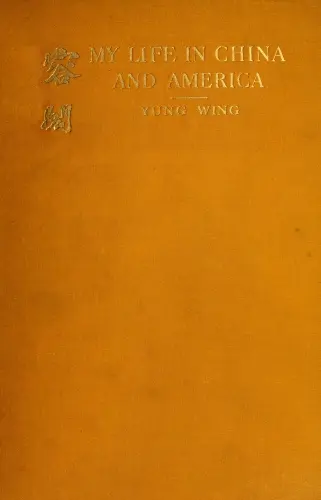
"My Life in China and America" by Yung Wing is a memoir written in the early 20th century. This work chronicles the author's experiences growing up in China, pursuing education in the United States, and his subsequent return to China, highlighting his efforts to reform Chinese education. The narrative aims to weave the story of personal growth and cultural exchange while aiming for the enlightenment and betterment of China through Western ideals and education. The opening of the memoir introduces Yung Wing's early life in Nam Ping, near Macao, where he begins his education under the guidance of Mrs. Gutzlaff. It describes his family's decision to send him to a foreign school, which set the stage for his extraordinary journey. Yung Wing reflects on his initial impressions of the school, his interactions with Mrs. Gutzlaff, and the influence of their relationship on his life. He recounts early childhood escapades, such as his attempt to escape from the confines of the school, and ultimately lays the groundwork for his later academic pursuits in American institutions, which would significantly shape his identity and ambitions.
Introduction adapted from the source catalogue; source summaries may be automatically generated.
Free to read · English · 62,380 words · No account needed
MAKE TIME FOR A GOOD BOOK
On by default. Untick to stop anonymous reading totals. Each page counts after 10 seconds in view. How this works.
Anonymous counting is on unless you have switched it off.
Shemonashiki, Treaty of, 244.
Sheong Shan, city, 83.
Shing Sun Whei, head of Chinese Telegraphic Company, 235; responsible for defeat of National Banking project, 235.
Shing Taoti, see Shing Sun Whei.
Shortrede, Andrew, 20, 48, 59.
Si-Hoo, or West Lake, 80.
Siang Tan, city, overland transport trade with Canton, 97.
Silk, Yellow, 88, 90, 94.
Siu Tsai, degree, 50.
Soldiery and the people in time of war, 103.
Springfield, Mass., home of Dr. A. S. McClean, 28; Yung Wing’s headquarters (1872), 29; center of location for students under Chinese Educational Commission, 189.
Students, in preparatory school, Shanghai, 185;
first installment under Chinese Educational Commission
leave for U. S. (1872), 188;
distributed through New England, 189;
last installment (1875), 197;
see also Chinese Educational Commission; School.
Suchau, captured by Taiping rebels, 97;
under martial law, 98.
Sung Dynasty, 81.
Sung-Kiang route to Suchau, 96.
Szechuen Road, Shanghai, 67.
Szechwan, province, 84.
Ta Tung, non-treaty port, 126.
Tael, value of Chinese, 128.
Taiping government, conditions under which Yung Wing would join, 109.
Taiping Green Tea Expedition (1860-’61), 191;
see also Tea; Yung Wing.
Taiping rebellion (1850-’65), religion its vital force, 113;
led by Hung Siu Chune, 117;
Chinese government resorts to persecution to quell, 118;
assumes political character, 118;
real causes of, 119;
false impressions concerning evangelization of China, 120;
first victory, 120;
causes of loss of prestige, 121;
collapse, 122;
indirect results, 122;
cost and loss of life, 147;
capture of Nanking (1850), 164;
also 53, 55, 56;
see also Taiping rebels.
Taiping rebels, capture of Woo Chang (1856), 91;
and of Suchau, 97;
condition of surrounding country, 100;
their considerate conduct, 101;
Doxology, 99, 102;
views of Christianity, 101;
and of soldiery, 103;
defeated before Nanking (1860), 104;
statement by Chin regarding their disposition, 105;
quantities of green tea held by, 124;
also 86, 90;
see also Taiping Green Tea Expedition; Rebellions.
Taotai, official of fourth rank, 167.
Tea, Chinese and Indian compared, 92;
drank as thank-offering, 103;
quantities held by Taiping rebels, 124;
expeditions to purchase, headed by Yung Wing, 125;
also 85, 90, 191.
Tien Wong, Hung Siu Chune called, 108.
Tientsin massacre (1870), cause, 177;
Chung Hou held responsible for, 178;
indemnity, 178;
Imperial commissioners, 178;
also 268.
Ting Yi Tcheang, see Ting Yih Chang.
Ting Yih Chang, taotai of Shanghai, 167;
sympathy with educational plans of Yung Wing, 170;
governor of Kiang Su and Imperial commissioner for
settlement of Tsientsin massacre, 179.
Tonquin, tributary state, 178.
Treaty Powers, 58.
Trident, sailing ship, 14.
Tsai Sik Yung, secretary to viceroy of Hunan and Hupeh (1894), 225.
Tsang Kee Foo, standing, 76;
introduces Yung Wing to Li Jen Shu, 76.
Your reading position is saved on this browser. Take it to another device with a library code. Reading pages adapt to text, rather than matching a printed edition.
BEHIND THE BOOK
This eBook is for the use of anyone anywhere in the United States and most other parts of the world at no cost and with almost no restrictions whatsoever. You may copy it, give it away or re-use it under the terms of the Project Gutenberg License included with this eBook or online at www.gutenberg.org. If you are not located in the United States, you will have to check the laws of the country where you are located before using this eBook. Read the source licence.
The original source file, including credits and licence, is retained by this library. Request an original-format copy at no charge. Please include the book title and Project Gutenberg identifier #54635.
KEEP YOUR CURIOSITY GOING
Cécile Tormay

Moritz Busch
John L. Ransom
Frances Wright
Cécile Tormay

Mabel Potter Daggett