THE CLASSIC COLLECTION✦An outlaw’s diary: the CommuneCLASSIC FREE BOOKS
An outlaw’s diary: the Commune
Cécile Tormay
THE CLASSIC COLLECTION · 1909
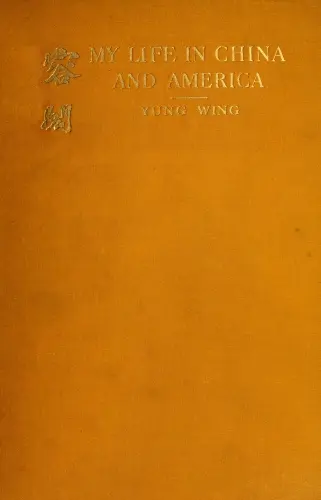
"My Life in China and America" by Yung Wing is a memoir written in the early 20th century. This work chronicles the author's experiences growing up in China, pursuing education in the United States, and his subsequent return to China, highlighting his efforts to reform Chinese education. The narrative aims to weave the story of personal growth and cultural exchange while aiming for the enlightenment and betterment of China through Western ideals and education. The opening of the memoir introduces Yung Wing's early life in Nam Ping, near Macao, where he begins his education under the guidance of Mrs. Gutzlaff. It describes his family's decision to send him to a foreign school, which set the stage for his extraordinary journey. Yung Wing reflects on his initial impressions of the school, his interactions with Mrs. Gutzlaff, and the influence of their relationship on his life. He recounts early childhood escapades, such as his attempt to escape from the confines of the school, and ultimately lays the groundwork for his later academic pursuits in American institutions, which would significantly shape his identity and ambitions.
Introduction adapted from the source catalogue; source summaries may be automatically generated.
Free to read · English · 62,380 words · No account needed
MAKE TIME FOR A GOOD BOOK
On by default. Untick to stop anonymous reading totals. Each page counts after 10 seconds in view. How this works.
Anonymous counting is on unless you have switched it off.
Chinese Educational Commission, Chin Lan Pin appointed to
co-operate with Yung Wing, 181;
personnel and duties, 183;
character, selection, and number of students in preparatory
school, 183;
support of Chinese government, 185;
work carried on by Li Hung Chang after death of Tsang Kwoh
Fan, 187;
first installment of students leave for U. S. (1872), 188;
headquarters at Hartford, Conn., 189;
building erected (1875), 190;
last installment (1875), 197;
changes in personnel, 197, 200;
reactionary attitude of Tsze Tung, 201;
students refused admission to West Point and Annapolis, 207;
break up of Commission (1881), 210;
text of protest, 211;
impression made upon Chinese government, 216;
practical revival, 217;
annual cost of maintenance, 247;
details of administration, 248;
inception, 255;
also 23, 76, 269.
Chinese government, resorts to persecution to quell religious
fanaticism, 118;
corruption of, real cause of Taiping rebellion, 119;
see also Graft.
Chinese in St. Helena, 22.
Chinkiang, river port, 83.
Christianity, views held by Taiping rebels, 101;
spread of as led by Hung Siu Chune, 117;
see also Taiping rebellion.
Christy, Thomas, 156.
Chu Chow, headquarters of Viceroy Tsang Kwoh Fan, 164.
Chung Hou, viceroy of Metropolitan province, held responsible
for Tsientsin massacre, 178.
Chung Wong, issues three orders against incendiarism, 104.
Clemens, Samuel, protest against breaking up of Chinese
Educational Commission, 211.
Colton’s Geography, translated by Yung Wing, 167.
Coolie traffic in Cuba, investigated by Chin Lan Pin, 194;
results, 196.
Coolie traffic in Peru, attempt to form treaty with
China, 192;
Yung Wing’s recital of existing cruelties and refusal
to further treaty, 193;
investigation by Yung Wing, 194;
attitude of Commission, 195;
results, 196.
Cuba, Coolie traffic in, 194, 196.
Cutler, Carrol, president of Western Reserve College, 255.
“Deliberative Association of China,” 241.
Dent and Co., Messrs., 77.
Dialect, of Canton, 52;
Fuhkien, Anhui, Kiangsee, 53.
Dictionary, First Anglo-Chinese, compiled by Dr. Robert Morrison, 14, 114.
Dictionary of Emperor Khang Hsi, translated, 114.
Doxology, The, repeated by Commandant Liu and Taiping rebels, 99.
Dowager Empress Chi Hsi, Tsang Kwoh Fan created duke by, 147;
on side of Li Hung Chang in war with Japan (1894-’95), 226;
affected by graft, 235;
despotic rule over Emperor Kwang Su, 239;
also 73.
Dumaresque, Captain, of ship Florence, 62.
Dynasties in China, Number of, 113.
East India Company, 22.
East Windsor, Conn., 25.
“Elegant talent,” interpretation of Siu Tsai, 50.
Eureka, sailing ship, story of voyage from New York
to Hong Kong (1854-’55), 43;
also 63, 69.
European powers and partitionment of China, 73.
Evangelization of China, False impressions of, caused by Christian tendencies of Taiping rebellion, 120.
Exploitation of Chinese by officials, one cause of Taiping rebellion, 119.
Extra-territorial basis, Foreign settlement on, 72.
Feudatory period, 113.
Fitchburg, Mass., supplies first American machinery to China, 53;
see also Machinery.
Florence, sailing ship, 62.
Formosa, Island of, plan to mortgage (1894), 225, 244;
visited by Yung Wing, 242.
Frelinghuysen, T. F., protest against breaking up of
Chinese Educational Commission, 211.
Friend of China, Shanghai local paper, 76.
Fuhkien, province, Dialect of, 53.
Gatling gun introduced into China, 191.
German government claims monopoly of railroads in Shan Tung, 237.
Gillespie, Capt., of ship Huntress, 21.
Good Hope, Cape of, 21, 33, 43.
Goodhue and Co., Messrs., 42.
Your reading position is saved on this browser. Take it to another device with a library code. Reading pages adapt to text, rather than matching a printed edition.
BEHIND THE BOOK
This eBook is for the use of anyone anywhere in the United States and most other parts of the world at no cost and with almost no restrictions whatsoever. You may copy it, give it away or re-use it under the terms of the Project Gutenberg License included with this eBook or online at www.gutenberg.org. If you are not located in the United States, you will have to check the laws of the country where you are located before using this eBook. Read the source licence.
The original source file, including credits and licence, is retained by this library. Request an original-format copy at no charge. Please include the book title and Project Gutenberg identifier #54635.
KEEP YOUR CURIOSITY GOING
Cécile Tormay

Moritz Busch
John L. Ransom
Frances Wright
Cécile Tormay

Mabel Potter Daggett