THE CLASSIC COLLECTION✦An outlaw’s diary: the CommuneCLASSIC FREE BOOKS
An outlaw’s diary: the Commune
Cécile Tormay
THE CLASSIC COLLECTION · 1909
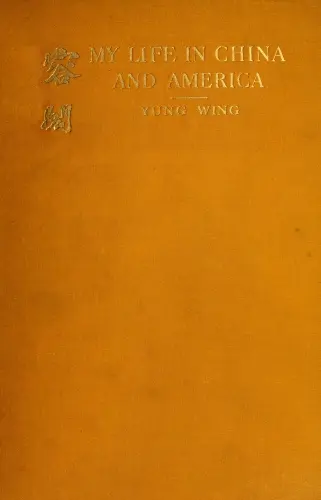
"My Life in China and America" by Yung Wing is a memoir written in the early 20th century. This work chronicles the author's experiences growing up in China, pursuing education in the United States, and his subsequent return to China, highlighting his efforts to reform Chinese education. The narrative aims to weave the story of personal growth and cultural exchange while aiming for the enlightenment and betterment of China through Western ideals and education. The opening of the memoir introduces Yung Wing's early life in Nam Ping, near Macao, where he begins his education under the guidance of Mrs. Gutzlaff. It describes his family's decision to send him to a foreign school, which set the stage for his extraordinary journey. Yung Wing reflects on his initial impressions of the school, his interactions with Mrs. Gutzlaff, and the influence of their relationship on his life. He recounts early childhood escapades, such as his attempt to escape from the confines of the school, and ultimately lays the groundwork for his later academic pursuits in American institutions, which would significantly shape his identity and ambitions.
Introduction adapted from the source catalogue; source summaries may be automatically generated.
Free to read · English · 62,380 words · No account needed
MAKE TIME FOR A GOOD BOOK
On by default. Untick to stop anonymous reading totals. Each page counts after 10 seconds in view. How this works.
Anonymous counting is on unless you have switched it off.
Bribery in Chinese government, one cause of Taiping rebellion, 119;
see also Graft.
Bridgeman, E. C., work on Anglo-Chinese dictionary, 114.
“Brothers in Unity,” debating society at Yale, Yung Wing
assistant librarian, 39;
see also “Linonia.”
Brown, Mrs. Elizabeth, home at East Windsor, Conn., 25.
Brown, Mrs. Phœbe H., mother of Dr. S. R. Brown, 29;
author of hymn, 30, 252.
Brown, Miss Rebekah, preceptress at Munson Academy, 28;
also 189.
Brown, Dr. Samuel Robins, opens Morrison school (1839), 13;
assisted by W. A. Macy, 16;
personal qualifications, 17;
return to U. S. accompanied by three students, 18;
provides for support of their parents, 19;
willow trees planted at Auburn, N. Y., 22;
uses influence in obtaining financial support for Yung Wing, 36;
also 12, 34, 36, 43.
Burlingame Treaty of 1868 disregarded, 208.
Bushnell, Dr. Horace, meeting with Yung Wing, 256.
Campbell, A. A., 20.
Canton, city, Wong Foon practices medicine in, 33;
dialect of, 52;
revolting conditions attending insurrection (1855), 53.
Canton and Siang Tan, overland transport trade between, 87.
“Celestial Empire of Universal Peace,” 120.
“Celestial Sovereign,” Hung Siu Chune called, 108.
Chamber, Heisser and Co., N. Y., 43.
Chang Chi Tung, Viceroy, summons Yung Wing (1895), 227;
temporarily transferred, 228;
listens to plan to recover prestige, 228;
compared with Tsang Kwoh Fan, 228, 230;
appoints Yung Wing Secretary of Foreign Affairs for Kiang Nan, 231;
also 232.
Chang Shi Kwei, secretary to Viceroy Tsang Kwoh Fan, 137;
also 143.
Chang Tsze Tung, viceroy of Hunan and Hupeh (1894), 225.
Chang Yen Hwan, minister in Washington (1884-’88), 223; champions Yung Wing’s banking scheme, 234.
Chêhkiang, province, 83, 86.
Cheong Sha, capital of Hunan, 87, 88.
Cheong Yuh Leang, Imperialist general, 103, 105.
Chi Ksi, see Dowager Empress.
Chin * * *, commandant’s representative at Tan Yang, statement concerning disposition of rebel forces, 105.
Chin Lan Pin, co-operates with Yung Wing in Chinese Educational
Commission, 181;
personal qualities, 182;
duties as commissioner, 183;
sent to investigate coolie traffic in Cuba, 194;
requests changes in personnel of Educational Commission, 197;
appointed joint minister to Washington, 198;
minister plenipotentiary to U. S. (1876), 200;
antagonistic to reform, 201;
unsympathetic to New England influence on students, 202;
reputation as official, 206;
instrumental in recalling students (1881), 210;
reports at Peking upon expiration of term of office (1880), 217.
China, characteristics of language, 52;
Yung Wing’s feeling toward during college course, 40;
conditions in interior (1860), 93.
China and Japan war (1894-’95), plans for prosecution by China
formulated by Yung Wing, 224;
unsuccessful attempts to negotiate loan, 225;
influence on China, 236.
China Mail, 48, 60.
Chinaman, First, to graduate from American college, 39.
Chinese and their Rebellions, 74.
Chinese boats, 79, 82.
Your reading position is saved on this browser. Take it to another device with a library code. Reading pages adapt to text, rather than matching a printed edition.
BEHIND THE BOOK
This eBook is for the use of anyone anywhere in the United States and most other parts of the world at no cost and with almost no restrictions whatsoever. You may copy it, give it away or re-use it under the terms of the Project Gutenberg License included with this eBook or online at www.gutenberg.org. If you are not located in the United States, you will have to check the laws of the country where you are located before using this eBook. Read the source licence.
The original source file, including credits and licence, is retained by this library. Request an original-format copy at no charge. Please include the book title and Project Gutenberg identifier #54635.
KEEP YOUR CURIOSITY GOING
Cécile Tormay

Moritz Busch
John L. Ransom
Frances Wright
Cécile Tormay

Mabel Potter Daggett