THE CLASSIC COLLECTION✦When I was your ageCLASSIC FREE BOOKS
When I was your age
Laura Elizabeth Howe Richards
THE CLASSIC COLLECTION · 1902
"Mrs. Tree" by Laura Elizabeth Howe Richards is a novel written in the early 20th century. The story centers around the eccentric and lively titular character, Mrs. Tree, who, despite her advanced age of over ninety years, exudes vitality and engages in the everyday dramas of her village in Elmerton. The novel explores themes of age, community ties, and the rich tapestry of human relationships, as seen through Mrs. Tree's interactions with various townsfolk and visitors. At the start of the novel, the reader is introduced to Mrs. Tree, a formidable and sharp-witted elderly woman, and her companion Direxia Hawkes. The opening chapter reveals their dynamic as they discuss various happenings in the village, including the departure of a young couple. Mrs. Tree's strong personality is emphasized in her banter with Direxia and her musings on the world around her. The narrative also hints at deeper connections, such as the likely return of William Jaquith, a young man with a troubled past, whose story intertwines with the lives of the townspeople. This sets the stage for a charming exploration of life's complexities as seen through the eyes of an unforgettable character.
Introduction adapted from the source catalogue; source summaries may be automatically generated.
Free to read · English · 39,521 words · No account needed
MAKE TIME FOR A GOOD BOOK
On by default. Untick to stop anonymous reading totals. Each page counts after 10 seconds in view. How this works.
Anonymous counting is on unless you have switched it off.
"Quite right," said Doctor Stedman, "quite right!" and though his eyes twinkled, he spoke with conviction.
"The cities of Europe," Mr. Homer observed, "can hardly be suited, as places of residence, to--a--persons of literary taste. There is"--he waved his hands--"too much noise; too much--sound; too much--absence of tranquillity. I could wish, though, to have seen the grave of Keats."
"I brought you a leaf from his grave, Homer," said Doctor Stedman, kindly. "I have it at home, in my pocketbook. I'll bring it down to the office to-morrow. I went to the burying-ground on purpose."
"Did you so?" exclaimed Mr. Homer, his mild face growing radiant with pleasure. "That was kind, James; that was--friendly; that was--benevolent! I shall value it highly, highly. I thank you, James. I--since you are interested in the lamented Keats, perhaps you would like"--his hand went with a fluttering motion to his pocket.
"I must go now," said Doctor Stedman, hastily. "I've stayed too long already, but I never know how to get away from this house. Good night, Phoebe! Good night, Vesta! You are looking a little tired; take care of yourself. 'Night, Homer; see you to-morrow!"
He shook hands heartily all around and was gone.
Mr. Homer sighed gently. "It is a great pity," he said, "with his excellent disposition, that James will never interest himself in literary pursuits."
His hand was still fluttering about his pocket, and there was an unspoken appeal in his mild brown eyes.
"Have you brought something to read to us, Cousin Homer?" asked Miss
Phoebe, benevolently.
Mr. Homer with alacrity drew a folded paper from his pocket.
"This is--you may be aware, Cousin Phoebe--the anniversary of the birth of the lamented Keats. I always like to pay some tribute to his memory on these occasions, and I have here a slight thing--I tossed it off after breakfast this morning--which I confess I should like to read to you. You know how highly I value your opinion, Cousin Phoebe, and some criticism may suggest itself to you, though I trust that in the main--but you shall judge for yourself."
He cleared his throat, adjusted his spectacles, and began:
"Thoughts suggested by the Anniversary of the Natal Day of the poet
Keats."
"Could you find it convenient not to rock, Cousin Homer?" said Miss
Phoebe.
"By all means, Cousin Phoebe. I beg your pardon. 'Thoughts'--but I
need not repeat the title.
"I asked the Muse if she had one
Thrice-favored son,
Or if some one poetic brother
Appealed to her more than another.
She gazed on me with aspect high,
And tear in eye,
While musically she repeats,
'Keats!'
Your reading position is saved on this browser. Take it to another device with a library code. Reading pages adapt to text, rather than matching a printed edition.
Laura Elizabeth Howe Richards
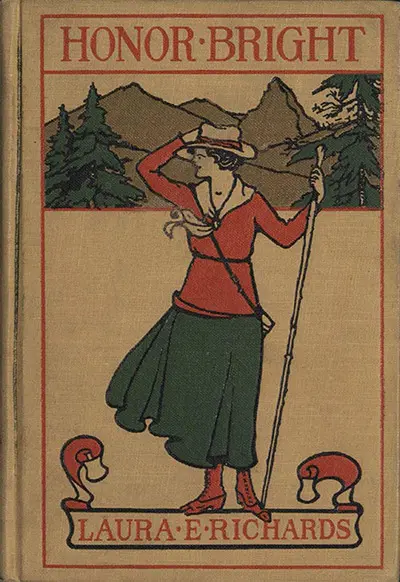
Laura Elizabeth Howe Richards
Laura Elizabeth Howe Richards
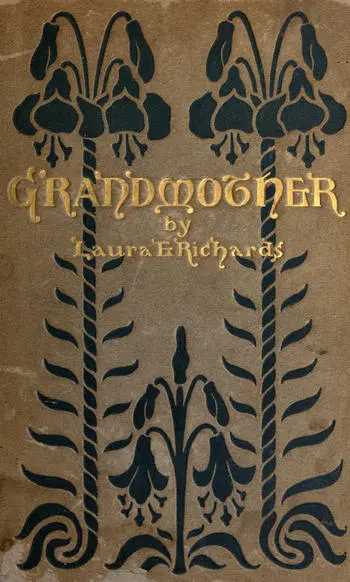
Laura Elizabeth Howe Richards
BEHIND THE BOOK
This eBook is for the use of anyone anywhere in the United States and most other parts of the world at no cost and with almost no restrictions whatsoever. You may copy it, give it away or re-use it under the terms of the Project Gutenberg License included with this eBook or online at www.gutenberg.org. If you are not located in the United States, you will have to check the laws of the country where you are located before using this eBook. Read the source licence.
The original source file, including credits and licence, is retained by this library. Request an original-format copy at no charge. Please include the book title and Project Gutenberg identifier #30439.
KEEP YOUR CURIOSITY GOING
Coulson Kernahan

Maurice Baring
Frances Wright
Cécile Tormay

Frederic Jesup Stimson

W. H. P. (William Henry Pope) Jarvis