THE CLASSIC COLLECTION✦When I was your ageCLASSIC FREE BOOKS
When I was your age
Laura Elizabeth Howe Richards
THE CLASSIC COLLECTION · 1902
"Mrs. Tree" by Laura Elizabeth Howe Richards is a novel written in the early 20th century. The story centers around the eccentric and lively titular character, Mrs. Tree, who, despite her advanced age of over ninety years, exudes vitality and engages in the everyday dramas of her village in Elmerton. The novel explores themes of age, community ties, and the rich tapestry of human relationships, as seen through Mrs. Tree's interactions with various townsfolk and visitors. At the start of the novel, the reader is introduced to Mrs. Tree, a formidable and sharp-witted elderly woman, and her companion Direxia Hawkes. The opening chapter reveals their dynamic as they discuss various happenings in the village, including the departure of a young couple. Mrs. Tree's strong personality is emphasized in her banter with Direxia and her musings on the world around her. The narrative also hints at deeper connections, such as the likely return of William Jaquith, a young man with a troubled past, whose story intertwines with the lives of the townspeople. This sets the stage for a charming exploration of life's complexities as seen through the eyes of an unforgettable character.
Introduction adapted from the source catalogue; source summaries may be automatically generated.
Free to read · English · 39,521 words · No account needed
MAKE TIME FOR A GOOD BOOK
On by default. Untick to stop anonymous reading totals. Each page counts after 10 seconds in view. How this works.
Anonymous counting is on unless you have switched it off.
Politics had little hold in Elmerton. When any question of public interest was to be settled, the elders of the village met and settled it; if they disagreed among themselves, they went to Mrs. Tree, and she told them what to do. People sometimes wondered what would happen when Mrs. Tree died, but there seemed no immediate danger of this.
"Truth and Trees live forever!" was the saying in the village.
When Israel Nudd, the postmaster, died, Elmerton found little difficulty in recommending his successor. The day after his funeral, the elders assembled at the usual place of meeting, the post-office piazza. This was a narrow platform running along one side of the post-office building, and commanding a view of the sea. A row of chairs stood along the wall on their hind legs. They might be supposed to have lost the use of their fore legs, simply because they never were used. In these chairs the elders sat, and surveyed the prospect.
"Tide's makin'," said John Peavey.
No one seemed inclined to contradict this statement.
"Water looks rily," John Peavey continued. "Goin' to be a change o'
weather."
"I never see no sense in that," remarked Seth Weaver. "Why should a change of weather make the water rily beforehand? Besides, it ain't."
"My Uncle Ammi lived to a hundred and two," said John Peavey, slowly, "and he never doubted it. You're allers contrary, Seth. If I said I had a nose on my face, you'd say it warn't so."
"Wal, some might call it one," rejoined Seth, with a cautious glance. "I ain't fond of committin' myself."
"Meetin' come to order!" said Salem Rock, interrupting this preliminary
badinage.
"Brether--I--I would say, gentlemen, we have met to recommend a postmaster for this village, in the room of Israel Nudd, diseased. What is your pleasure in this matter? I s'pose Homer'd ought to have it, hadn't he?"
The conclave meditated. No one had the smallest doubt that Homer ought to have it, but it was not well to decide matters too hastily.
"Homer's none too speedy," said Abram Cutter. "He gets to moonin' over the mail sometimes, and it seems as if you'd git Kingdom Come before you got the paper. But I never see no harm in Home."
"Not a mite," was the general verdict.
"Homer's as good as gingerbread," said Salem Rock, heartily. "He knows the business, ben in it sence he was a boy, and there's no one else doos. My 'pinion, he'd oughter have the job."
He spoke emphatically, and all the others glanced at him with approval; but there was no hurry. The mail would not be in for half an hour yet.
Your reading position is saved on this browser. Take it to another device with a library code. Reading pages adapt to text, rather than matching a printed edition.
Laura Elizabeth Howe Richards
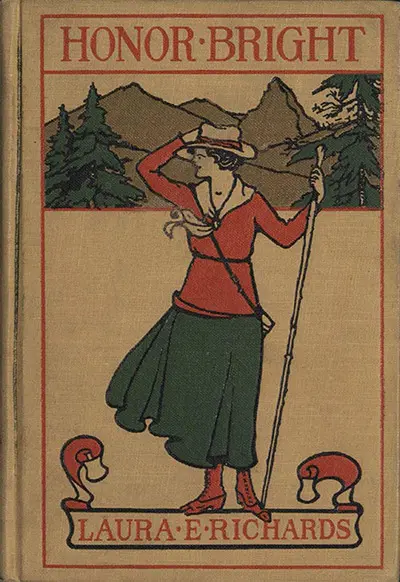
Laura Elizabeth Howe Richards
Laura Elizabeth Howe Richards
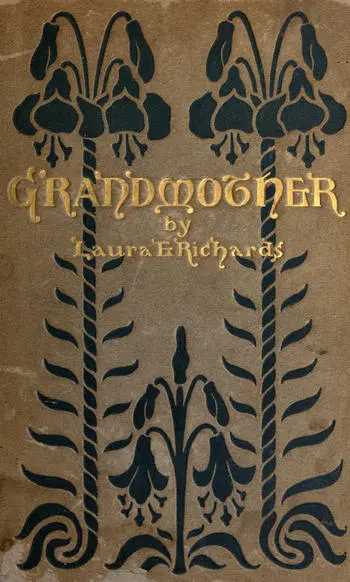
Laura Elizabeth Howe Richards
BEHIND THE BOOK
This eBook is for the use of anyone anywhere in the United States and most other parts of the world at no cost and with almost no restrictions whatsoever. You may copy it, give it away or re-use it under the terms of the Project Gutenberg License included with this eBook or online at www.gutenberg.org. If you are not located in the United States, you will have to check the laws of the country where you are located before using this eBook. Read the source licence.
The original source file, including credits and licence, is retained by this library. Request an original-format copy at no charge. Please include the book title and Project Gutenberg identifier #30439.
KEEP YOUR CURIOSITY GOING
Coulson Kernahan

Maurice Baring
Frances Wright
Cécile Tormay

Frederic Jesup Stimson

W. H. P. (William Henry Pope) Jarvis