THE CLASSIC COLLECTION✦When I was your ageCLASSIC FREE BOOKS
When I was your age
Laura Elizabeth Howe Richards
THE CLASSIC COLLECTION · 1902
"Mrs. Tree" by Laura Elizabeth Howe Richards is a novel written in the early 20th century. The story centers around the eccentric and lively titular character, Mrs. Tree, who, despite her advanced age of over ninety years, exudes vitality and engages in the everyday dramas of her village in Elmerton. The novel explores themes of age, community ties, and the rich tapestry of human relationships, as seen through Mrs. Tree's interactions with various townsfolk and visitors. At the start of the novel, the reader is introduced to Mrs. Tree, a formidable and sharp-witted elderly woman, and her companion Direxia Hawkes. The opening chapter reveals their dynamic as they discuss various happenings in the village, including the departure of a young couple. Mrs. Tree's strong personality is emphasized in her banter with Direxia and her musings on the world around her. The narrative also hints at deeper connections, such as the likely return of William Jaquith, a young man with a troubled past, whose story intertwines with the lives of the townspeople. This sets the stage for a charming exploration of life's complexities as seen through the eyes of an unforgettable character.
Introduction adapted from the source catalogue; source summaries may be automatically generated.
Free to read · English · 39,521 words · No account needed
MAKE TIME FOR A GOOD BOOK
On by default. Untick to stop anonymous reading totals. Each page counts after 10 seconds in view. How this works.
Anonymous counting is on unless you have switched it off.
"It is an old-fashioned expression, Cousin Homer," Miss Vesta put in,
gently. "I have heard our Grandmother Darracott use it, Sister
Phoebe."
"There's nothing improper in it, is there?" said Doctor Stedman.
"Really, my dear James," said Miss Phoebe, bending a literally awful brow on her guest, "I trust not. Do you mean to imply that the conversation of gentlewomen of my aunt's age is apt to be improper?"
"No, no," said Doctor Stedman, easily. "It only seemed to me that you were making a good deal of Mrs. Tree's little eccentricities. But, Phoebe, you said something a few minutes ago that I was very glad to hear. It is pleasant to know that I am still your family physician. That young fellow who went off the other day seems to have taken every heart in the village in his pocket. A young rascal!"
Miss Phoebe colored and drew herself up.
"Sister Phoebe," Miss Vesta breathed rather than spoke, "James is in jest. He has the highest opinion of--"
"Vesta, I think I have my senses," said Miss Phoebe, kindly. "I have heard James use exaggerated language before. Candor compels me to admit, James, that I have benefited greatly by the advice and prescriptions of Doctor Strong; also that, though deploring certain aspects of his conduct while under our roof--I will say no more, having reconciled myself entirely to the outcome of the matter--we have become deeply attached to him. He is"--Miss Phoebe's voice quavered slightly--"he is a chosen spirit."
"Dear Geoffrey!" murmured Miss Vesta.
"But in spite of this," Miss Phoebe continued, graciously, "we feel the ties of ancient friendship as strongly as ever, James, and must always value you highly, whether as physician or as friend."
"Yes, indeed, dear James," said Miss Vesta, softly.
Doctor Stedman rose from his seat. His eyes were very tender as he looked at the sisters from under his shaggy eyebrows.
"Good girls!" he said. "I couldn't afford to lose my best--patients." He straightened his broad shoulders and looked round the room. "When I saw anything new over there," he said, "castle or picture-gallery or cathedral,--whatever it was,--I always compared it with this room, and it never stood the comparison for an instant. Pleasantest place in the world, to my thinking."
Miss Phoebe beamed over her spectacles. "You pay us a high compliment, James," she said. "It is pleasant indeed to feel that home still seems best to you. I confess that, great as are the treasures of art, and magnificent as are the monuments in the cities of Europe, I have always felt that as places of residence they would not compare favorably with Elmerton."
Your reading position is saved on this browser. Take it to another device with a library code. Reading pages adapt to text, rather than matching a printed edition.
Laura Elizabeth Howe Richards
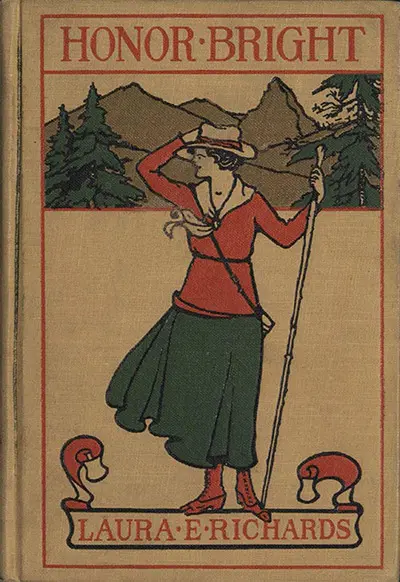
Laura Elizabeth Howe Richards
Laura Elizabeth Howe Richards
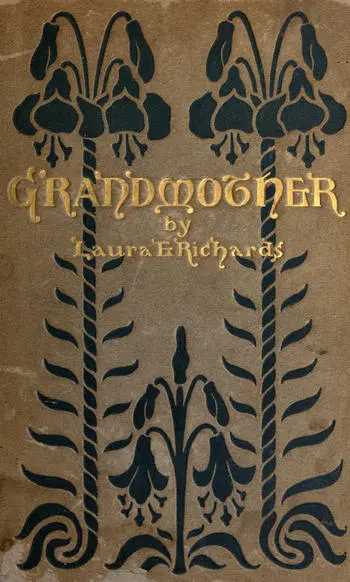
Laura Elizabeth Howe Richards
BEHIND THE BOOK
This eBook is for the use of anyone anywhere in the United States and most other parts of the world at no cost and with almost no restrictions whatsoever. You may copy it, give it away or re-use it under the terms of the Project Gutenberg License included with this eBook or online at www.gutenberg.org. If you are not located in the United States, you will have to check the laws of the country where you are located before using this eBook. Read the source licence.
The original source file, including credits and licence, is retained by this library. Request an original-format copy at no charge. Please include the book title and Project Gutenberg identifier #30439.
KEEP YOUR CURIOSITY GOING
Coulson Kernahan

Maurice Baring
Frances Wright
Cécile Tormay

Frederic Jesup Stimson

W. H. P. (William Henry Pope) Jarvis