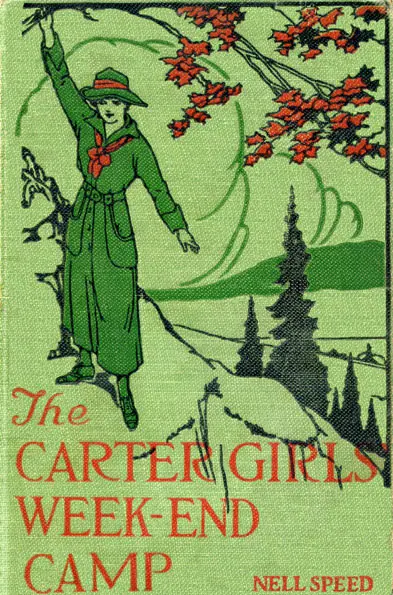
The Carter Girls’ Week-End Camp
Nell Speed
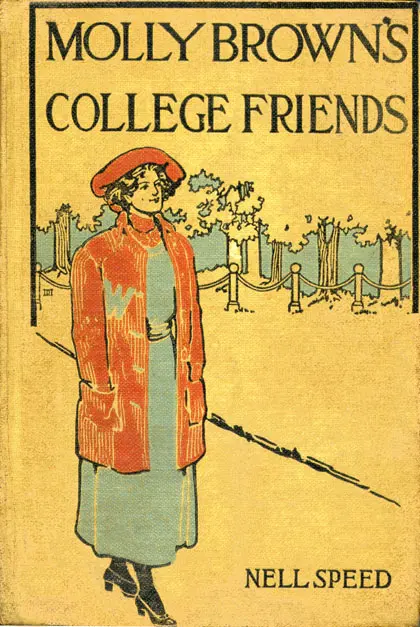
THE CLASSIC COLLECTION · 1921
"Molly Brown's College Friends" by Nell Speed is a novel written in the early 20th century. The story delves into the lives of Molly Brown and her college friend Nance Oldham, exploring themes of friendship, change, and the longing for connection as they navigate their personal lives against the backdrop of societal expectations and grief. The narrative also invites readers to reflect on the impact of loss and the complexities of relationships, setting the stage for the development of the characters as they reconnect after years apart. At the start of the novel, Molly eagerly prepares to welcome her old friend Nance, who is coming to visit after experiencing significant family loss. Molly’s excitement is tinged with anxiety about how much Nance may have changed during their time apart. The arrival of Nance is met with warmth and affection, as she brings her own unique personality into Molly’s family atmosphere. Nance’s character is introduced as a capable and nurturing figure, despite carrying the weight of her recent grief. The opening chapters establish the foundation of their friendship and hint at the deeper interpersonal dynamics that will unfold as the characters reconnect and face the realities of their respective lives.
Introduction adapted from the source catalogue; source summaries may be automatically generated.
Free to read · English · 50,543 words · No account needed
MAKE TIME FOR A GOOD BOOK
On by default. Untick to stop anonymous reading totals. Each page counts after 10 seconds in view. How this works.
Anonymous counting is on unless you have switched it off.
"Ahem!" said Billie, rapping for order as the girls began all at once to say what they thought of "Fairy Godmothers Wanted." The one with the burning plot began rattling her paper in preparation of the turn she hoped for.
"First general impressions are in order! One at a time, please! You, Miss Oldham, you tell us how it strikes you."
"Pleasing on the whole, but----"
"We'll come to the 'buts' later," was the stern mandate of the chairman
of the day.
"You, Lilian Swift, you next!"
"Too long!" from the blunt Lilian.
"The idea! I think it was just sweet," from the gentle Alabamian.
"I got kind of mixed in the middle and couldn't tell which was the nurse and which Polly Nelson," declared one who had evidently gone off into a cataleptic fit, no doubt dreaming of a story she meant to write some day.
"I never, never could love a man who had deceived me," sighed the sentimental one with big eyes and a little mouth.
"Personal predilections not valuable as criticism," said Billie sternly.
Many and various were the opinions expressed. Molly diligently and meekly took notes, agreeing heartily with the ones who thought it was too long.
"Where must I cut it?" she asked eagerly.
"Cut out all the letters!" suggested Lilian.
"How could she? It is all letters," asked Billie, whose chair was becoming a burden as she felt she must get into the discussion.
"Cut 'em, anyhow. Letters in fiction are no good."
"Humph! How about the early English novelists?" asked Molly.
"Dead! Dead! All of them dead!" stormed Lilian.
"Then how about Mary Roberts Rinehart and Booth Tarkington and lots of others? Daddy Longlegs is all letters."
"All the samey, it is a poor stunt," insisted the intrepid Lilian. "I call it a lazy way to get your idea over."
"Perhaps you are right, but the point is: did I get my idea over?"
"We-ll, yes,--but they tell me editors don't like letter form of
fiction."
"Certainly none of them have liked this," sighed Molly, who had devoutly hoped her little story would sell. The money she made herself was very delightful to receive and more delightful to spend. A professor's salary can as a rule stand a good deal of supplementing.
"How about the plot, now?" asked Billie, having finished with the
general impression.
"Slight!"
"Strong!"
"Weak!"
"Impossible!"
"Plausible!"
"Original!"
"Bromidic!"
"Involved!" were the verdicts. The matter was thoroughly threshed out, Billie with difficulty keeping order. Nance was called on for the "but" that she had been left holding.
Your reading position is saved on this browser. Take it to another device with a library code. Reading pages adapt to text, rather than matching a printed edition.
Nell Speed
Nell Speed
Nell Speed
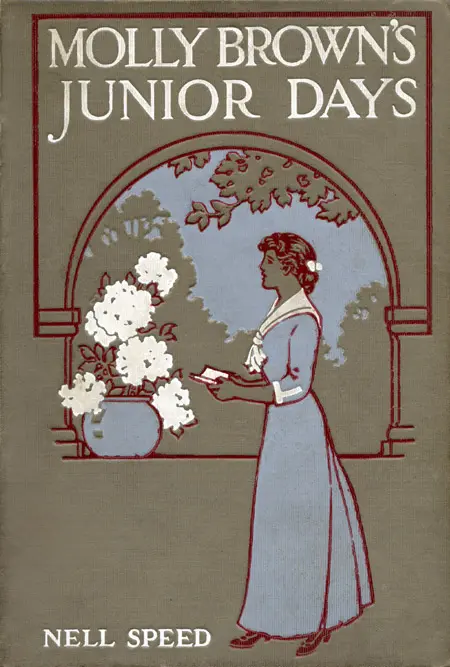
Nell Speed
BEHIND THE BOOK
This eBook is for the use of anyone anywhere in the United States and most other parts of the world at no cost and with almost no restrictions whatsoever. You may copy it, give it away or re-use it under the terms of the Project Gutenberg License included with this eBook or online at www.gutenberg.org. If you are not located in the United States, you will have to check the laws of the country where you are located before using this eBook. Read the source licence.
The original source file, including credits and licence, is retained by this library. Request an original-format copy at no charge. Please include the book title and Project Gutenberg identifier #36733.
KEEP YOUR CURIOSITY GOING
Coulson Kernahan

Maurice Baring
Frances Wright
Cécile Tormay

Frederic Jesup Stimson

W. H. P. (William Henry Pope) Jarvis