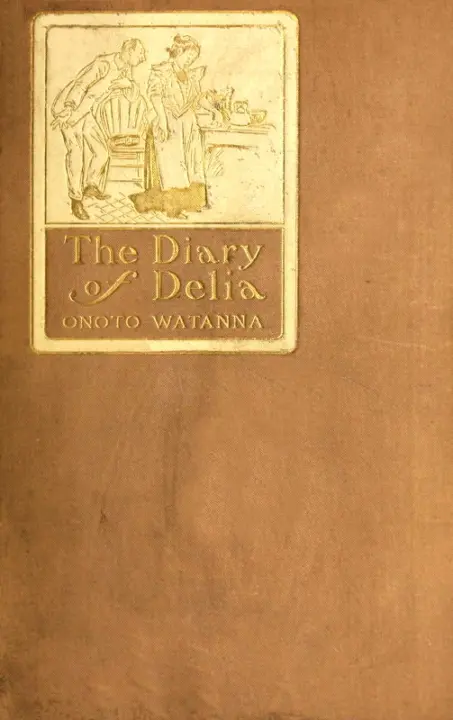
The diary of Delia : Being a veracious chronicle of the kitchen, with some side-lights on the parlour
Onoto Watanna
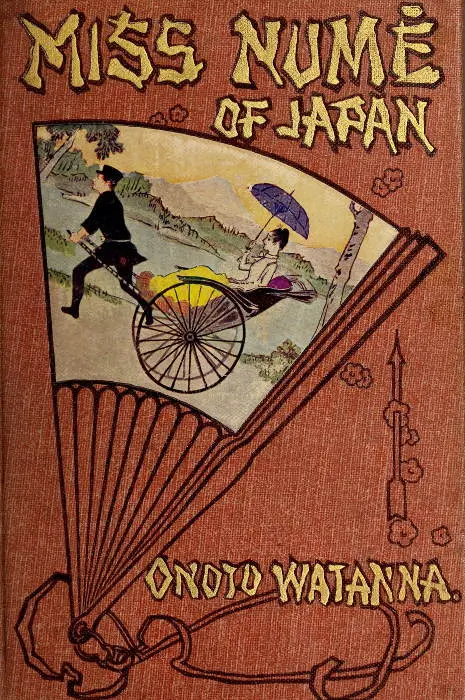
THE CLASSIC COLLECTION · 1899
"Miss Numè of Japan: A Japanese-American Romance" by Onoto Watanna is a novel written in the late 19th century. The story revolves around a rich tapestry of cultural intersections, primarily focusing on the lives of two central characters, Orito Takashima and Numè Watanabe, childhood friends from wealthy Japanese families whose fathers have arranged their marriage. However, Orito's educational pursuits lead him to America, creating a backdrop of longing and cultural exploration as both characters navigate their personal desires against the expectations placed upon them by society and family. The opening of the novel introduces Orito and Numè's childhood bond, established through their fathers' ambitions. At just ten years old, Numè's carefree joy contrasts sharply with Orito's impending departure to study in America, which is proposed as a means to secure a brighter future. This sets the stage for deep emotional undercurrents, particularly in Numè, who reacts defiantly against the notion of Orito's absence. The narrative then shifts to present interactions with different characters onboard a steamer heading to Japan, including the spirited American girl Cleo Ballard, hinting at future romantic entanglements and cultural misunderstandings. The beginning effectively establishes the central themes of love, ambition, and the tension between tradition and modernity that will drive the plot forward.
Introduction adapted from the source catalogue; source summaries may be automatically generated.
Free to read · English · 46,650 words · No account needed
MAKE TIME FOR A GOOD BOOK
On by default. Untick to stop anonymous reading totals. Each page counts after 10 seconds in view. How this works.
Anonymous counting is on unless you have switched it off.
It was with a heart full of yearning and love that Sinclair waited for Numè the next day. She was late; or was it that that last look of hers had turned his head so that he had come earlier than usual to the spot, unable to wait the appointed time?
He found himself planning their future together. How he would love her--his bright tropic flower, his pure shining star--his singing bird. Every leaf that stirred startled him. He tried to absorb himself in the beauty of the country, but his restlessness at her failure to come caused him to go constantly to the road and see if there were any signs of her.
At last he heard the faint, unmistakable beat, beat, beat of sandaled runners. They started his blood throbbing wildly through his veins. She was coming--the woman he loved, the dear little woman who had told him she loved him--not in words--but with that last parting, sweet look; and oh! Numè was too sweet, too genuine, too pure, to deceive.
As he helped her from the jinrikisha and looked at her with all his pent-up longing and eagerness, she turned her head aside with a constrained look. Koto stayed close by her, and refused to take any suggestion from Sinclair to leave them alone together.
Numè began to talk hastily, and as though she could not wait.
"We have had lots of fon, Mr. Sinka?"
"Fun!--why, Numè!"
She opened her little fan and shaded her face a moment.
"Ess--Numè and all Japanese girl luf to have fon."
"Numè--I don't like that word. It is inapplicable in our case."
He tried to take her hand in his, but it clung persistently to her fan, while the other remained hidden in the folds of her robe.
"My little girl is quite cross," he said, thinking she was trying to
tease him.
"No! Numè nod mos' vaery cross;" after a moment she added, in a hard voice: "Numè does nod want to have any more fon." She clung to that word persistently.
"You do not want any more fun, Numè!" he repeated, slowly; "I don't
understand you."
"Ess--it is all fon," she said. "All fon thad we pretending to luf."
"All fun?" he echoed, stupidly. "What is all fun, Numè? Why, what is the matter, sweetheart--why so contrary to-day?"
"Nosing is madder 'cept that Numè does nod wand any more fon with you--she tired vaery much of Mr. Sinka."
A silence, tragic in its feeling, passed between them.
"What do you mean, Numè?" He was still stupid.
"That I only have fon to pretend that I luf you--I am very tired now."
Your reading position is saved on this browser. Take it to another device with a library code. Reading pages adapt to text, rather than matching a printed edition.
Onoto Watanna
Onoto Watanna
Onoto Watanna
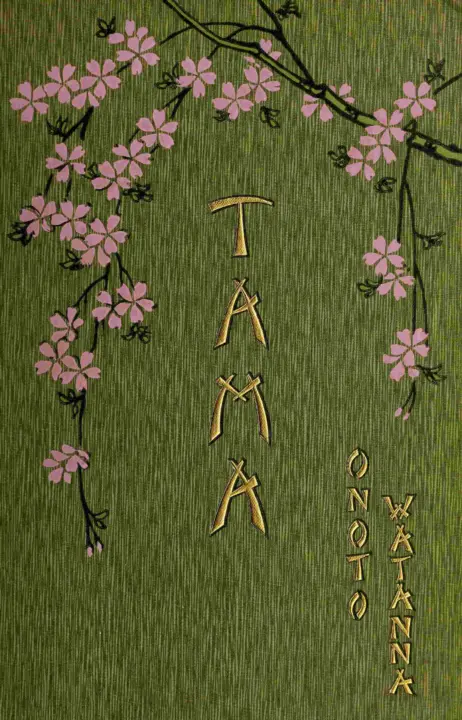
Onoto Watanna
BEHIND THE BOOK
This eBook is for the use of anyone anywhere in the United States and most other parts of the world at no cost and with almost no restrictions whatsoever. You may copy it, give it away or re-use it under the terms of the Project Gutenberg License included with this eBook or online at www.gutenberg.org. If you are not located in the United States, you will have to check the laws of the country where you are located before using this eBook. Read the source licence.
The original source file, including credits and licence, is retained by this library. Request an original-format copy at no charge. Please include the book title and Project Gutenberg identifier #58305.
KEEP YOUR CURIOSITY GOING
Coulson Kernahan

Maurice Baring
Frances Wright
Cécile Tormay

Frederic Jesup Stimson

W. H. P. (William Henry Pope) Jarvis