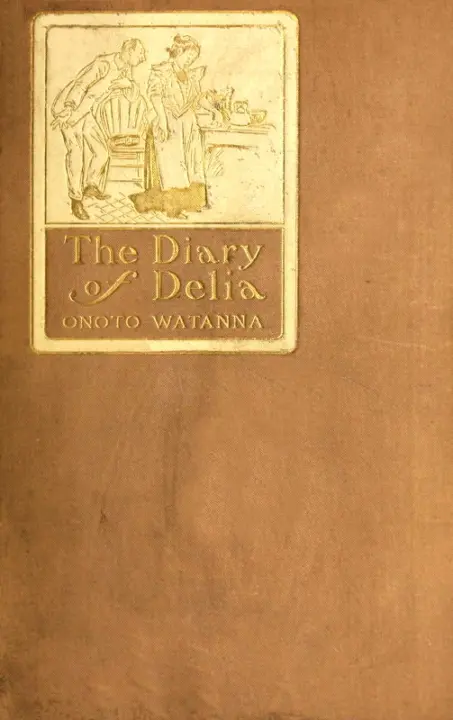
The diary of Delia : Being a veracious chronicle of the kitchen, with some side-lights on the parlour
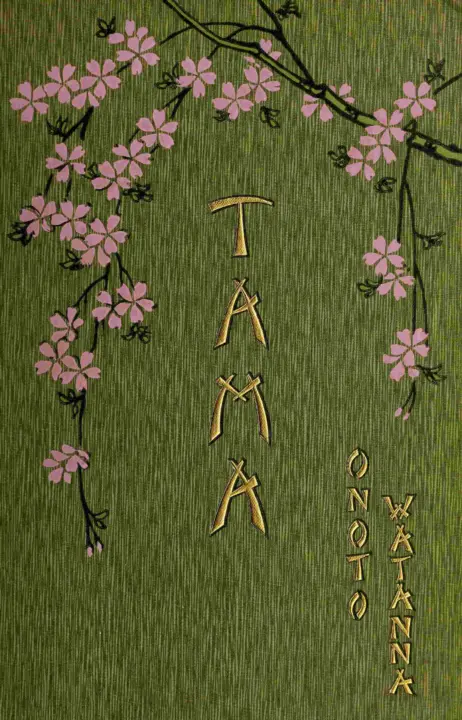
Onoto Watanna
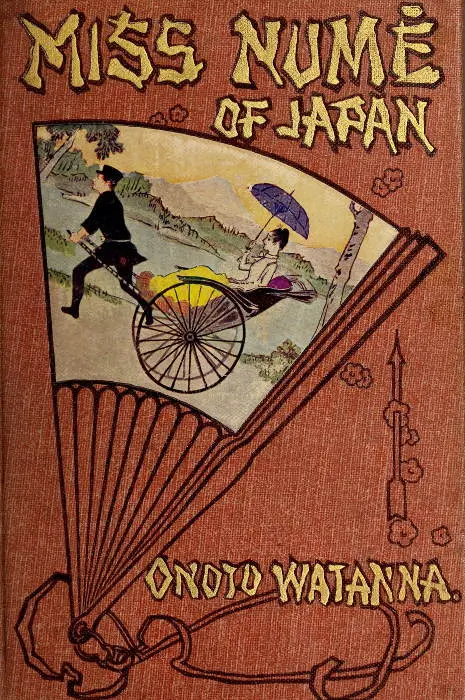
THE CLASSIC COLLECTION · 1899
"Miss Numè of Japan: A Japanese-American Romance" by Onoto Watanna is a novel written in the late 19th century. The story revolves around a rich tapestry of cultural intersections, primarily focusing on the lives of two central characters, Orito Takashima and Numè Watanabe, childhood friends from wealthy Japanese families whose fathers have arranged their marriage. However, Orito's educational pursuits lead him to America, creating a backdrop of longing and cultural exploration as both characters navigate their personal desires against the expectations placed upon them by society and family. The opening of the novel introduces Orito and Numè's childhood bond, established through their fathers' ambitions. At just ten years old, Numè's carefree joy contrasts sharply with Orito's impending departure to study in America, which is proposed as a means to secure a brighter future. This sets the stage for deep emotional undercurrents, particularly in Numè, who reacts defiantly against the notion of Orito's absence. The narrative then shifts to present interactions with different characters onboard a steamer heading to Japan, including the spirited American girl Cleo Ballard, hinting at future romantic entanglements and cultural misunderstandings. The beginning effectively establishes the central themes of love, ambition, and the tension between tradition and modernity that will drive the plot forward.
Introduction adapted from the source catalogue; source summaries may be automatically generated.
Free to read · English · 46,650 words · No account needed
MAKE TIME FOR A GOOD BOOK
On by default. Untick to stop anonymous reading totals. Each page counts after 10 seconds in view. How this works.
Anonymous counting is on unless you have switched it off.
The next day Cleo rallied Takashima because he was unusually quiet, and asked him the cause. He turned and looked at her very directly.
"Will you tell me, Miss Ballard," he said, "why Mr. Sinclair will be so overjoyed that you come to Japan?"
The abrupt question startled the girl. She flushed a violent, almost angry red, and for a moment did not reply. Then she recovered herself and said: "He is a very dear friend of ours."
The Japanese looked thoughtfully at her. There was an embarrassed flush on her face. Again he questioned her very directly, still with his eyes on her face.
"Tell me, Miss Ballard, also, do you flirt only with me?"
Cleo's face was averted a moment. With an effort she turned toward him, a light answer on the tip of her tongue. Something in the earnest, questioning gaze of the young man held her a moment and changed her gay answer. Her voice was very low:
"No," she said. "Please don't believe that of me."
She understood that some one had been trying to poison him against her. Her eyes were dewy--with self-pity, perhaps, for at that moment the coquette in her was subdued, and the natural liking, almost sentiment, she had for Takashima was paramount. A silence fell between them. Takashima broke it after a while to say, very gently: "Will you forgive me, Miss Ballard?"
"There is nothing to forgive."
"Ah! yes," said Takashima, sadly, "because I have misjudged you so?" His voice was raised in a half-question. The girl's eyes were suffused.
"Let us not talk of it any more," he continued, noticing her distress and embarrassment. "I will draw your chair back here and we will talk. What will we talk of? Of America--of Japan? Of you--and of myself?"
"My life has been uninteresting," she said; "let us not talk of it to-night,--but tell me about yours instead. You must have some very pretty remembrances of Japan. Eight years is not such a long time, after all."
"No; that is true, and yet one may become almost a different being during that time." He paused thoughtfully. "Still, I have many beautiful remembrances of my home--all my memories, in fact, are sweet of it." Again he paused to think, and continued slowly: "I will also have beautiful memories of America."
"Yes, but they will be different," said the girl, "for, of course,
America is not your home."
"One often, though, becomes homesick--let us call it--for a country which is not our own, but where we have sojourned for a time," he rejoined, quickly.
Your reading position is saved on this browser. Take it to another device with a library code. Reading pages adapt to text, rather than matching a printed edition.
Onoto Watanna
Onoto Watanna
Onoto Watanna
Onoto Watanna
BEHIND THE BOOK
This eBook is for the use of anyone anywhere in the United States and most other parts of the world at no cost and with almost no restrictions whatsoever. You may copy it, give it away or re-use it under the terms of the Project Gutenberg License included with this eBook or online at www.gutenberg.org. If you are not located in the United States, you will have to check the laws of the country where you are located before using this eBook. Read the source licence.
The original source file, including credits and licence, is retained by this library. Request an original-format copy at no charge. Please include the book title and Project Gutenberg identifier #58305.
KEEP YOUR CURIOSITY GOING
Coulson Kernahan

Maurice Baring
Frances Wright
Cécile Tormay

Frederic Jesup Stimson

W. H. P. (William Henry Pope) Jarvis