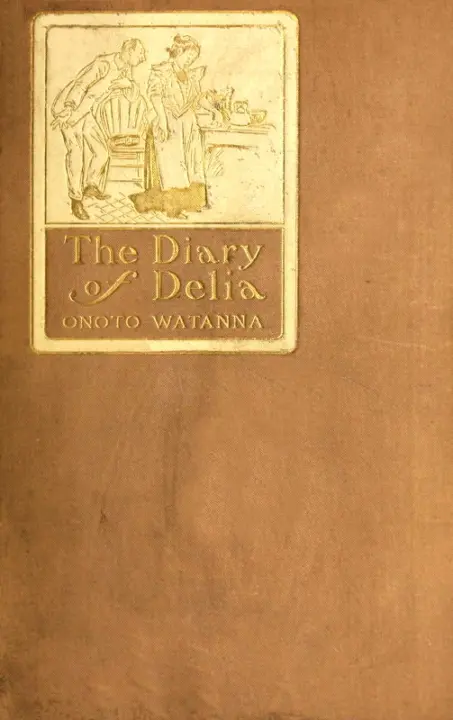
The diary of Delia : Being a veracious chronicle of the kitchen, with some side-lights on the parlour
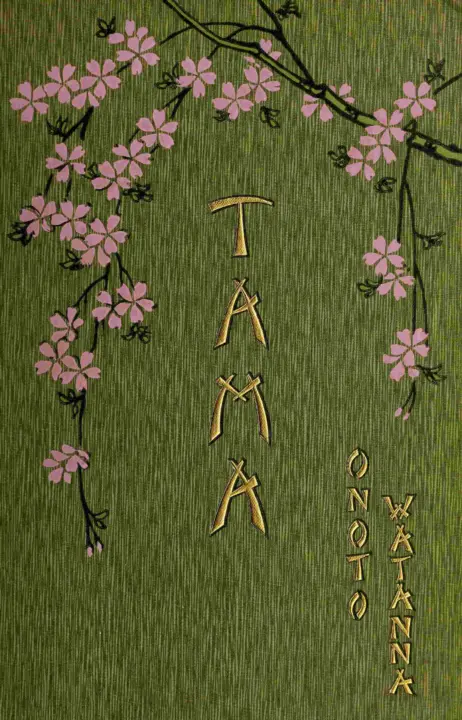
Onoto Watanna
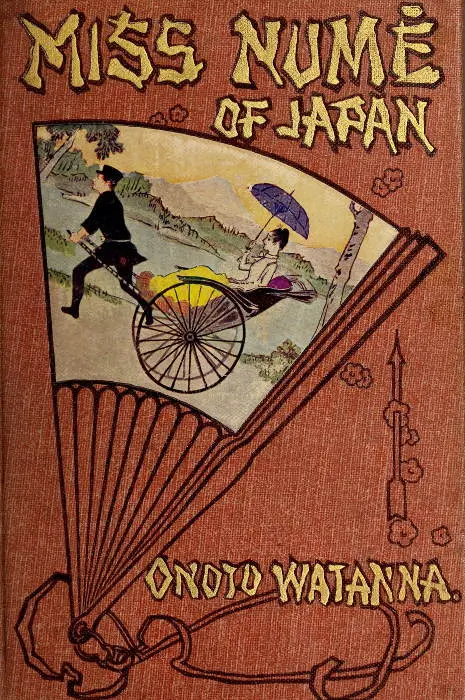
THE CLASSIC COLLECTION · 1899
"Miss Numè of Japan: A Japanese-American Romance" by Onoto Watanna is a novel written in the late 19th century. The story revolves around a rich tapestry of cultural intersections, primarily focusing on the lives of two central characters, Orito Takashima and Numè Watanabe, childhood friends from wealthy Japanese families whose fathers have arranged their marriage. However, Orito's educational pursuits lead him to America, creating a backdrop of longing and cultural exploration as both characters navigate their personal desires against the expectations placed upon them by society and family. The opening of the novel introduces Orito and Numè's childhood bond, established through their fathers' ambitions. At just ten years old, Numè's carefree joy contrasts sharply with Orito's impending departure to study in America, which is proposed as a means to secure a brighter future. This sets the stage for deep emotional undercurrents, particularly in Numè, who reacts defiantly against the notion of Orito's absence. The narrative then shifts to present interactions with different characters onboard a steamer heading to Japan, including the spirited American girl Cleo Ballard, hinting at future romantic entanglements and cultural misunderstandings. The beginning effectively establishes the central themes of love, ambition, and the tension between tradition and modernity that will drive the plot forward.
Introduction adapted from the source catalogue; source summaries may be automatically generated.
Free to read · English · 46,650 words · No account needed
MAKE TIME FOR A GOOD BOOK
On by default. Untick to stop anonymous reading totals. Each page counts after 10 seconds in view. How this works.
Anonymous counting is on unless you have switched it off.
Ever since the day Tom Ballard had introduced Takashima to her, he had been with her almost constantly. Among all the men, young and old, who paid her court on the steamer, she openly favored the Japanese. Most Japanese have their full share of conceit. Takashima was not lacking in this. It was pleasant for him to be singled out each day as the one the beautiful American girl preferred to have by her. It pleased him that she did not laugh or joke so much when with him, but often became even as serious as he, and he even enjoyed hearing her snub some of her admirers for his sake.
"Cleo," Tom Ballard said to her one day, as the Japanese left her side for a moment, "have mercy on Takashima; spare him, as thou wouldst be spared."
She flushed a trifle at the bantering words, and looked out across the
sea.
"Why, Tom! he understands. Didn't you say he had lived eight years in
America?"
Tom sighed. "Woman! woman! incorrigible, unanswerable creature!"
After a time Cleo said, almost pleadingly, as if she were trying to defend herself against some accusation:
"Really, Tom, he is so nice. I can't help myself. You haven't the slightest idea how it feels to have any one--any one like that--on the verge of being in love with you."
Takashima returned to them, and took his seat by the girl's side.
"To-night," he told her, "they are going to dance on deck. The band will
play a concert for us."
Cleo smiled whimsically at his broken English, for, in spite of his long residence in America, he still tripped in his speech.
"Do you dance?" she asked, curiously.
"No! I like better to watch with you."
"But I dance," she put in, hastily.
Takashima's face fell. He looked at her so dejectedly that she laughed. "Life is so serious to you, is it not, Mr. Takashima? Every little thing is of moment."
He gravely agreed with her, looking almost surprised that she should
consider this strange.
"We are always taught," he said, gently, "that it is the little things of life which produce the big; that without the little we may not have the big. So, therefore, we Japanese measure even the smallest of things just as we do the large things."
Cleo repeated this speech later to Tom, and an Englishman who had been paying her a good deal of attention. They both laughed, but she felt somewhat ashamed of herself for repeating it.
Your reading position is saved on this browser. Take it to another device with a library code. Reading pages adapt to text, rather than matching a printed edition.
Onoto Watanna
Onoto Watanna
Onoto Watanna
Onoto Watanna
BEHIND THE BOOK
This eBook is for the use of anyone anywhere in the United States and most other parts of the world at no cost and with almost no restrictions whatsoever. You may copy it, give it away or re-use it under the terms of the Project Gutenberg License included with this eBook or online at www.gutenberg.org. If you are not located in the United States, you will have to check the laws of the country where you are located before using this eBook. Read the source licence.
The original source file, including credits and licence, is retained by this library. Request an original-format copy at no charge. Please include the book title and Project Gutenberg identifier #58305.
KEEP YOUR CURIOSITY GOING
Coulson Kernahan

Maurice Baring
Frances Wright
Cécile Tormay

Frederic Jesup Stimson

W. H. P. (William Henry Pope) Jarvis