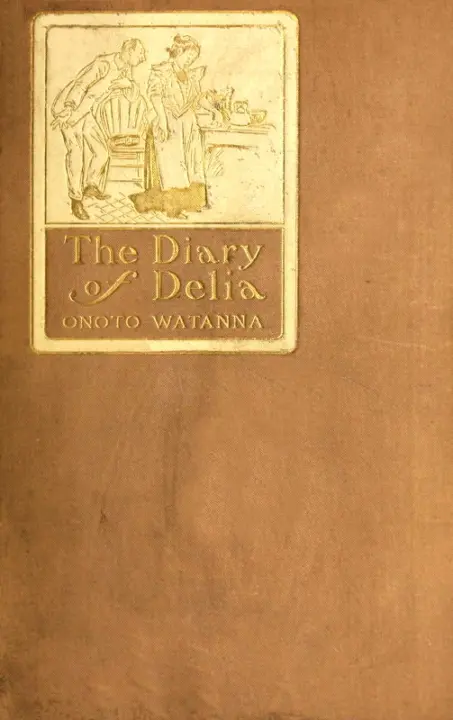
The diary of Delia : Being a veracious chronicle of the kitchen, with some side-lights on the parlour
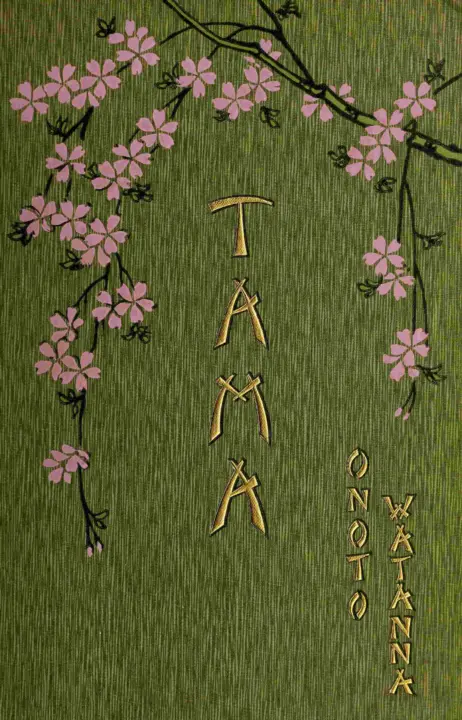
Onoto Watanna
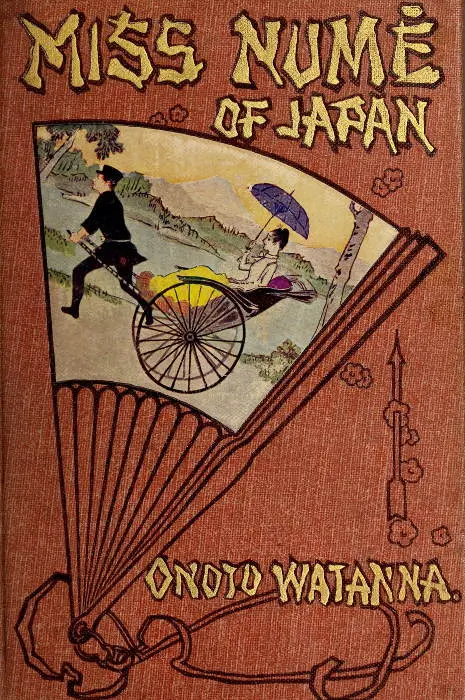
THE CLASSIC COLLECTION · 1899
"Miss Numè of Japan: A Japanese-American Romance" by Onoto Watanna is a novel written in the late 19th century. The story revolves around a rich tapestry of cultural intersections, primarily focusing on the lives of two central characters, Orito Takashima and Numè Watanabe, childhood friends from wealthy Japanese families whose fathers have arranged their marriage. However, Orito's educational pursuits lead him to America, creating a backdrop of longing and cultural exploration as both characters navigate their personal desires against the expectations placed upon them by society and family. The opening of the novel introduces Orito and Numè's childhood bond, established through their fathers' ambitions. At just ten years old, Numè's carefree joy contrasts sharply with Orito's impending departure to study in America, which is proposed as a means to secure a brighter future. This sets the stage for deep emotional undercurrents, particularly in Numè, who reacts defiantly against the notion of Orito's absence. The narrative then shifts to present interactions with different characters onboard a steamer heading to Japan, including the spirited American girl Cleo Ballard, hinting at future romantic entanglements and cultural misunderstandings. The beginning effectively establishes the central themes of love, ambition, and the tension between tradition and modernity that will drive the plot forward.
Introduction adapted from the source catalogue; source summaries may be automatically generated.
Free to read · English · 46,650 words · No account needed
MAKE TIME FOR A GOOD BOOK
On by default. Untick to stop anonymous reading totals. Each page counts after 10 seconds in view. How this works.
Anonymous counting is on unless you have switched it off.
The same pique that always irritated him so was in her voice now. It was, he told himself, the reminder to him of his bondage; for long ere this the man had admitted to himself that he did not love her. He was too staunch by nature, however, knowing her love for him, to break with her. He rose stiffly from his seat beside Numè, his face rather flushed.
"Certainly," he said, coldly, and pronounced the two girls' names.
Instinctively the woman nature in Numè scented a rival--possibly an enemy. She wished the American gentleman would sit down again. She could not understand why he should stand just because the beautiful shining American lady had wanted to know her. The American girl's partner tapped her lightly on the shoulder, reminding her of the dance, and once more she glided away, leaving a vague unrest behind.
"Is the beautiful Americazan lady your betrothed?"
The man started, though he evaded the question.
"What makes you ask that?"
"All of us have betrothed," the girl said, vaguely. "See, I will show you my betrothed. He stands over there now--talking to the same pretty Americazan lady."
"Takashima!" said Sinclair.
"Ess," the girl answered, happily.
Takashima was talking very seriously to Cleo Ballard. There was an impatient, almost pettish, look on her face. She seemed anxious to get away from him. Sinclair saw her make a motion to Mrs. Davis, and in some way the two women managed to get rid of the Japanese. They stood talking for a moment together, and Sinclair saw them look over in his direction. He noted Cleo's movements almost mechanically, his mind being more absorbed in what Numè had told him about her betrothal to Takashima.
"When does the wedding take place?" he asked, abruptly.
"Oh! I not know. We--Orito and me--do not like much to hurry, the fadders make great haste," she said.
Sinclair looked down at her thoughtfully, studying her with a strange
pang at his heart.
"So you are Takashima's little sweetheart," he said, slowly. "He used to tell us about you in America. He said you were the prettiest thing on earth, and the boys didn't believe him, of course, but, after all--he spoke only the truth."
Again the girl smiled.
"When I was liddle, liddle girl," she said, "Orito carry me high way up on his shoulder. Now I grow big and polite, and he is that far away to me, and I thing' we are strangers."
The man was silent. "But I am vaery happy," she continued, "because some day I will be altogether with Orito, then we will be much luf for each other again."
Your reading position is saved on this browser. Take it to another device with a library code. Reading pages adapt to text, rather than matching a printed edition.
Onoto Watanna
Onoto Watanna
Onoto Watanna
Onoto Watanna
BEHIND THE BOOK
This eBook is for the use of anyone anywhere in the United States and most other parts of the world at no cost and with almost no restrictions whatsoever. You may copy it, give it away or re-use it under the terms of the Project Gutenberg License included with this eBook or online at www.gutenberg.org. If you are not located in the United States, you will have to check the laws of the country where you are located before using this eBook. Read the source licence.
The original source file, including credits and licence, is retained by this library. Request an original-format copy at no charge. Please include the book title and Project Gutenberg identifier #58305.
KEEP YOUR CURIOSITY GOING
Coulson Kernahan

Maurice Baring
Frances Wright
Cécile Tormay

Frederic Jesup Stimson

W. H. P. (William Henry Pope) Jarvis