
Piccino, and other child stories
Frances Hodgson Burnett

THE CLASSIC COLLECTION · 1878
"Miss Crespigny" by Frances Hodgson Burnett is a novel written in the late 19th century. The story revolves around the enigmatic Lisbeth Crespigny, a young woman with a complex personality and a tumultuous past, navigating relationships and societal expectations in her quest for independence and self-discovery. The book introduces her interactions with figures such as her patroness, Mrs. Despard, and Hector Anstruthers, who is linked to her history through a former engagement that she now dismisses. At the start of the story, we meet Lisbeth as she expresses a sense of restlessness and dissatisfaction with social gatherings, showcasing her self-aware and somewhat rebellious nature. She has recently left her sheltered life with her aunts and is now living with Mrs. Despard. The narrative captures her sharp wit and striking beauty, hints at her emotional struggles, and sets the stage for her encounters with Anstruthers, who has matured since their last meeting. Lisbeth's conflicting feelings about her past, her self-image, and her influence over those around her are explored as she interacts with various characters and prepares for potential confrontations with her former life.
Introduction adapted from the source catalogue; source summaries may be automatically generated.
Free to read · English · 38,158 words · No account needed
MAKE TIME FOR A GOOD BOOK
On by default. Untick to stop anonymous reading totals. Each page counts after 10 seconds in view. How this works.
Anonymous counting is on unless you have switched it off.
“Georgie, my dear,” he said, his voice quite trembling, “I am going to ask you for that great gift, of which I am so unworthy.”
What need that he should say another word? She knew quite well, then, what he meant, and why it was that he had not wanted Lisbeth. And, ready as she usually was with her blushes, she did not blush at all. She even lost all her bright color at once, and confronted him with a face quite pale and altered.
“You may go on, Hector,” she said; “I will listen.”
So he broke out hurriedly and desperately, and poured forth his appeal.
“I don’t know how I dare ask so much,” he said. “I don’t know how I dare speak at all. You do not understand what my life has been. God forbid that you should! But what is left of it is not worthy of you, Georgie--the sweetest, purest woman that God ever made. And yet I think it is because I honor you so much, that I dare to throw myself on your mercy. I want to be a better man, my dear, and--and--will you help me? You see what I am asking you for, Georgie?” And he bent his pale face over her hand, kissing it as some sad penitent might kiss a saint’s.
A strange love-making, indeed! The girl gave a little sob. Yes, actually, a little sob. But she let him hold her hand, just as she had let him hold it, that day before. She had put her budding love aside, and outlived it bravely; but there was a pang in this, nevertheless, and she could not help but feel it. It would be over in a moment, but it stung sharply, for the instant.
“Yes, Hector, I see,” she answered, almost directly. “You are asking me if I will marry you.”
“Yes, my dear.” And he kissed her hand again.
Then there was a silence, for a little while; and he waited, wondering and feeling, God knows what strange hope, or fear, at heart. At length, however, another fair, small hand was laid softly on his, causing him to glance up, questioningly.
“Is that the answer?” he ventured, with a new throb of the heart.
But she shook her head, smiling a sweet, half-sad smile.
“It is not that answer,” she said, “but it is an answer in its way. It means that I am going to speak to you, from my heart.”
“I think you always do that,” he said, unsteadily.
“Yes, always; but now, more than ever, I must be very true to you, indeed, to-day, because--because you have made a mistake, Hector.”
Your reading position is saved on this browser. Take it to another device with a library code. Reading pages adapt to text, rather than matching a printed edition.
Frances Hodgson Burnett

Frances Hodgson Burnett

Frances Hodgson Burnett
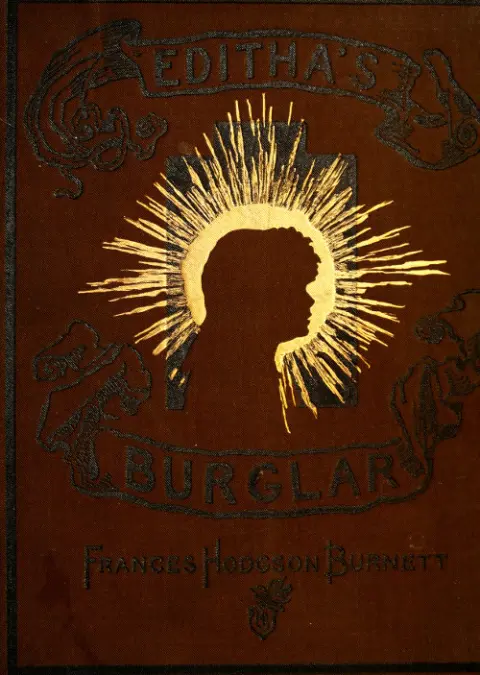
Frances Hodgson Burnett
BEHIND THE BOOK
This eBook is for the use of anyone anywhere in the United States and most other parts of the world at no cost and with almost no restrictions whatsoever. You may copy it, give it away or re-use it under the terms of the Project Gutenberg License included with this eBook or online at www.gutenberg.org. If you are not located in the United States, you will have to check the laws of the country where you are located before using this eBook. Read the source licence.
The original source file, including credits and licence, is retained by this library. Request an original-format copy at no charge. Please include the book title and Project Gutenberg identifier #57099.
KEEP YOUR CURIOSITY GOING
Coulson Kernahan

Maurice Baring
Frances Wright
Cécile Tormay

Frederic Jesup Stimson

W. H. P. (William Henry Pope) Jarvis