THE CLASSIC COLLECTION✦An outlaw’s diary: the CommuneCLASSIC FREE BOOKS
An outlaw’s diary: the Commune
Cécile Tormay
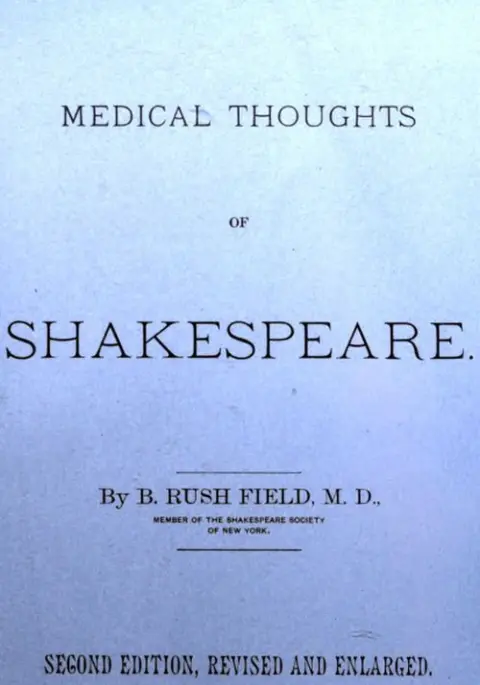
THE CLASSIC COLLECTION · 1884
"Medical Thoughts of Shakespeare" by Benjamin Rush Field is a scholarly publication written in the late 19th century. The work explores the intersection of medicine and the literary genius of Shakespeare, analyzing various medical references and characters within his plays. It aims to highlight Shakespeare's understanding of medical practices and terminology through various citations from his works, providing insights into the medical knowledge of his time. At the start of the text, the author introduces the revised second edition, noting the expansion of content and the addition of new topics related to medicine, surgery, and pharmacology. The opening includes a preface that acknowledges the book's reception and outlines the chapters to follow, suggesting an organized analytical approach. Field begins discussing Shakespeare's portrayal of physicians in his plays and quotes lines showcasing the playwright’s grasp of medical concepts, setting the stage for a detailed investigation into Shakespeare’s medical insights throughout the ensuing chapters.
Introduction adapted from the source catalogue; source summaries may be automatically generated.
Free to read · English · 25,133 words · No account needed
MAKE TIME FOR A GOOD BOOK
On by default. Untick to stop anonymous reading totals. Each page counts after 10 seconds in view. How this works.
Anonymous counting is on unless you have switched it off.
War. Be patient, princes; you do know, these fits Are with his highness very ordinary. Stand from him, give him air; he’ll straight be well. Clar. No, no; he can not long hold out these pangs: The incessant care and labour of his mind Hath wrought the mure, that should confine it in, So thin, that life looks through, and will break out. * * * * * P. Humph. This apoplexy will certain be his end. Henry IV—2d, Act IV., Sc. IV.
Peace is a very apoplexy, lethargy; mulled, deaf, sleepy, insensible. Coriolanus, Act IV., Sc. V.
Dick. Why dost thou quiver, man? Say. The palsy and not fear provokes me. Cade. Nay, he nods at us, as who should say, I’ll be even with you. Henry VI—2d, Act IV., Sc. VII.
With a palsy-fumbling on his gorget, Shake in and out the rivet. Troilus and Cressida, Act I., Sc. III.
How quickly should this arm of mine, Now prisoner to the palsy, chastise thee. Richard II, Act II., Sc. III.
Flat on the ground and still as any stone, A very corpse, save yielding forth a breath. Sackville.
How concisely he describes epilepsy, giving the most prominent symptoms.
Casca. He fell down in the market-place, and foamed at mouth, and was speechless. Bru. ’Tis very like,—he has the falling sickness. Casca. * * * * * When he came to himself again, he said, If he had done or said anything amiss, he desired their worships to think it was his infirmity. Julius Cæsar, Act I., Sc. II.
Julius Cæsar was the only epileptic among his characters: Othello is spoken of as being one, but this is merely Iago’s lie to Cassio, which is clearly shown in Othello’s conversation after the trance, it being a continuation of the former subject, which is never the case in epilepsy.
Iago. My lord is fall’n into an epilepsy: This is his second fit; he had one yesterday. Cas. Rub him about the temples. Iago. No, forbear; The lethargy must have his quiet course; If not, he foams at mouth, and by and by Breaks out to savage madness. Act IV., Sc. I.
A plague upon your epileptic visage! King Lear, Act. II., Sc. II.
He takes some notice of the other affections classed under nervous
diseases.
Which of your hips has the most profound sciatica? Measure for Measure, Act I., Sc. II.
Thou cold sciatica,
Cripple our Senators, that their limbs may halt
As lamely as their manners!
Timon of Athens, Act IV., Sc. I.
Lord, how my head aches! what a head have I! It beats as it would fall in twenty pieces. Romeo and Juliet, Act II., Sc. V.
Your reading position is saved on this browser. Take it to another device with a library code. Reading pages adapt to text, rather than matching a printed edition.
BEHIND THE BOOK
This eBook is for the use of anyone anywhere in the United States and most other parts of the world at no cost and with almost no restrictions whatsoever. You may copy it, give it away or re-use it under the terms of the Project Gutenberg License included with this eBook or online at www.gutenberg.org. If you are not located in the United States, you will have to check the laws of the country where you are located before using this eBook. Read the source licence.
The original source file, including credits and licence, is retained by this library. Request an original-format copy at no charge. Please include the book title and Project Gutenberg identifier #61366.
KEEP YOUR CURIOSITY GOING
Cécile Tormay

Moritz Busch
John L. Ransom
Frances Wright
Cécile Tormay

Mabel Potter Daggett