THE CLASSIC COLLECTION✦An outlaw’s diary: the CommuneCLASSIC FREE BOOKS
An outlaw’s diary: the Commune
Cécile Tormay
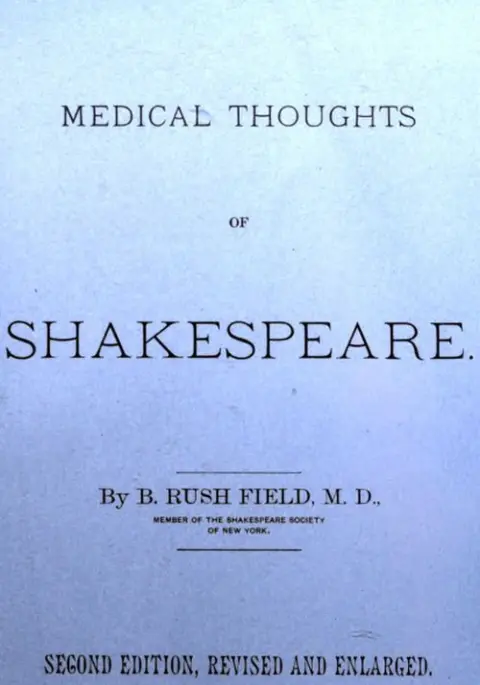
THE CLASSIC COLLECTION · 1884
"Medical Thoughts of Shakespeare" by Benjamin Rush Field is a scholarly publication written in the late 19th century. The work explores the intersection of medicine and the literary genius of Shakespeare, analyzing various medical references and characters within his plays. It aims to highlight Shakespeare's understanding of medical practices and terminology through various citations from his works, providing insights into the medical knowledge of his time. At the start of the text, the author introduces the revised second edition, noting the expansion of content and the addition of new topics related to medicine, surgery, and pharmacology. The opening includes a preface that acknowledges the book's reception and outlines the chapters to follow, suggesting an organized analytical approach. Field begins discussing Shakespeare's portrayal of physicians in his plays and quotes lines showcasing the playwright’s grasp of medical concepts, setting the stage for a detailed investigation into Shakespeare’s medical insights throughout the ensuing chapters.
Introduction adapted from the source catalogue; source summaries may be automatically generated.
Free to read · English · 25,133 words · No account needed
MAKE TIME FOR A GOOD BOOK
On by default. Untick to stop anonymous reading totals. Each page counts after 10 seconds in view. How this works.
Anonymous counting is on unless you have switched it off.
Fal. Why, sirs, I am almost out at heels. Pist. Why, then, let kibes ensue. Merry Wives, Act I., Sc. III.
The age is grown so picked, that the toe of the peasant comes so near the heel of the courtier, he galls his kibe. Hamlet, Act V., Sc. I.
If it were a kibe
’Twould put me to my slipper.
Tempest, Act II., Sc. I.
If a man’s brains were in ’s heels, were ’t not in danger of kibes? King Lear, Act I., Sc. V.
Does your worship mean to geld and splay all the youth of the city? Measure for Measure, Act II., Sc. I.
Thou hast drawn my shoulder out of joint. Henry IV—2d, Act V., Sc. IV.
Were ’t my fitness To let these hands obey my blood, They are apt enough to dislocate and tear Thy flesh and bones:—howe’er thou art a fiend, A woman’s shape doth shield thee. King Lear, Act IV., Sc. II.
Charles in a moment threw him, and broke three of his ribs, * * * * there is little hope of life in him. As You Like It, Act I., Sc. II.
It is the first time that ever I heard breaking of ribs was sport for ladies. As You Like It, Act I., Sc. II.
On her left breast
A mole cinque-spotted, like the crimson drops
I’ the bottom of a cowslip.
Cymbeline, Act II., Sc. II.
Under her breast
(Worthy the pressing) lies a mole, right proud
Of that most delicate lodging.
Cymbeline, Act II., Sc. IV.
If thou wert * * * *
Lame, foolish, crooked, swart, prodigious,
Patch’d with foul moles and eye offending marks,
I would not care. * * *
King John, Act III., Sc. I.
In case of a recent burn it was the custom to place the part near the fire, thus upholding the old homœopathic doctrine that what hurts will cure.
And falsehood falsehood cures; as fire cools fire Within the scorched veins of one new burn’d. King John, Act III., Sc. I.
One fire drives out one fire; one nail, one nail; Rights by rights founder, strength by strengths do fail. Coriolanus, Act IV., Sc. VII.
One fire burns out another’s burning, One pain is lessen’d by another’s anguish. Romeo and Juliet, Act I., Sc. II.
Even as one heat another heat expels, Or as one nail by strength drives out another, So the remembrance of my former love Is by a newer object quite forgotten. Two Gentlemen of Verona, Act II., Sc. IV.
I must not break my back to heal his finger. Timon of Athens, Act II., Sc. I.
Your reading position is saved on this browser. Take it to another device with a library code. Reading pages adapt to text, rather than matching a printed edition.
BEHIND THE BOOK
This eBook is for the use of anyone anywhere in the United States and most other parts of the world at no cost and with almost no restrictions whatsoever. You may copy it, give it away or re-use it under the terms of the Project Gutenberg License included with this eBook or online at www.gutenberg.org. If you are not located in the United States, you will have to check the laws of the country where you are located before using this eBook. Read the source licence.
The original source file, including credits and licence, is retained by this library. Request an original-format copy at no charge. Please include the book title and Project Gutenberg identifier #61366.
KEEP YOUR CURIOSITY GOING
Cécile Tormay

Moritz Busch
John L. Ransom
Frances Wright
Cécile Tormay

Mabel Potter Daggett