THE CLASSIC COLLECTION✦An outlaw’s diary: the CommuneCLASSIC FREE BOOKS
An outlaw’s diary: the Commune
Cécile Tormay
THE CLASSIC COLLECTION · 1884
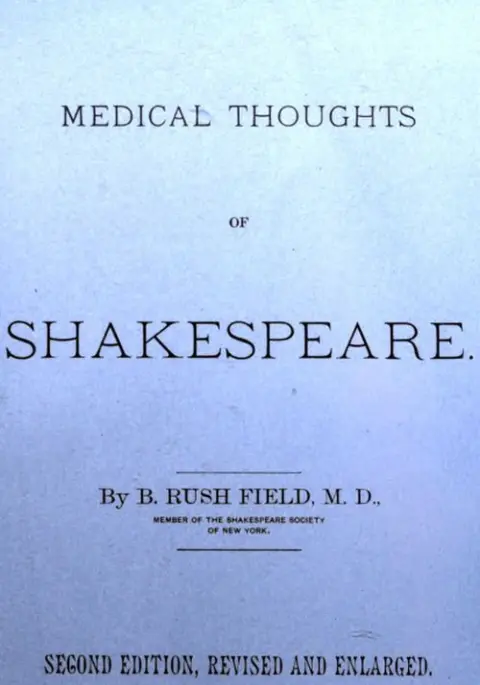
"Medical Thoughts of Shakespeare" by Benjamin Rush Field is a scholarly publication written in the late 19th century. The work explores the intersection of medicine and the literary genius of Shakespeare, analyzing various medical references and characters within his plays. It aims to highlight Shakespeare's understanding of medical practices and terminology through various citations from his works, providing insights into the medical knowledge of his time. At the start of the text, the author introduces the revised second edition, noting the expansion of content and the addition of new topics related to medicine, surgery, and pharmacology. The opening includes a preface that acknowledges the book's reception and outlines the chapters to follow, suggesting an organized analytical approach. Field begins discussing Shakespeare's portrayal of physicians in his plays and quotes lines showcasing the playwright’s grasp of medical concepts, setting the stage for a detailed investigation into Shakespeare’s medical insights throughout the ensuing chapters.
Introduction adapted from the source catalogue; source summaries may be automatically generated.
Free to read · English · 25,133 words · No account needed
MAKE TIME FOR A GOOD BOOK
On by default. Untick to stop anonymous reading totals. Each page counts after 10 seconds in view. How this works.
Anonymous counting is on unless you have switched it off.
King Macb. Cure her of that:
Canst thou not minister to a mind diseas’d;
Pluck from the memory a rooted sorrow;
Raze out the written troubles of the brain;
And, with some sweet oblivious antidote,
Cleanse the stuff’d bosom of that perilous stuff
Which weighs upon the heart?
Doct. Therein the patient
Must minister to himself.
King Macb. Throw physic to the dogs,
I’ll none of it.
Macbeth, Act V., Sc. III.
In King Lear also appears a physician worthy of the name. The last scene of the fourth act shows his excellent skill in treating Lear’s case. Dr. Bucknill, of England, in writing of it twenty-five years ago, says: “We confess, almost with shame, that although near two centuries and a half have passed since Shakespeare thus wrote we have very little to add to his method of treating the insane as thus pointed out.”
Dr. Butts, in Henry VIII, and Dr. Caius, in Merry Wives, play rather unimportant parts. He compliments the profession by putting this speech in the mouth of a madman:
Timon to Banditti:
Trust not the physician;
His antidotes are poison, and he slays
More than you rob.
Timon of Athens, Act IV., Sc. III.
And bringing this one from the lips of an ignorant prostitute:
Nay, will you cast away your child on a fool and a physician? Merry Wives, Act III., Sc. IV.
Reference to the physician is frequently made throughout his works.
Cor. The queen is dead. Cym. Whom worse than a physician Would this report become. But I consider, By med’cine life may be prolong’d, yet death Will seize the doctor too. Cymbeline, Act V., Sc. V.
* * * * doctor-like, controlling skill. Sonnets, LXVI.
We * * * may not be so credulous of cure, When our most learned doctors leave us. All’s Well, Act II., Sc. I.
Kill thy physician, and the fee bestow
Upon the foul disease.
King Lear, Act I., Sc. I.
Thou speak’st like a physician, Helicanus; That minister’st a potion unto me, That thou would’st tremble to receive thyself. Pericles, Act I., Sc. II.
The patient dies while the physician sleeps. Lucrece.
The physician
Angry that his prescriptions are not kept
Hath left me.
Sonnets, CXLVII.
Testy sick men, when their deaths be near, No news but health from their physicians know. Sonnets, CXL.
His friends, like physicians, thrice give him over. Timon of Athens, Act III., Sc. III.
He is the wiser man, master doctor; he is a curer of souls, and you a curer of bodies. Merry Wives, Act II., Sc. III.
Your reading position is saved on this browser. Take it to another device with a library code. Reading pages adapt to text, rather than matching a printed edition.
BEHIND THE BOOK
This eBook is for the use of anyone anywhere in the United States and most other parts of the world at no cost and with almost no restrictions whatsoever. You may copy it, give it away or re-use it under the terms of the Project Gutenberg License included with this eBook or online at www.gutenberg.org. If you are not located in the United States, you will have to check the laws of the country where you are located before using this eBook. Read the source licence.
The original source file, including credits and licence, is retained by this library. Request an original-format copy at no charge. Please include the book title and Project Gutenberg identifier #61366.
KEEP YOUR CURIOSITY GOING
Cécile Tormay

Moritz Busch
John L. Ransom
Frances Wright
Cécile Tormay

Mabel Potter Daggett