THE CLASSIC COLLECTION✦An outlaw’s diary: the CommuneCLASSIC FREE BOOKS
An outlaw’s diary: the Commune
Cécile Tormay
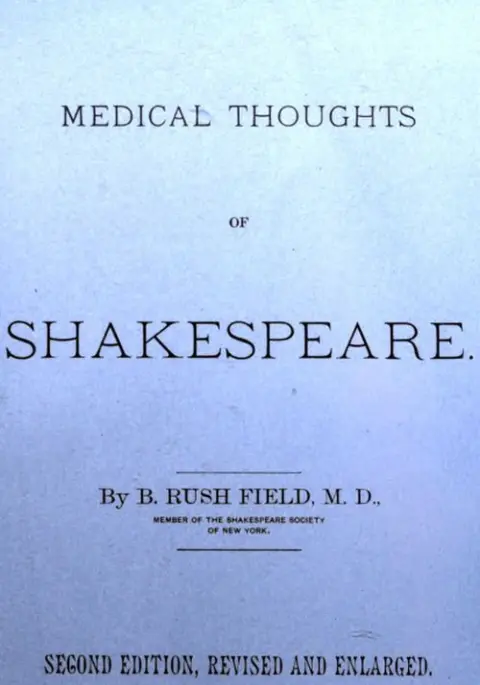
THE CLASSIC COLLECTION · 1884
"Medical Thoughts of Shakespeare" by Benjamin Rush Field is a scholarly publication written in the late 19th century. The work explores the intersection of medicine and the literary genius of Shakespeare, analyzing various medical references and characters within his plays. It aims to highlight Shakespeare's understanding of medical practices and terminology through various citations from his works, providing insights into the medical knowledge of his time. At the start of the text, the author introduces the revised second edition, noting the expansion of content and the addition of new topics related to medicine, surgery, and pharmacology. The opening includes a preface that acknowledges the book's reception and outlines the chapters to follow, suggesting an organized analytical approach. Field begins discussing Shakespeare's portrayal of physicians in his plays and quotes lines showcasing the playwright’s grasp of medical concepts, setting the stage for a detailed investigation into Shakespeare’s medical insights throughout the ensuing chapters.
Introduction adapted from the source catalogue; source summaries may be automatically generated.
Free to read · English · 25,133 words · No account needed
MAKE TIME FOR A GOOD BOOK
On by default. Untick to stop anonymous reading totals. Each page counts after 10 seconds in view. How this works.
Anonymous counting is on unless you have switched it off.
So much was our love,
We would not understand what was most fit;
But, like the owner of a foul disease,
To keep it from divulging, let it feed
Even on the pith of life.
Hamlet, Act IV., Sc. I.
Diseases desperate grown,
By desperate appliance are reliev’d
Or not at all.
Hamlet, Act IV., Sc. III.
His dissolute disease will scarce obey this medicine. Merry Wives, Act III., Sc. III.
O vanity of sickness! fierce extremes, In their continuance, will not feel themselves. Death, having prey’d upon the outward parts, Leaves them insensible. King John, Act V., Sc. VII.
What a catalogue have we here:
Now the rotten diseases of the south, the guts-griping, ruptures, catarrhs, loads o’ gravel i’ the back, lethargies, cold palsies, raw eyes, dirt-rotten livers, wheezing lungs, bladders full of imposthume, sciaticas, lime-kilns i’ the palm, incurable bone-ache, and the rivelled fee-simple of tetter, take and take again such preposterous discoveries! Troilus and Cressida, Act V., Sc. I.
As burning fevers, agues pale and faint, Life-poisoning pestilence, and frenzies wood, The marrow-eating sickness, whose attaint Disorder breeds by heating of the blood: Surfeits, imposthumes, grief and damn’d despair, Swear nature’s death for framing thee so fair. Venus and Adonis.
How nicely does he describe the decay of man, the second childhood, the wasting away of the organism:
The sixth age shifts Into the lean and slipper’d pantaloon, With spectacles on nose and pouch on side; His youthful hose, well sav’d, a world too wide For his shrunk shank; and his big manly voice Turning again towards childish treble, pipes And whistles in his sound. Last scene of all, That ends this strange eventful history, Is second childishness, and mere oblivion, Sans teeth, sans eyes, sans taste, sans everything. As You Like It, Act. II., Sc. VII.
Again:
Do you set down your name in the scroll of youth, that are written down old with all the characters of age? Have you not a moist eye? a dry hand? a yellow cheek? a white beard? a decreasing leg? an increasing belly? Is not your voice broken? your wind short? your chin double? your wit single? and every part of you blasted with antiquity; and will you yet call yourself young? Henry IV—2d, Act I., Sc. II.
The satirical rogue says here, that old men have grey beards; that their faces are wrinkled; their eyes purging thick amber and plum-tree gum; and that they have a plentiful lack of wit, together with most weak hams. Hamlet, Act II., Sc. II.
Your reading position is saved on this browser. Take it to another device with a library code. Reading pages adapt to text, rather than matching a printed edition.
BEHIND THE BOOK
This eBook is for the use of anyone anywhere in the United States and most other parts of the world at no cost and with almost no restrictions whatsoever. You may copy it, give it away or re-use it under the terms of the Project Gutenberg License included with this eBook or online at www.gutenberg.org. If you are not located in the United States, you will have to check the laws of the country where you are located before using this eBook. Read the source licence.
The original source file, including credits and licence, is retained by this library. Request an original-format copy at no charge. Please include the book title and Project Gutenberg identifier #61366.
KEEP YOUR CURIOSITY GOING
Cécile Tormay

Moritz Busch
John L. Ransom
Frances Wright
Cécile Tormay

Mabel Potter Daggett