THE CLASSIC COLLECTION✦An outlaw’s diary: the CommuneCLASSIC FREE BOOKS
An outlaw’s diary: the Commune
Cécile Tormay
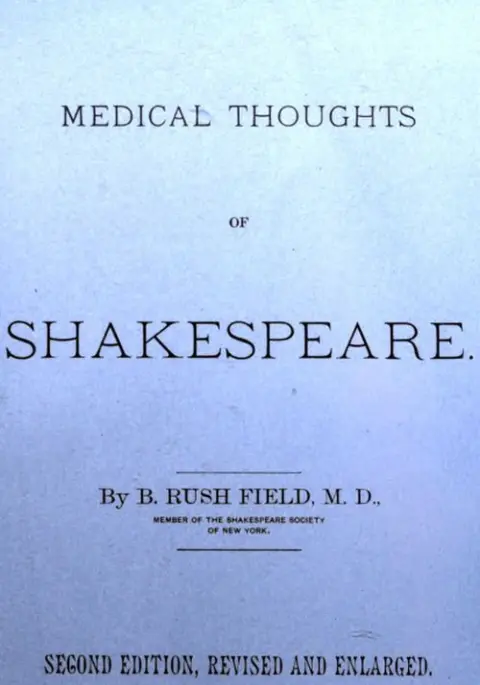
THE CLASSIC COLLECTION · 1884
"Medical Thoughts of Shakespeare" by Benjamin Rush Field is a scholarly publication written in the late 19th century. The work explores the intersection of medicine and the literary genius of Shakespeare, analyzing various medical references and characters within his plays. It aims to highlight Shakespeare's understanding of medical practices and terminology through various citations from his works, providing insights into the medical knowledge of his time. At the start of the text, the author introduces the revised second edition, noting the expansion of content and the addition of new topics related to medicine, surgery, and pharmacology. The opening includes a preface that acknowledges the book's reception and outlines the chapters to follow, suggesting an organized analytical approach. Field begins discussing Shakespeare's portrayal of physicians in his plays and quotes lines showcasing the playwright’s grasp of medical concepts, setting the stage for a detailed investigation into Shakespeare’s medical insights throughout the ensuing chapters.
Introduction adapted from the source catalogue; source summaries may be automatically generated.
Free to read · English · 25,133 words · No account needed
MAKE TIME FOR A GOOD BOOK
On by default. Untick to stop anonymous reading totals. Each page counts after 10 seconds in view. How this works.
Anonymous counting is on unless you have switched it off.
An old superstition regarding toothache was that it was caused by a small worm, formed like an eel, which bored a hole into the tooth, and various methods were employed to remove it. Dyer notes the fact that John of Gatisden, one of the oldest medical authorities, attributed decay of the teeth to this cause.
Don Pedro. What! sigh for the toothache? Leon. Where is but a humour or a worm? Much Ado, Act III., Sc. II.
He that sleeps feels not the toothache. Cymbeline, Act V., Sc. IV.
Being troubled with a raging tooth,
I could not sleep.
Othello, Act III., Sc. III.
There was never yet philosopher, That could endure the toothache patiently. Much Ado, Act V., Sc. I.
She shall be buried with her face upwards; Yet this is no charm for the toothache. Much Ado, Act III., Sc. II.
Bene. I have the toothache.
D. Pedro. Draw it.
Much Ado, Act III., Sc. II.
Things sweet to taste prove in digestion sour. Richard II., Act I., Sc. III.
A surfeit of the sweetest things The deepest loathing to the stomach brings. Midsummer Night’s Dream, Act II., Sc. II.
Like a sickness, did I loath this food: But, as in health, come to my natural taste, Now do I wish it, love it, long for it. * * Midsummer Night’s Dream, Act IV., Sc. I.
She gallops night by night. * * * * * * * O’er ladies lips, who straight on kisses dream; Which oft the angry Mab with blisters plagues, Because their breaths with sweetmeats tainted are. Romeo and Juliet, Act I., Sc. IV.
Fat paunches have lean pates, and dainty bits Make rich the ribs, but bankrupt quite the wits. Love’s Labour’s Lost, Act I., Sc. I.
Say, can you fast? Your stomachs are too young; And abstinence engenders maladies. Love’s Labour’s Lost, Act IV., Sc. III.
Unquiet meals make ill digestions. Comedy of Errors, Act V., Sc. I.
A sick man’s appetite, who desires most that Which would increase his evil. Coriolanus, Act I., Sc. I.
Do not turn me about; my stomach is not constant. Tempest, Act II., Sc. II.
For, ever and anon comes indigestion. Byron—Don Juan, Canto XI., Verse III.
When a roast and a ragout, And fish and soup, by some side-dishes back’d, Can give us either pain or pleasure, who Would pique himself on intellects, whose use Depends so much upon the gastric juice? Byron—Don Juan, Canto V., Verse XXXII.
Your reading position is saved on this browser. Take it to another device with a library code. Reading pages adapt to text, rather than matching a printed edition.
BEHIND THE BOOK
This eBook is for the use of anyone anywhere in the United States and most other parts of the world at no cost and with almost no restrictions whatsoever. You may copy it, give it away or re-use it under the terms of the Project Gutenberg License included with this eBook or online at www.gutenberg.org. If you are not located in the United States, you will have to check the laws of the country where you are located before using this eBook. Read the source licence.
The original source file, including credits and licence, is retained by this library. Request an original-format copy at no charge. Please include the book title and Project Gutenberg identifier #61366.
KEEP YOUR CURIOSITY GOING
Cécile Tormay

Moritz Busch
John L. Ransom
Frances Wright
Cécile Tormay

Mabel Potter Daggett