THE CLASSIC COLLECTION✦An outlaw’s diary: the CommuneCLASSIC FREE BOOKS
An outlaw’s diary: the Commune
Cécile Tormay
THE CLASSIC COLLECTION · 1920
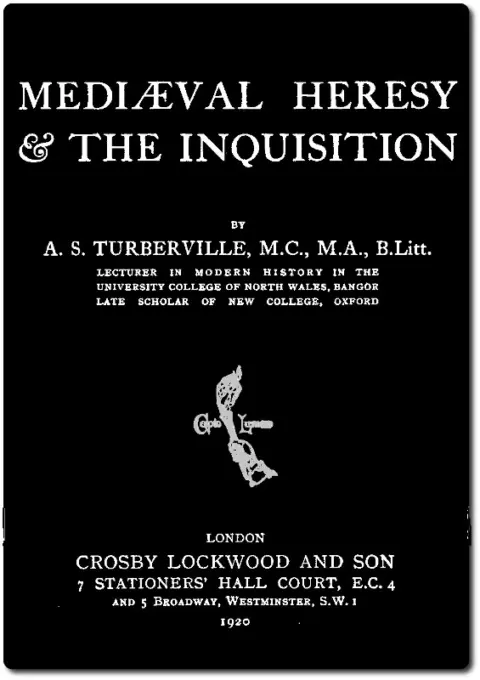
"Mediæval Heresy & the Inquisition" by Arthur Stanley Turberville is a historical account written in the early 20th century. The work explores the complex relationship between various heretical movements that emerged in the Middle Ages and the Church's response to them through the Inquisition. With a focus primarily on the origins of heresy and the nature of ecclesiastical power, it seeks to provide insight into the doctrinal conflicts and social conditions that fueled these movements. The opening of the book sets the stage by describing the historical context of the Middle Ages, establishing a nuanced perspective on what is often referred to as the "Ages of Faith." Turberville asserts that this title does not reflect the whole truth, as various heresies arose from psychological, social, and intellectual tensions within society. He delves into the concept of the "Civitas Dei," emphasizing the intertwined relationship of church and state, and addresses the roots of heresy stemming from clerical abuses and public dissatisfaction. By laying this groundwork, the author suggests that the Inquisition's emergence was a societal response to the perceived threats posed by heretical teachings, highlighting the complexities of faith and authority during this turbulent period.
Introduction adapted from the source catalogue; source summaries may be automatically generated.
Free to read · English · 89,610 words · No account needed
MAKE TIME FOR A GOOD BOOK
On by default. Untick to stop anonymous reading totals. Each page counts after 10 seconds in view. How this works.
Anonymous counting is on unless you have switched it off.
[346] Lea, vol. ii. p. 236. Notably Honorius III in 1286, who, in consideration of the fidelity of the people of Tuscany, relieved them of the penalties of heresy, save in the case of the relapsed, so that the children of heretics could enjoy the property confiscated from their parents.
[347] Ibid., p. 251.
[348] Ludovico à Paramo attributes the tranquillity of Spain to the beneficent influence of the Inquisition, op. cit., p. 290.
[349] Llorente, vol. i, pp. 66-97.
[350] Mansi, vol. xxiii, pp. 553-8.
[351] See eulogy of Eymeric in Ludovico à Paramo, p. 110.
[352] See Lea, vol. ii, pp. 290-315. For Bohemia, see pp. 427-505.
[353] Practica, pp. 232-3, ‘Diligens ac fervens zelo veritatis fidei et salubris animarum ad detestationem et extirpationem heretice pravitatis.... Inquisitor sit constans: persistat inter pericula et adversa usque ad mortem, pro justitia fidei agonizans, ut non temerarie praesumat per audaciam que periculose precipiat.’ Cf. Eymeric, Directorium, p. 575, ‘Inquisitor debet esse conversatione honestus, prudentia circumspectus, constantia firmus, sacra doctrina fidei eminenter eruditus et virtutibus circumfultus.’ See also Frédéricq, Corpus, vol. i, Nos. 215, 243.
[354] Ibid., pp. 594, 602; Ludovico à Paramo, p. 106.
[355] Limborch, Historia Inquisitionis, p. 124, cap. ix;
Directorium, pp. 631-2.
[356] See Lea, vol. i, p. 379.
[357] See Vacandard, op. cit., p. 139.
[358] Douais, L’Inquisition, p. 246; De Cauzons, vol. ii, p. 134.
[359] Vacandard, p. 142; Lea, vol. i, pp. 388-9.
[360] In sentences the name of the bishop preceded that of the inquisitor. Bernard Gui, Practica, p. 93.
[361] Arnaldo Albertini, Tractatus de Agnoscendis Assertionibus Catholicis et haereticis, in F. Zilettus, op. cit., vol. xi, pt. ii, pp. 52 et seq.
[362] See Tanon, p. 218.
[363] Vacandard, p. 162.
[364] Simancas in Zilettus, vol. xi, pt. ii, pp. 96-7, 104, 122.
[365] Moeller, op. cit., p. 740. ‘The spirit of the inquisitors is another matter. There is room for distrust of their propensity to discover heresies everywhere. Their amour propre was engaged to discover it under the most puzzling appearances.’
[366] See J. à Royas, De Haereticis, in Zilettus, vol. xi, pt. ii, pp. 212-24 (passim); Albertini, op. cit., p. 53; Ludovico à Paramo, p. 544. See both Royas and Albertini passim on the general question of how to recognize a heretic, also Simancas in tit. xxxi.
[367] Simancas, p. 155.
[368] Eymeric, Directorium, p. 343. ‘Haeretici affirmativi dicti sunt, qui habent eorum quae sunt fidei, errorem in mente, et verbo vel facto ostendunt, se modis praedictis habere pertinaciam in voluntate.’—‘Negativi vero haeretici dicti sunt, qui coram judice fidei per testes legitimos de aliqua haeresi, vel errore, quos nolunt vel non possunt repellere, rite sive juste convicti sunt, sed non confessi, immo in negativa constanter perseverant; verbo fidem catholicam profitentur et detestantur etiam verbo haereticam pravitatem.’ Cf. p. 561.
Your reading position is saved on this browser. Take it to another device with a library code. Reading pages adapt to text, rather than matching a printed edition.
BEHIND THE BOOK
This eBook is for the use of anyone anywhere in the United States and most other parts of the world at no cost and with almost no restrictions whatsoever. You may copy it, give it away or re-use it under the terms of the Project Gutenberg License included with this eBook or online at www.gutenberg.org. If you are not located in the United States, you will have to check the laws of the country where you are located before using this eBook. Read the source licence.
The original source file, including credits and licence, is retained by this library. Request an original-format copy at no charge. Please include the book title and Project Gutenberg identifier #46149.
KEEP YOUR CURIOSITY GOING
Cécile Tormay

Moritz Busch
John L. Ransom
Frances Wright
Cécile Tormay

Mabel Potter Daggett