THE CLASSIC COLLECTION✦Hardscrabble; or, the fall of Chicago: a tale of Indian warfareCLASSIC FREE BOOKS
Hardscrabble; or, the fall of Chicago: a tale of Indian warfare
Major (John) Richardson
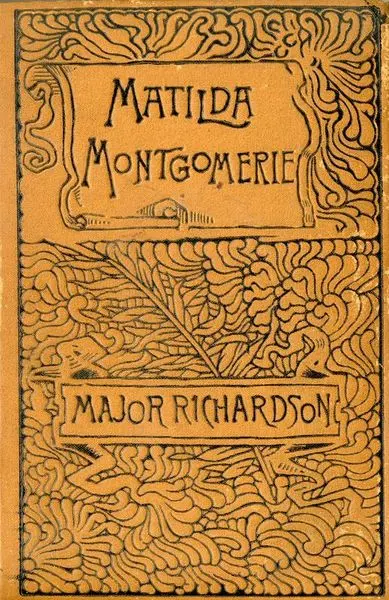
THE CLASSIC COLLECTION · 1851
"Matilda Montgomerie; Or, The Prophecy Fulfilled" by Major Richardson is a historical novel written in the late 19th century. This book serves as a sequel to the earlier work "Wacousta" and unfolds during the tumultuous period of the War of 1812 in America. The narrative centers around significant characters including Matilda and the revered Native American leader Tecumseh, exploring themes of conflict, loyalty, and cultural exchanges amidst war. At the start of the narrative, the author describes the picturesque setting of Amherstburg at the onset of the War of 1812, highlighting its serene beauty juxtaposed with the impending chaos of conflict. The atmosphere shifts when various factions—British officers, Native American warriors, and American forces—begin to gather, signaling a blend of excitement and tension as they anticipate military action. The arrival of Tecumseh, along with a contingent of Indigenous warriors, sets the stage for strategic alliances and conflicts that will unfold, while multiple layers of character dynamics begin to emerge in the backdrop of war preparations. This opening portion establishes the backdrop for a story steeped in historical fidelity and emotional complexity, suggesting a rich exploration of the characters' interwoven fates.
Introduction adapted from the source catalogue; source summaries may be automatically generated.
Free to read · English · 138,068 words · No account needed
MAKE TIME FOR A GOOD BOOK
On by default. Untick to stop anonymous reading totals. Each page counts after 10 seconds in view. How this works.
Anonymous counting is on unless you have switched it off.
"And it was there," continued the sailor, with the emphasis of strong emotion, "that, during my unfortunate absence from the death-bed of our yet surviving parent, you gave a pledge for both, that no action of our lives should reflect dishonor on his unsullied name."
"I did. Both in your name and in my own, I gave the pledge--well knowing that, in that, I merely anticipated your desire."
"Most assuredly; what then would be your sensations were you to know that I had violated that sacred obligation?"
"Deep, poignant, ceaseless regret, that my once noble and high-spirited brother should have been so lost to respect for his father's memory and for himself." This was uttered not without deep agitation.
"You are right, Henry," added Gerald, mournfully; "better, far better, is it to die than live on in the consciousness of having forfeited all claim to esteem."
The young soldier started as if a viper had stung him. "Gerald," he said, eagerly, "you have not dishonored yourself. Oh no--tell me, my brother, that you have not."
"No," was the cold, repulsive answer; "although my peace of mind is fled," he pursued, rather more mildly, "my honor, thank heaven, remains as pure as when you first pledged yourself for its preservation."
"Thanks, my brother, for that. But can it really be possible, that the mysterious condition attached to Miss Montgomerie's love involves the loss of honor?"
Gerald made no answer.
"And can you really be weak enough to entertain a passion for a woman, who would make the dishonoring of the fair fame of him she professes to love the fearful price at which her affection is to be purchased?"
Gerald seemed to wince at the word "weak," which was rather emphatically pronounced, and looked displeased at the concluding part of the sentence.
"I said not that the condition attached to her love," he remarked, with the piqued expression of a wounded vanity; "her affection is mine, I know, beyond her own power of control--the condition relates not to her heart, but to her hand."
"Alas, my poor infatuated brother. Blinding indeed must be the delusions of passion, when a nature so sensitive and so honorable shrinks not from such a connexion. My only surprise is, that, with such a perversion of judgment you have returned at all."
Your reading position is saved on this browser. Take it to another device with a library code. Reading pages adapt to text, rather than matching a printed edition.
Major (John) Richardson
Major (John) Richardson
Major (John) Richardson
Major (John) Richardson
BEHIND THE BOOK
This eBook is for the use of anyone anywhere in the United States and most other parts of the world at no cost and with almost no restrictions whatsoever. You may copy it, give it away or re-use it under the terms of the Project Gutenberg License included with this eBook or online at www.gutenberg.org. If you are not located in the United States, you will have to check the laws of the country where you are located before using this eBook. Read the source licence.
The original source file, including credits and licence, is retained by this library. Request an original-format copy at no charge. Please include the book title and Project Gutenberg identifier #39758.
KEEP YOUR CURIOSITY GOING
Cécile Tormay

Moritz Busch
Coulson Kernahan
John L. Ransom

Maurice Baring
Frances Wright