THE CLASSIC COLLECTION✦Hardscrabble; or, the fall of Chicago: a tale of Indian warfareCLASSIC FREE BOOKS
Hardscrabble; or, the fall of Chicago: a tale of Indian warfare
Major (John) Richardson
THE CLASSIC COLLECTION · 1851
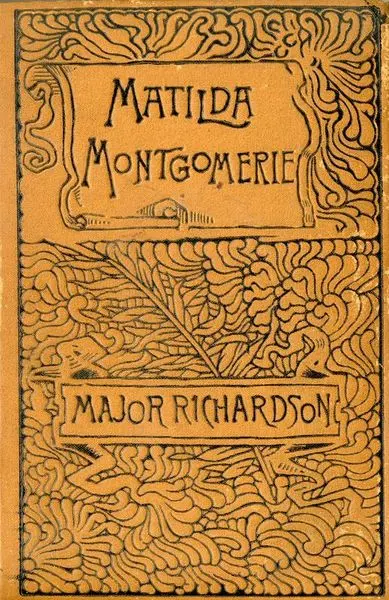
"Matilda Montgomerie; Or, The Prophecy Fulfilled" by Major Richardson is a historical novel written in the late 19th century. This book serves as a sequel to the earlier work "Wacousta" and unfolds during the tumultuous period of the War of 1812 in America. The narrative centers around significant characters including Matilda and the revered Native American leader Tecumseh, exploring themes of conflict, loyalty, and cultural exchanges amidst war. At the start of the narrative, the author describes the picturesque setting of Amherstburg at the onset of the War of 1812, highlighting its serene beauty juxtaposed with the impending chaos of conflict. The atmosphere shifts when various factions—British officers, Native American warriors, and American forces—begin to gather, signaling a blend of excitement and tension as they anticipate military action. The arrival of Tecumseh, along with a contingent of Indigenous warriors, sets the stage for strategic alliances and conflicts that will unfold, while multiple layers of character dynamics begin to emerge in the backdrop of war preparations. This opening portion establishes the backdrop for a story steeped in historical fidelity and emotional complexity, suggesting a rich exploration of the characters' interwoven fates.
Introduction adapted from the source catalogue; source summaries may be automatically generated.
Free to read · English · 138,068 words · No account needed
MAKE TIME FOR A GOOD BOOK
On by default. Untick to stop anonymous reading totals. Each page counts after 10 seconds in view. How this works.
Anonymous counting is on unless you have switched it off.
Nearly midway between Elliott's and Hartley's points, both of which are remarkable for the low and sandy nature of the soil, the land, raising gradually towards the centre, assumes a more healthy and arable aspect; and, on its highest elevation, stood a snug, well cultivated property, called Girty's farm. From this height, crowned on its extreme summit by a neat and commodious farm-house, the far reaching sands, forming the points above-named, are distinctly visible. Immediately in the rear, and commencing beyond the orchard which surrounded the house, stretched forestward, and to a considerable distance, a tract of rich and cultivated soil, separated into strips by zig-zag enclosures, and offering to the eye of the traveller, in appropriate season, the several species of American produce, such as Indian corn, buck wheat, &c., with here and there a few patches of indifferent tobacco. Thus far of the property, a more minute description of which is unimportant. The proprietors of this neat little place were a father and son, to the latter of whom was consigned, for reasons which will appear presently, the sole management of the farm. Of him we will merely say that, at the period of which we treat, he was a fine, strapping, dark curley-haired, white-teethed, red-lipped, broad-shouldered, and altogether comely and gentle tempered youth, of about twenty, who had, although unconsciously, monopolized the affections of almost every well favored maiden of his class, for miles around him--advantages of nature from which had resulted a union with one of the prettiest of the fair competitors for connubial happiness.
The father we may not dismiss so hastily. He was--but, before attempting the portraiture of his character, we will, in the best of our ability, sketch his person.
Let the reader fancy an old man of about sixty, possessed of that comfortable amptitude of person which is the result rather of a mind at peace with itself, and undisturbed by worldly care, than of any marked indulgence in indolent habits. Let him next invest this comfortable person in a sort of Oxford grey, coarse capote, or frock, of capacious size, tied closely round the waist with one of those-parti-colored worsted sashes, we have, on a former occasion described as peculiar to the bourgeois settlers of the country. Next, suffering the eye to descend on and admire the rotund and fleshy thigh, let it drop gradually to the stout and muscular legs, which he must invest in a pair of closely fitting leathern trowsers, the wide-seamed edges of which are slit into innumerable small strips, much after the fashion of the American Indian. When he has completed the survey of the lower extremities, to which he must not fail to subjoin a foot of proportionate dimensions, tightly moccasined, and, moreover, furnished with a pair of old English hunting spurs, the reader must then examine the head with which this heavy piece of animated machinery is surmounted. From beneath a coarse felt hat, garnished with an inch-wide band or ribbon, let him imagine he sees the yet vigorous grey hair, descending over a forehead not altogether wanting in a certain dignity of expression, and terminating in a beetling brow, silvered also with the frost of years, and shadowing a sharp, grey, intelligent eye, the vivacity of whose expression denotes its possessor to be far in advance, in spirit, even of his still active and powerful frame. With these must be connected a snub nose--a double chin, adorned with grizzly honors, which are borne, like the fleece of the lamb, only occasionally to the shears of the shearer--and a small, and not unhandsome, mouth, at certain periods pursed into an expression of irresistible humor, but more frequently expressing a sense of lofty independence. The grisly neck, little more or less bared, as the season may demand--a kerchief loosely tied around the collar of a checkered shirt--and a knotted cudgel in his hand--and we think our sketch of Simon Girty is complete.
Your reading position is saved on this browser. Take it to another device with a library code. Reading pages adapt to text, rather than matching a printed edition.
Major (John) Richardson
Major (John) Richardson
Major (John) Richardson
Major (John) Richardson
BEHIND THE BOOK
This eBook is for the use of anyone anywhere in the United States and most other parts of the world at no cost and with almost no restrictions whatsoever. You may copy it, give it away or re-use it under the terms of the Project Gutenberg License included with this eBook or online at www.gutenberg.org. If you are not located in the United States, you will have to check the laws of the country where you are located before using this eBook. Read the source licence.
The original source file, including credits and licence, is retained by this library. Request an original-format copy at no charge. Please include the book title and Project Gutenberg identifier #39758.
KEEP YOUR CURIOSITY GOING
Cécile Tormay

Moritz Busch
Coulson Kernahan
John L. Ransom

Maurice Baring
Frances Wright