THE CLASSIC COLLECTION✦Hardscrabble; or, the fall of Chicago: a tale of Indian warfareCLASSIC FREE BOOKS
Hardscrabble; or, the fall of Chicago: a tale of Indian warfare
Major (John) Richardson
THE CLASSIC COLLECTION · 1851
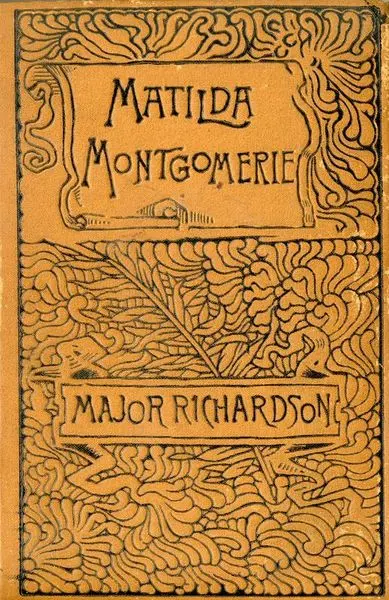
"Matilda Montgomerie; Or, The Prophecy Fulfilled" by Major Richardson is a historical novel written in the late 19th century. This book serves as a sequel to the earlier work "Wacousta" and unfolds during the tumultuous period of the War of 1812 in America. The narrative centers around significant characters including Matilda and the revered Native American leader Tecumseh, exploring themes of conflict, loyalty, and cultural exchanges amidst war. At the start of the narrative, the author describes the picturesque setting of Amherstburg at the onset of the War of 1812, highlighting its serene beauty juxtaposed with the impending chaos of conflict. The atmosphere shifts when various factions—British officers, Native American warriors, and American forces—begin to gather, signaling a blend of excitement and tension as they anticipate military action. The arrival of Tecumseh, along with a contingent of Indigenous warriors, sets the stage for strategic alliances and conflicts that will unfold, while multiple layers of character dynamics begin to emerge in the backdrop of war preparations. This opening portion establishes the backdrop for a story steeped in historical fidelity and emotional complexity, suggesting a rich exploration of the characters' interwoven fates.
Introduction adapted from the source catalogue; source summaries may be automatically generated.
Free to read · English · 138,068 words · No account needed
MAKE TIME FOR A GOOD BOOK
On by default. Untick to stop anonymous reading totals. Each page counts after 10 seconds in view. How this works.
Anonymous counting is on unless you have switched it off.
"True," returned Henry, slightly coloring; "I had forgotten--but what condition, Gerald (and here he spoke as if piqued at the abrupt manner in which his brother had concluded his half confidence), what condition, I ask, may a woman entitled to our respect, as well as to our love, propose, which should be held of more account than that severest of offences against the Divine will--self-murder? Nay, look not thus surprised; for have you not admitted that you had guiltily attempted to throw away your life--to commit suicide, in short--rather than comply with an earthly condition?"
"What if in this," returned Gerald, with a smile of bitterness, "I have preferred the lesser guilt to the greater?"
"I can understand no condition, my brother, a woman worthy of your esteem could impose, which should one moment weigh in the same scale against the inexpiable crime of self-destruction. But, really, all this mystery so startles and confounds me, that I know not what to think--what inference to draw."
"Henry," observed the sailor, with some show of impatience, "considering your promise not to urge it further, it seems to me you push the matter to an extremity."
The youth made no reply, but, raising himself from his knees, moved towards the door, which he again unbolted. He then walked to the window at the further end of the apartment.
Gerald saw that he was deeply pained; and, impatient and angry with himself, he also rose and paced the room with hurried steps. At length he stopped, and putting one hand upon the shoulder of his brother, who stood gazing vacantly from the window, pointed with the other towards that part of the apartment in which both their parents had breathed their last.
"Henry, my kind, good Henry," he said, with a voice faltering with emotion, "do you recollect the morning when, on our return from school, we found our young holiday joy changed into heart-breaking and mourning by the sight of our dying mother?"
"Remember it, Gerald! aye, even as though it had been yesterday. Oh, my brother, little did I think at the moment when, with hands closely clasped together, we sank, overcome with grief, upon our bended knees, to receive that mother's blessing, a day would ever arrive when the joy or sorrow of the one should form no portion of the joy or sorrow of the other."
"It was there," pursued Gerald, and without noticing the interruption, "that we solemnly pledged ourselves to do the will and bidding of our father in all things."
"Even so, Gerald, I remember it well."
Your reading position is saved on this browser. Take it to another device with a library code. Reading pages adapt to text, rather than matching a printed edition.
Major (John) Richardson
Major (John) Richardson
Major (John) Richardson
Major (John) Richardson
BEHIND THE BOOK
This eBook is for the use of anyone anywhere in the United States and most other parts of the world at no cost and with almost no restrictions whatsoever. You may copy it, give it away or re-use it under the terms of the Project Gutenberg License included with this eBook or online at www.gutenberg.org. If you are not located in the United States, you will have to check the laws of the country where you are located before using this eBook. Read the source licence.
The original source file, including credits and licence, is retained by this library. Request an original-format copy at no charge. Please include the book title and Project Gutenberg identifier #39758.
KEEP YOUR CURIOSITY GOING
Cécile Tormay

Moritz Busch
Coulson Kernahan
John L. Ransom

Maurice Baring
Frances Wright