THE CLASSIC COLLECTION✦Hardscrabble; or, the fall of Chicago: a tale of Indian warfareCLASSIC FREE BOOKS
Hardscrabble; or, the fall of Chicago: a tale of Indian warfare
Major (John) Richardson
THE CLASSIC COLLECTION · 1851
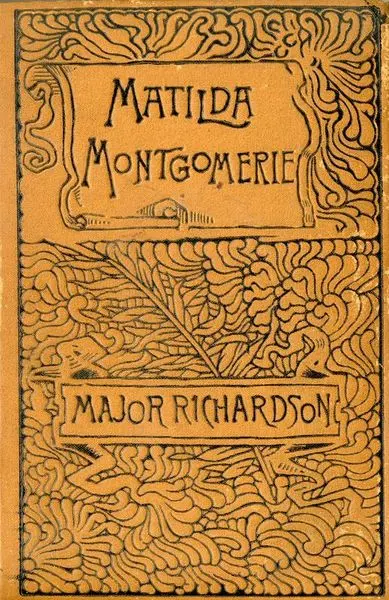
"Matilda Montgomerie; Or, The Prophecy Fulfilled" by Major Richardson is a historical novel written in the late 19th century. This book serves as a sequel to the earlier work "Wacousta" and unfolds during the tumultuous period of the War of 1812 in America. The narrative centers around significant characters including Matilda and the revered Native American leader Tecumseh, exploring themes of conflict, loyalty, and cultural exchanges amidst war. At the start of the narrative, the author describes the picturesque setting of Amherstburg at the onset of the War of 1812, highlighting its serene beauty juxtaposed with the impending chaos of conflict. The atmosphere shifts when various factions—British officers, Native American warriors, and American forces—begin to gather, signaling a blend of excitement and tension as they anticipate military action. The arrival of Tecumseh, along with a contingent of Indigenous warriors, sets the stage for strategic alliances and conflicts that will unfold, while multiple layers of character dynamics begin to emerge in the backdrop of war preparations. This opening portion establishes the backdrop for a story steeped in historical fidelity and emotional complexity, suggesting a rich exploration of the characters' interwoven fates.
Introduction adapted from the source catalogue; source summaries may be automatically generated.
Free to read · English · 138,068 words · No account needed
MAKE TIME FOR A GOOD BOOK
On by default. Untick to stop anonymous reading totals. Each page counts after 10 seconds in view. How this works.
Anonymous counting is on unless you have switched it off.
"Or," interrupted the American in the same careless tone, "that he had
betrayed a wife."
"Such a man----"
"Or, what is worse, infinitely worse, sought to put the finishing stroke to his villainy, by affixing to the name and conduct of his victim every ignominy and disgrace which can attach to insulted humanity."
"Matilda," eagerly exclaimed the youth, advancing close to her, and gazing into her dark eyes, "you are drawing a picture."
"No, Gerald," she replied calmly, "I am merely supposing a case. Could you find no excuse for a man acting under a sense of so much injury?--would you still call him an assassin, if, with such provocation, he sought to destroy the hated life of one who had thus injured him?"
Gerald paused, apparently bewildered.
"Tell me, dearest Gerald," and her fair and beautiful hand caught and pressed his--"would you still bestow upon one so injured the degrading epithet of assassin?"
"Assassin? most undoubtedly I would. But why this question, Matilda?"
The features of the American assumed a changed expression; she dropped the hand she had taken the instant before, and said, disappointedly:
"I find, then, my philosophy is totally at fault."
"Wherein, Matilda?" anxiously asked Gerald.
"In this, that I have not been able to make you a convert to my
opinions."
"And these are--?" again questioned Gerald, his every pulse throbbing
with intense emotion.
"Not to pronounce too harshly on the conduct of others, seeing that we ourselves may stand in much need of lenity of judgment. There might have existed motives for the action of him whom you designate as an assassin, quite as powerful as those which led to your interference, and quite as easily justified to himself."
"But, dearest Matilda-----"
"Nay. I have done--I close at once my argument and my philosophy. The humor is past, and I shall no longer attempt to make the worse appear the better cause. I dare say you thought me in earnest," she added, with slight sarcasm, "but a philosophical disquisition between two lovers on the eve of parting for ever, was too novel and piquant a seduction to be resisted."
That "parting for ever" was sufficient to drive all philosophy utterly
away from our hero.
"For ever, did you say, Matilda?--no, not for ever; yet, how coldly do you allude to a separation which, although I trust it will be only temporary, is to me a source of the deepest vexation. You did not manifest this indifference in the early part of our conversation this evening."
Your reading position is saved on this browser. Take it to another device with a library code. Reading pages adapt to text, rather than matching a printed edition.
Major (John) Richardson
Major (John) Richardson
Major (John) Richardson
Major (John) Richardson
BEHIND THE BOOK
This eBook is for the use of anyone anywhere in the United States and most other parts of the world at no cost and with almost no restrictions whatsoever. You may copy it, give it away or re-use it under the terms of the Project Gutenberg License included with this eBook or online at www.gutenberg.org. If you are not located in the United States, you will have to check the laws of the country where you are located before using this eBook. Read the source licence.
The original source file, including credits and licence, is retained by this library. Request an original-format copy at no charge. Please include the book title and Project Gutenberg identifier #39758.
KEEP YOUR CURIOSITY GOING
Cécile Tormay

Moritz Busch
Coulson Kernahan
John L. Ransom

Maurice Baring
Frances Wright