THE CLASSIC COLLECTION✦Hardscrabble; or, the fall of Chicago: a tale of Indian warfareCLASSIC FREE BOOKS
Hardscrabble; or, the fall of Chicago: a tale of Indian warfare
Major (John) Richardson
THE CLASSIC COLLECTION · 1851
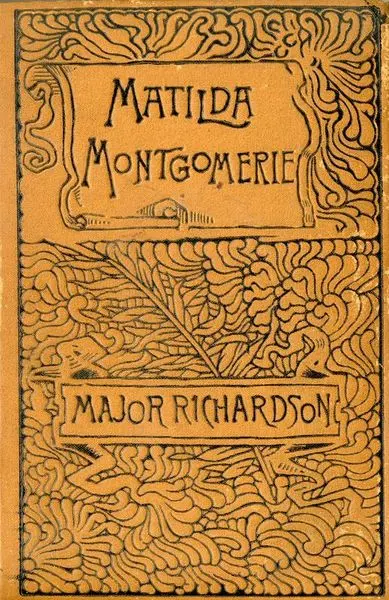
"Matilda Montgomerie; Or, The Prophecy Fulfilled" by Major Richardson is a historical novel written in the late 19th century. This book serves as a sequel to the earlier work "Wacousta" and unfolds during the tumultuous period of the War of 1812 in America. The narrative centers around significant characters including Matilda and the revered Native American leader Tecumseh, exploring themes of conflict, loyalty, and cultural exchanges amidst war. At the start of the narrative, the author describes the picturesque setting of Amherstburg at the onset of the War of 1812, highlighting its serene beauty juxtaposed with the impending chaos of conflict. The atmosphere shifts when various factions—British officers, Native American warriors, and American forces—begin to gather, signaling a blend of excitement and tension as they anticipate military action. The arrival of Tecumseh, along with a contingent of Indigenous warriors, sets the stage for strategic alliances and conflicts that will unfold, while multiple layers of character dynamics begin to emerge in the backdrop of war preparations. This opening portion establishes the backdrop for a story steeped in historical fidelity and emotional complexity, suggesting a rich exploration of the characters' interwoven fates.
Introduction adapted from the source catalogue; source summaries may be automatically generated.
Free to read · English · 138,068 words · No account needed
MAKE TIME FOR A GOOD BOOK
On by default. Untick to stop anonymous reading totals. Each page counts after 10 seconds in view. How this works.
Anonymous counting is on unless you have switched it off.
"Now, Matilda, that coldness arose not from any change in my feelings towards yourself--I was piqued, disappointed, even angry, at the extraordinary escape of my prisoner, and could not sufficiently play the hypocrite to disguise my annoyance."
"Yet, what had I to do with the man's escape that his offence should be visited upon me?" she demanded quickly.
"Can you not find some excuse for my vexation, knowing, as you do, that the wretch was a vile assassin--a man whose hands have been imbrued in the blood of my own father?"
"Was he not acquitted of the charge?"
"He was--but only from lack of evidence to convict; yet, although acquitted by the law, not surer is fate than that he is an assassin."
"You hold assassins in great horror," remarked the American thoughtfully, "you are right--it is but natural."
"In horror, said you?--aye, in such loathing that language can supply no
term to express it."
"And yet you once attempted an assassination yourself. Nay do not start, and look the image of astonishment. Have you not told me that you fired into the hut, on the night of your mysterious adventure? What right had you, if we argue the question on its real merit, to attempt the life of a being who had never injured you?"
"What right, Matilda?--every right, human and divine. I sought but to save a victim from the hands of a midnight murderer."
"And, to effect this, scrupled not to become a midnight murderer
yourself?"
"And is it thus you interpret my conduct, Matilda?"--the voice of Gerald spoke bitter reproach--"can you compare the act of that man with mine, and hold me no more blameless than him?"
"Nay, I did not say I blamed you," she returned, gaily, "but the fact is, you had left me so long to ruminate here alone, that I have fallen into a mood argumentative, or philosophical--whichsoever you may be pleased to term it--and I am willing to maintain my proposition, that you might by possibility have been more guilty than the culprit at whom you aimed, had your shot destroyed him."
The light tone in which Matilda spoke dispelled the seriousness which had begun to shadow the brow of the young commander. "And pray how do you make this good?" he asked.
"Suppose, for instance, the slumberer you preserved had been a being of crime, through whom the hopes, the happiness, the peace of mind, and above all, the fair fame of the other, had been cruelly and irrevocably blasted. Let us imagine that he had destroyed some dear friend or relative of him with whose vengeance you beheld him threatened."
"Could that be----"
Your reading position is saved on this browser. Take it to another device with a library code. Reading pages adapt to text, rather than matching a printed edition.
Major (John) Richardson
Major (John) Richardson
Major (John) Richardson
Major (John) Richardson
BEHIND THE BOOK
This eBook is for the use of anyone anywhere in the United States and most other parts of the world at no cost and with almost no restrictions whatsoever. You may copy it, give it away or re-use it under the terms of the Project Gutenberg License included with this eBook or online at www.gutenberg.org. If you are not located in the United States, you will have to check the laws of the country where you are located before using this eBook. Read the source licence.
The original source file, including credits and licence, is retained by this library. Request an original-format copy at no charge. Please include the book title and Project Gutenberg identifier #39758.
KEEP YOUR CURIOSITY GOING
Cécile Tormay

Moritz Busch
Coulson Kernahan
John L. Ransom

Maurice Baring
Frances Wright