
Life of Edwin Forrest, the American Tragedian. Volume 2 (of 2)
William Rounseville Alger & Horatio, Jr. Alger
THE CLASSIC COLLECTION · 1899
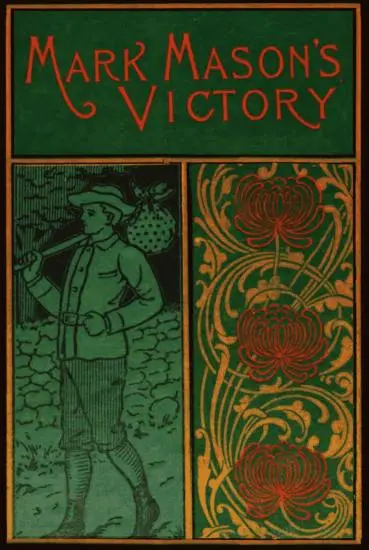
"Mark Mason's Victory: The Trials and Triumphs of a Telegraph Boy" by Horatio Alger, Jr. is a novel written in the late 19th century. It follows the life of a young telegraph boy named Mark Mason as he navigates the challenges of poverty and the ambitions that come with youth. The story likely explores themes of perseverance, integrity, and the social dynamics of the time, specifically focusing on how Mark seeks to improve his family's circumstances while maintaining his moral compass. The opening of the novel introduces Mark Mason in New York City, where he encounters his wealthy relatives from Syracuse, Uncle Solon and his cousin Edgar Talbot. Despite their cool demeanor towards him and his mother, Mark remains undeterred, demonstrating his pride and showing his determination to rise above their disdain. In this first chapter, Mark's interactions highlight the stark contrast between his humble beginnings and the affluent lifestyle of his relatives, setting the stage for the conflicts and adventures that will unfold as he strives for success amidst adversity. This early setup hints at Mark's character development and foreshadows the challenges he will face in his pursuit of a better life.
Introduction adapted from the source catalogue; source summaries may be automatically generated.
Free to read · English · 62,520 words · No account needed
MAKE TIME FOR A GOOD BOOK
On by default. Untick to stop anonymous reading totals. Each page counts after 10 seconds in view. How this works.
Anonymous counting is on unless you have switched it off.
LEAVING Mark on his way we will precede him, and carry the reader at once to Gulchville, in California, where he was to find the young boy of whom Mr. Gilbert had requested him to take charge.
In an unpainted frame house lived Mr. Nahum Sprague. In New England such a building would hardly have cost over five hundred dollars, but here it had been erected at more than double the expense by the original owner. When he became out of health and left California it was bought for a trifling price by Nahum Sprague.
The letter was a man of forty-five with small eyes and a face prematurely wrinkled. He was well-to-do, but how he had gained his money no one knew. He and his wife, however, were mean and parsimonious.
They had one son, a boy of fifteen, who resembled them physically and mentally. He was named Oscar, after a gentleman of wealth, in the hope that at his death the boy would be remembered. Unfortunately for Oscar the gentleman died without a will and his namesake received nothing.
The disappointed parents would gladly have changed the boy's name, but
Oscar would not hear of it, preferring the name that had become
familiar.
This was the family whose grudging hospitality had embittered the last days of John Lillis, and to them he was obliged to commit the temporary guardianship of his little son Philip.
In the field adjoining, Philip Lillis, a small pale boy, was playing when Oscar Sprague issued from the house.
"Come here, you little brat!" he said harshly.
Philip looked with a frightened expression.
"What do you want of me?" he asked.
"What do I want? Come here and see."
The little fellow approached.
He was received with a sharp slap in the face.
"Why do you hit me, Oscar?" Philip asked tearfully.
"Because you didn't come quicker," answered the young tyrant.
"I didn't know you were in a hurry."
"Well, you know it now."
"You wouldn't have hit me when papa was alive," said Philip with a flash
of spirit.
"Well, he isn't alive, see?"
"I know he isn't, and I am alone in the world."
"Well, don't snivel! If anything makes me sick at the stomach it is to
see a boy snivel."
"Maybe you'd cry if your papa was dead."
"There ain't much fear. The old man's too tough," responded Oscar, who had no sentimental love for his father. Indeed, it would have been surprising if he had shown any attachment to Nahum Sprague, who was about as unattractive in outward appearance as he was in character and disposition.
"You didn't tell me what you wanted me to do."
Your reading position is saved on this browser. Take it to another device with a library code. Reading pages adapt to text, rather than matching a printed edition.
William Rounseville Alger & Horatio, Jr. Alger

William Rounseville Alger & Horatio, Jr. Alger

Horatio, Jr. Alger

Horatio, Jr. Alger
BEHIND THE BOOK
This eBook is for the use of anyone anywhere in the United States and most other parts of the world at no cost and with almost no restrictions whatsoever. You may copy it, give it away or re-use it under the terms of the Project Gutenberg License included with this eBook or online at www.gutenberg.org. If you are not located in the United States, you will have to check the laws of the country where you are located before using this eBook. Read the source licence.
The original source file, including credits and licence, is retained by this library. Request an original-format copy at no charge. Please include the book title and Project Gutenberg identifier #34499.
KEEP YOUR CURIOSITY GOING
Cécile Tormay

Moritz Busch
Coulson Kernahan
John L. Ransom

Maurice Baring
Frances Wright