
Life of Edwin Forrest, the American Tragedian. Volume 2 (of 2)
William Rounseville Alger & Horatio, Jr. Alger
THE CLASSIC COLLECTION · 1899
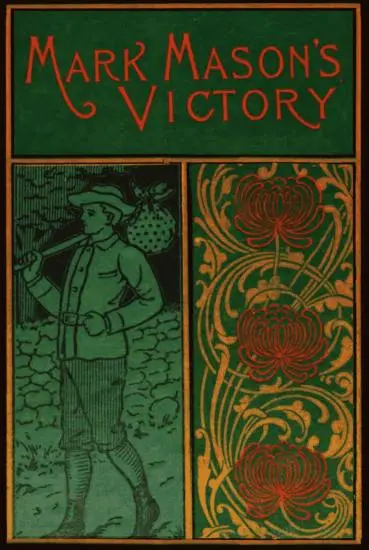
"Mark Mason's Victory: The Trials and Triumphs of a Telegraph Boy" by Horatio Alger, Jr. is a novel written in the late 19th century. It follows the life of a young telegraph boy named Mark Mason as he navigates the challenges of poverty and the ambitions that come with youth. The story likely explores themes of perseverance, integrity, and the social dynamics of the time, specifically focusing on how Mark seeks to improve his family's circumstances while maintaining his moral compass. The opening of the novel introduces Mark Mason in New York City, where he encounters his wealthy relatives from Syracuse, Uncle Solon and his cousin Edgar Talbot. Despite their cool demeanor towards him and his mother, Mark remains undeterred, demonstrating his pride and showing his determination to rise above their disdain. In this first chapter, Mark's interactions highlight the stark contrast between his humble beginnings and the affluent lifestyle of his relatives, setting the stage for the conflicts and adventures that will unfold as he strives for success amidst adversity. This early setup hints at Mark's character development and foreshadows the challenges he will face in his pursuit of a better life.
Introduction adapted from the source catalogue; source summaries may be automatically generated.
Free to read · English · 62,520 words · No account needed
MAKE TIME FOR A GOOD BOOK
On by default. Untick to stop anonymous reading totals. Each page counts after 10 seconds in view. How this works.
Anonymous counting is on unless you have switched it off.
"Just wait till I tell you, smarty. Do you see this bottle?"
"Yes."
"Take it to the saloon and get it full of whisky."
"Papa didn't want me to go into a liquor saloon."
"Well, your papa ain't got nothing to do with you now. See? You just do
as I tell you."
Philip took the bottle unwillingly and started for the saloon.
"Mind you don't drink any of it on the way home," called out Oscar.
"As if I would," said Philip indignantly. "I don't drink whisky and I
never will."
"Oh, you're an angel!" sneered Oscar. "You're too good for this world. Ain't you afraid you'll die young, as they say good boys do?"
"I don't believe you'll die young, Oscar."
"Hey? Was that meant for an insult? But never mind! I don't pretend to be one of the goody-goody Sunday-school kids. Now mind you don't loiter on the way."
Oscar sat down on the doorstep and began to whittle.
The door opened and his father came out.
"Why didn't you go to the saloon as I told you?" he asked hastily.
"It's all the same. I sent Philip."
"You sent that boy? He ain't fit to send on such an errand."
"Why ain't he? He can ask to have the bottle filled, can't he?"
"What did he say? Was he willing to go?"
"He said his papa," mimicked Oscar, "didn't want him to go into a liquor
saloon."
"He did, hey? All the more reason for making him go. His
poverty-stricken father can't help him now. Why, I am keeping the boy
from starving."
"Are you going to keep him always, dad?"
"I ought to turn him over to the town, but folks would talk. There's a man in New York that his father said would send for him. I don't know whether he will or not. There's a matter of fifty dollars due to me for burying John Lillis. That's the way I get imposed upon."
Philip kept on his way to the saloon. He was a timid, sensitive boy, and he shrank from going into the place which was generally filled with rough men. Two miners were leaning against the front of the wooden shanty used for the sale of liquor when Philip appeared.
As he passed in one said to the other, "Well, I'll be jiggered if here isn't a kid comin' for his liquor. I say, kid, what do you want?"
"Some whisky," answered Philip timidly.
"How old are you?"
"Ten."
"I say, young 'un, you're beginnin' early."
"I don't want it for myself," returned Philip half indignantly.
"Oh, no, of course not. You won't take a sip yourself, of course not."
Your reading position is saved on this browser. Take it to another device with a library code. Reading pages adapt to text, rather than matching a printed edition.
William Rounseville Alger & Horatio, Jr. Alger

William Rounseville Alger & Horatio, Jr. Alger

Horatio, Jr. Alger

Horatio, Jr. Alger
BEHIND THE BOOK
This eBook is for the use of anyone anywhere in the United States and most other parts of the world at no cost and with almost no restrictions whatsoever. You may copy it, give it away or re-use it under the terms of the Project Gutenberg License included with this eBook or online at www.gutenberg.org. If you are not located in the United States, you will have to check the laws of the country where you are located before using this eBook. Read the source licence.
The original source file, including credits and licence, is retained by this library. Request an original-format copy at no charge. Please include the book title and Project Gutenberg identifier #34499.
KEEP YOUR CURIOSITY GOING
Cécile Tormay

Moritz Busch
Coulson Kernahan
John L. Ransom

Maurice Baring
Frances Wright