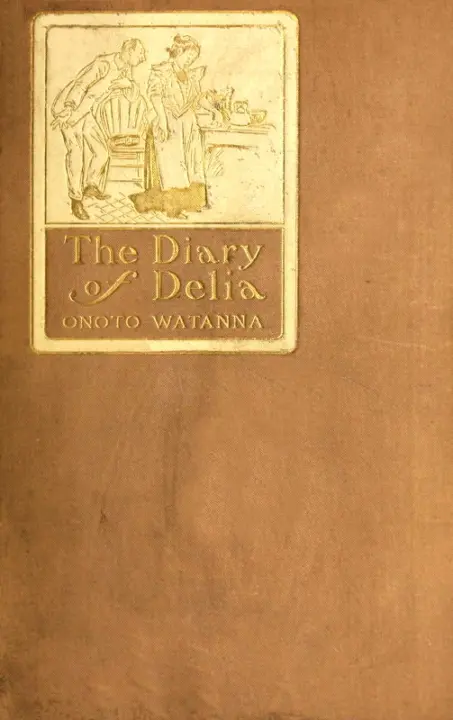
The diary of Delia : Being a veracious chronicle of the kitchen, with some side-lights on the parlour
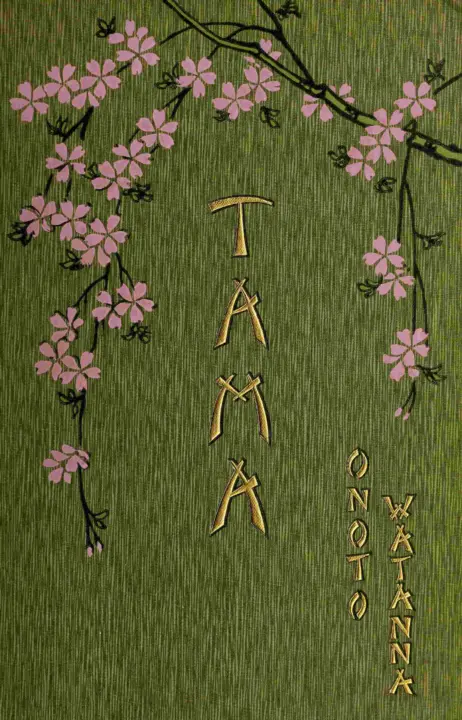
Onoto Watanna
THE CLASSIC COLLECTION · 1916
"Marion: The Story of an Artist's Model" by Onoto Watanna is a novel written in the early 20th century. The story focuses on a young girl named Marion, who is navigating her childhood and aspirations against the backdrop of a large family living in Hochelaga, Montreal. As she grapples with her self-image and dreams of becoming an actress, the narrative explores themes of beauty, ambition, and family dynamics. At the start of the story, Marion is sent to buy groceries but feels embarrassed when a local grocer discusses her family in a way that makes them seem conspicuous. This sparks Marion's desire to be seen as pretty after a stranger calls her “remarkably pretty.” This moment ignites her aspiration to become an actress, distracting her from her duties at home. The opening portrays her family life, her interactions with her father, a struggling artist, and the challenges of poverty that they face. Marion's vivid imagination and daydreams about fame contrast with the harsh realities of her world, setting the stage for her journey toward self-discovery and ambition.
Introduction adapted from the source catalogue; source summaries may be automatically generated.
Free to read · English · 63,931 words · No account needed
MAKE TIME FOR A GOOD BOOK
On by default. Untick to stop anonymous reading totals. Each page counts after 10 seconds in view. How this works.
Anonymous counting is on unless you have switched it off.
“Sarah, Sarah! be more careful of your speech!” cried her mother. “Did not the God above give to you those six little brothers? You should thank Him for His kindness.”
She started down the stairs, followed by her husband. Sarah, however, stayed in the room, and now she smiled at us in a friendly way.
“Say, Miss-- What’s your names?”
“Ellen and Marion.”
“Well, say, my stepmother is the limit. Gosh! I wish we were not Jews.
Nobody likes us.”
“You ought not to say that,” said Ellen, severely, “the Jews were God’s chosen people, remember.”
“Gosh!” said Sarah, “I wish He didn’t choose me.”
That evening, Sarah thrust her face in at our door, and called in a loud
whisper:
“Say, girls, do youse want to see two old fools? Come on then.”
She led us, all tiptoeing, into a room next to one occupied by a little English old maid named Miss Dick, who gave music lessons for twenty-five cents a lesson, and who always spoke in a sort of hissing whisper, so that a little spit came from her lips. Mrs. Cohen called it the “watering can.”
“Kneel down there,” said Sarah, pointing to a crack in the wall. I peeped through, and this is what I saw: Seated in the armchair was a funny little old man--I think he was German--with a dried, wrinkled face. Perched on the arm of the chair was Miss Dick. They were billing and cooing like turtle doves, and she was saying:
“Am I your little Dicky-birdie?” and he was looking proud and pleased.
Ellen and I burst into fits of laughter, but Sarah pulled us away, and we covered our mouths and stifled back the laughter. When we got to our room, Sarah told us that the old man, Schneider, had come to her father and mother and asked them to find him a wife. Her mother agreed to do so for the payment of ten dollars. She had spoken to Miss Dick, and the latter had also agreed to pay ten dollars.
About a week after we had been there, Miss Dick and Mr. Schneider were married. They had packed up all Miss Dick’s things and were going down the stairs with bags in their hands, when Mrs. Cohen ran out into the hall.
“Now please, like a lady and gentleman, pay me the ten dollars each as we made the bargain, for I make you acquainted to get married.”
“Ten dollars!” screamed Miss Dick.
“Yes, you make the bargain with me.”
Your reading position is saved on this browser. Take it to another device with a library code. Reading pages adapt to text, rather than matching a printed edition.
Onoto Watanna
Onoto Watanna
Onoto Watanna
Onoto Watanna
BEHIND THE BOOK
This eBook is for the use of anyone anywhere in the United States and most other parts of the world at no cost and with almost no restrictions whatsoever. You may copy it, give it away or re-use it under the terms of the Project Gutenberg License included with this eBook or online at www.gutenberg.org. If you are not located in the United States, you will have to check the laws of the country where you are located before using this eBook. Read the source licence.
The original source file, including credits and licence, is retained by this library. Request an original-format copy at no charge. Please include the book title and Project Gutenberg identifier #57920.
KEEP YOUR CURIOSITY GOING
Coulson Kernahan

Maurice Baring
Frances Wright
Cécile Tormay

Frederic Jesup Stimson

W. H. P. (William Henry Pope) Jarvis