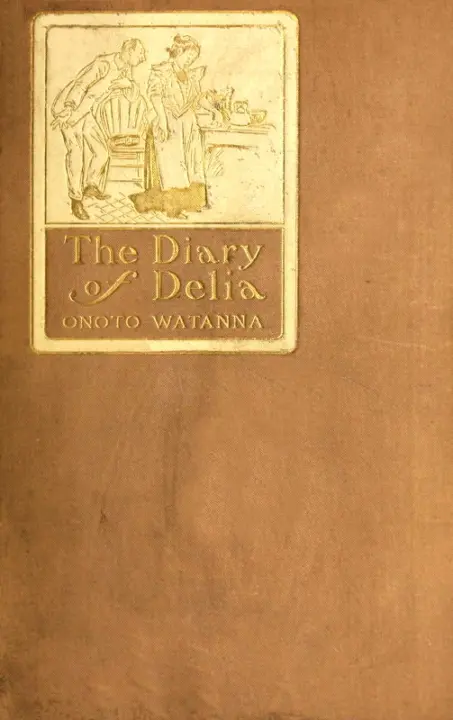
The diary of Delia : Being a veracious chronicle of the kitchen, with some side-lights on the parlour
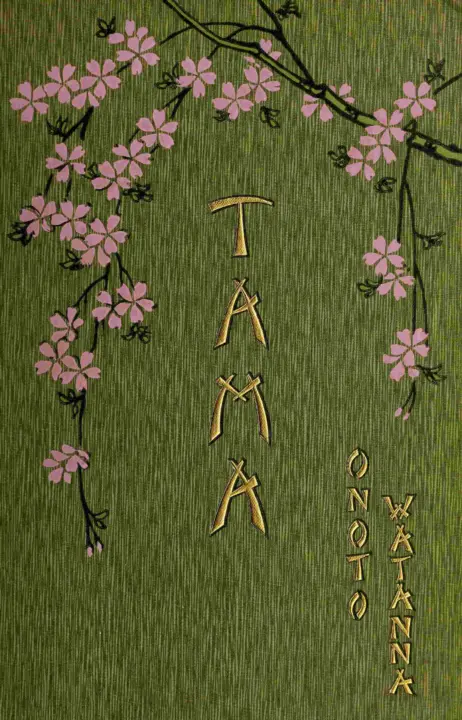
Onoto Watanna
THE CLASSIC COLLECTION · 1916
"Marion: The Story of an Artist's Model" by Onoto Watanna is a novel written in the early 20th century. The story focuses on a young girl named Marion, who is navigating her childhood and aspirations against the backdrop of a large family living in Hochelaga, Montreal. As she grapples with her self-image and dreams of becoming an actress, the narrative explores themes of beauty, ambition, and family dynamics. At the start of the story, Marion is sent to buy groceries but feels embarrassed when a local grocer discusses her family in a way that makes them seem conspicuous. This sparks Marion's desire to be seen as pretty after a stranger calls her “remarkably pretty.” This moment ignites her aspiration to become an actress, distracting her from her duties at home. The opening portrays her family life, her interactions with her father, a struggling artist, and the challenges of poverty that they face. Marion's vivid imagination and daydreams about fame contrast with the harsh realities of her world, setting the stage for her journey toward self-discovery and ambition.
Introduction adapted from the source catalogue; source summaries may be automatically generated.
Free to read · English · 63,931 words · No account needed
MAKE TIME FOR A GOOD BOOK
On by default. Untick to stop anonymous reading totals. Each page counts after 10 seconds in view. How this works.
Anonymous counting is on unless you have switched it off.
I was helping Menna that day. He had been very busy, and I had been working for him both mornings and afternoons. He had told me, however, that soon he expected to “pick up and go West,” and I was troubled about that. I depended upon Menna for most of my work, and we got along splendidly together. As I have said, Menna had always treated me just like a “fellow” as he would call it.
There was a knock at the door, and in came Paul Bonnat. After nodding to Menna, he strolled over to where I was working and stood at the back of me, watching me paint.
“She’s quite a painter,” he said after a moment to Menna, who looked up and nodded, and said:
“Yes, she does quite O. K.”
After a while Menna turned around on his stool and asked:
“Got anything on to-night, Bonnat?”
“No--nothing particular.”
“Well, a lady friend of mine is coming in from Staten Island, and I promised to take her somewhere to supper and see the town. Can’t you and Miss Ascough join us?”
Bonnat beamed, just as if Menna had handed him a gift, and he said:
“Sure, if Miss Ascough will go with me.”
I said that I would. I think I would have gone with him anywhere he
asked me to.
“Meet us here at seven, then,” said Menna, returning to his work.
“All right. Good-bye.” Bonnat went out, slamming the door noisily behind him. We could hear him singing the “Preislied” from “Meistersinger” as he went up the stairs. He had a big, wonderful baritone voice. We stopped painting to listen to him, but when I turned to resume my work, I found Menna watching me. He said:
“You and Bonnat are getting pretty friendly, eh?”
I felt myself color warmly, but I tried to laugh, and said:
“Oh, no more than I am with any of the other boys.”
Menna had his thumb through his palette, and he stared at me hard. Then
he said suddenly:
“Gee! What a fool I was to let him get ahead of me.”
He set down his palette, and came over to my stool:
“Say, Marion” (he had never called me Marion
before), “you and I would make a corking good team. Suppose we pair off together to-night, and we’ll put Miss Fleming on to Bonnat? What do you say?”
“Mr. Menna, you had better stick to your own girl,” I said, feeling uneasy. Menna continued to stare down at me and as he said nothing to that, I added:
Your reading position is saved on this browser. Take it to another device with a library code. Reading pages adapt to text, rather than matching a printed edition.
Onoto Watanna
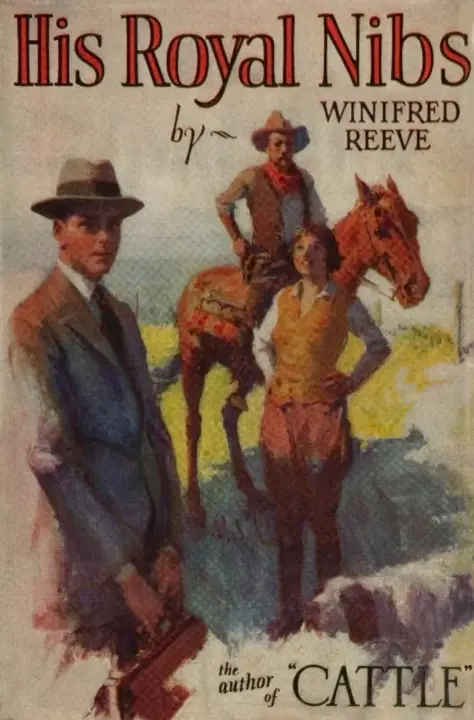
Onoto Watanna
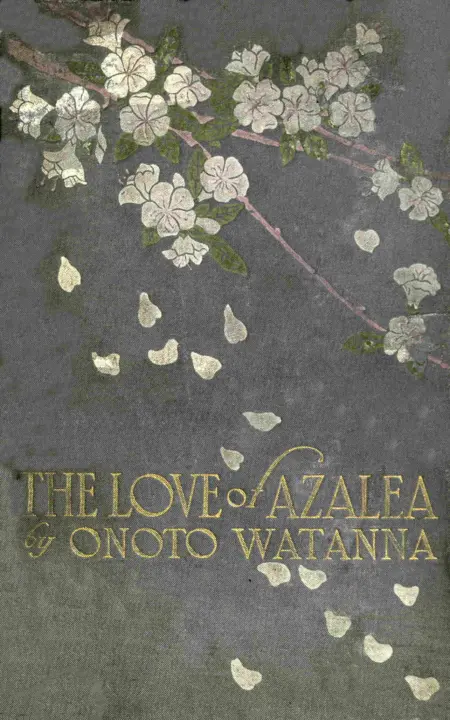
Onoto Watanna
Onoto Watanna
BEHIND THE BOOK
This eBook is for the use of anyone anywhere in the United States and most other parts of the world at no cost and with almost no restrictions whatsoever. You may copy it, give it away or re-use it under the terms of the Project Gutenberg License included with this eBook or online at www.gutenberg.org. If you are not located in the United States, you will have to check the laws of the country where you are located before using this eBook. Read the source licence.
The original source file, including credits and licence, is retained by this library. Request an original-format copy at no charge. Please include the book title and Project Gutenberg identifier #57920.
KEEP YOUR CURIOSITY GOING
Coulson Kernahan

Maurice Baring
Frances Wright
Cécile Tormay

Frederic Jesup Stimson

W. H. P. (William Henry Pope) Jarvis