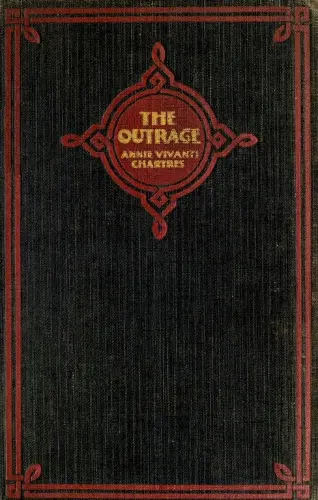
The Outrage
Annie Vivanti
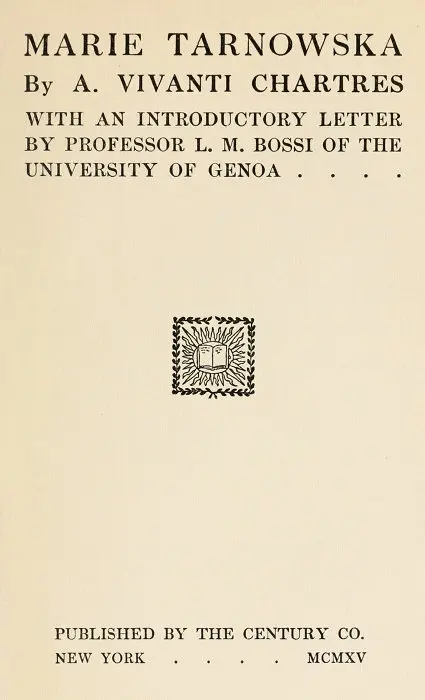
THE CLASSIC COLLECTION · 1915
"Marie Tarnowska" by Annie Vivanti is a novel written in the early 20th century. The story is centered around the tragic life of Marie Nicolaevna Tarnowska, a Russian noblewoman embroiled in a sensational murder trial that raises questions about guilt, morality, and societal judgments. The narrative navigates through themes of love, crime, and the psychological and physical conditions affecting women, particularly in the context of societal expectations and personal trauma. The opening of the novel introduces the backstory of Count Paul Kamarowsky's murder and sets the stage for the trial that reveals a web of passion, betrayal, and tragedy surrounding Marie. It describes the events leading up to Kamarowsky's death and the subsequent arrest and sentencing of Marie and her accomplices. Through the lens of a doctor familiar with the case, we learn about Marie's troubled past and the health issues that plagued her family, hinting at deeper societal critiques about the treatment of women and notions of criminality. The narrative style is introspective, inviting readers to empathize with Marie's plight while reflecting on her emotional and mental turmoil as she transitions from the corridors of aristocracy to the confines of a prison cell.
Introduction adapted from the source catalogue; source summaries may be automatically generated.
Free to read · English · 58,096 words · No account needed
MAKE TIME FOR A GOOD BOOK
On by default. Untick to stop anonymous reading totals. Each page counts after 10 seconds in view. How this works.
Anonymous counting is on unless you have switched it off.
A breath of soft morning air awoke me. I opened my eyes. Elise was bending over me with pale and anxious face. The room--my bedroom--whirled and swam before my dizzy sight.
"Elise!"...
Elise Perrier clasped her hands. "Thank God!" she murmured. "I feared you would never wake again." Her face worked strangely, and she burst into tears.
"Elise--what has happened? What is to-day?" Before she could answer, another question sprang to my lips: "Where is Naumoff?"
"He has left, my lady," whispered Elise in awestruck tones.
"Left?" A long silence held us. "Left? Where has he gone?"
Elise looked down at me with blanched and quivering countenance.
"To Venice," she said in low tones.
I started up. "To Venice?" To Venice! My memory darted to and fro like a child playing hide and seek. "Elise! Elise! Elise!" I stretched out my hands like one sinking and drowning in the darkness. Elise wept. I watched the strange faces that Elise always made when she wept: funny, pitiful grimaces with puckered brow and chin.
"To Venice." My memory flickers like a feeble light, then blazes into sudden flames that sear my soul with fire. "Elise! He must be stopped. He must not reach Venice! Elise, stop him, stop him--!"
"It is impossible, my lady."
Yes, it is impossible.
(By this time the train which is carrying Naumoff on his mission of death has passed Warsaw and is hastening towards Brünn; hastening, ever hastening through the dawning hours and the noonday sunshine, hastening on into the twilight--and at dusk it rumbles and pants into the station at Vienna.)
I fall fainting back upon my pillows, and all through the day and the night I dream that I am speeding after the rushing train, catching up with it and losing it again, sweeping through the air, tearing along the unending rails, reaching it at last, and being struck down and crushed under its rolling wheels.
Day dawns once more.
"Elise, Elise, bring Naumoff back. Telegraph to him. Elise, for heaven's
sake, bring him back!"
"It is hopeless, my lady."
Yes, it is hopeless.
(At this hour the train is hurrying from Bozen to Verona, from Verona to Vicenza, from Vicenza to Padua.)
Night falls on my despair.
"Elise, Elise! Where are you? What is the time?"
"It is nearly dawn, my lady."
"Elise, what day is this?"
"It is the third day of September."
The third day of September!
"Elise," I scream suddenly, "Elise! Telegraph to Kamarowsky. Warn him.... Quickly, oh, quickly! Why, why did we not do so before?"
"Hush, my lady, hush! You were delirious; you could only rave and weep."
"Elise, Elise, telegraph to Kamarowsky...."
Your reading position is saved on this browser. Take it to another device with a library code. Reading pages adapt to text, rather than matching a printed edition.
Annie Vivanti
Annie Vivanti
BEHIND THE BOOK
This eBook is for the use of anyone anywhere in the United States and most other parts of the world at no cost and with almost no restrictions whatsoever. You may copy it, give it away or re-use it under the terms of the Project Gutenberg License included with this eBook or online at www.gutenberg.org. If you are not located in the United States, you will have to check the laws of the country where you are located before using this eBook. Read the source licence.
The original source file, including credits and licence, is retained by this library. Request an original-format copy at no charge. Please include the book title and Project Gutenberg identifier #43058.
KEEP YOUR CURIOSITY GOING
Coulson Kernahan

Maurice Baring
Frances Wright
Cécile Tormay

Frederic Jesup Stimson

W. H. P. (William Henry Pope) Jarvis