
Last letters from the living dead man
David Patterson (Spirit) Hatch
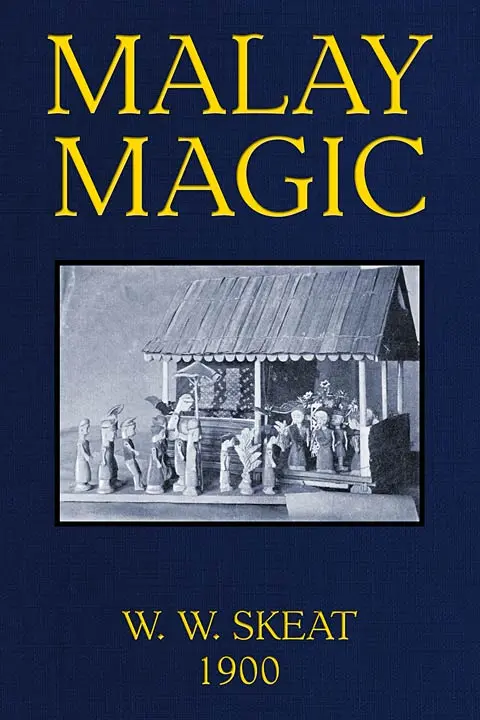
THE CLASSIC COLLECTION · 1900
"Malay Magic" by Walter William Skeat is an introductory work on folklore and popular religion written in the late 19th century. It explores the rich tapestry of beliefs, customs, and magical practices of the Malays in the Malay Peninsula, drawing upon a variety of sources, including personal observations, native manuscripts, and published works. The book aims to document and analyze the traditional beliefs and practices that are integral to Malay culture, highlighting the complexity of their folklore intertwined with influences from Indian, Arab, and indigenous sources. The opening of the book sets the stage for a comprehensive exploration of Malay folklore, establishing the author's intent to create a representative account of Malay beliefs and magical practices. Skeat introduces the key themes such as creation myths, the understanding of nature, and the relationships between humans and the supernatural world. He reflects on the significance of various folkloric beliefs, such as the creation of the world and the role of magic in everyday life, and emphasizes the importance of these elements in understanding the Malay identity and culture. As he begins to unfold these narratives, the reader is invited into the intricate world of Malay magic, laying the foundation for the detailed studies that follow.
Introduction adapted from the source catalogue; source summaries may be automatically generated.
Free to read · English · 226,518 words · No account needed
MAKE TIME FOR A GOOD BOOK
On by default. Untick to stop anonymous reading totals. Each page counts after 10 seconds in view. How this works.
Anonymous counting is on unless you have switched it off.
[919] Rindang was explained as = rindu (suka gemar). Kutop = tutop. Bintongan = benchana, kasusahan. Teng explained as = kaki sablah, as in tengkis. Bertengteng = jalan kaki sablah. The Bunga satengteng is also called the Satawar.
[920] Em. Jin Tanah.
[921] Or Petala, i.e. Batara.
[922] Merak in the "Bhasa Hantu," or "Spirit Language," means sirih, and it is in this sense that it should apparently be taken here. The ordinary meaning of merak (peacock) makes nonsense.
[923] Kutu hutan, lit. "flea of the forest," i.e. the mouse-deer.
[924] Lapang, i.e. "trap."
[925] Hunting dogs have special names used for harking them on,
e.g. Sukum, Sugara, Tampoi, Sujugara, Lansat, Si Indra, Si Kumbang,
Sa' Untara.
[926] There is a grass called rumput padi burong.
[927] Tedong: no doubt a play on the word, which means not only a cobra (ular tedong) but is applied to cocks (and query dogs?) of a certain colour.
[928] Semawi is said to be the name by which the wild pigs are
addressed.
[929] Sungko': quære sungkor.
[930] Unintelligible. Bengkarong means "lizard."
[931] Mampe, mawei: apparently the pigs are threatened with various
terrible forms of death.
[932] Explained as i.q. banyak. Quære emend sayup, "afar off."
[933] Explained as i.q. perminta'an.
[934] Explained as i.q. bahtra.
[935] When the voice of the gharu-spirit is heard at night.
[936] Satukum is the Kelantan form of satokong, from tokong, to cut
the hair.
[937] Besir, lit. incontinent, referring to the running of the sap when the flower-spike is tapped.
[938] Berhilir, i.q. berleler.
[939] i.q. pisau sadap.
[940] Explained as i.q. tagok, bekas buloh yang di-isi ayer mayang.
[941] Explained as kawah 'nak masak gula.
[942] The tujoh orang bersaudara are explained to be (1) Satinjau Rantau, (2) Sakuntum Raya, (3) Malim Karimun, (4) Si Ali Pachi, and three others, children of Mentala Guru.
[943] B'ras bertih "parched" rice (W. S.).
[944] This and the next four charms are extracted from a paper by the author which appeared in Sel. Journ., vol. iii. No. 12, pp. 196-200.
[945] Ular chintamani: the snake chintamani springs from the eggs of the bird chandrawasih (chendrawasi), which fall into the sea; if you find dust (abu) or a piece of sugar-cane inside a floating cocoa-nut-shell at sea, you may know it to be the snake chintamani. If, on the other hand, the eggs fall into primeval forest, they turn into the doves called merbo' titek abu, if upon a hill, they turn into the doves called merbo' api. Sometimes, however, even after falling, they take the shape of bananas, sugar-cane, or hen's eggs; and that is why sugar-cane, hen's eggs, and bananas are used when the "Soul of the Rice" is fetched home.
[946] Bijeh, i.q. biji, tin-ore, lit. seed, grain.
[947] Buih, i.q. buhi, foam.
Your reading position is saved on this browser. Take it to another device with a library code. Reading pages adapt to text, rather than matching a printed edition.
BEHIND THE BOOK
This eBook is for the use of anyone anywhere in the United States and most other parts of the world at no cost and with almost no restrictions whatsoever. You may copy it, give it away or re-use it under the terms of the Project Gutenberg License included with this eBook or online at www.gutenberg.org. If you are not located in the United States, you will have to check the laws of the country where you are located before using this eBook. Read the source licence.
The original source file, including credits and licence, is retained by this library. Request an original-format copy at no charge. Please include the book title and Project Gutenberg identifier #47873.
KEEP YOUR CURIOSITY GOING
David Patterson (Spirit) Hatch

David Patterson (Spirit) Hatch

David Patterson (Spirit) Hatch

Maurice Baring
Francis Greenleaf Allinson & Anne C. E. (Anne Crosby Emery) Allinson

Edwin Abbott Abbott