
Last letters from the living dead man
David Patterson (Spirit) Hatch
THE CLASSIC COLLECTION · 1900
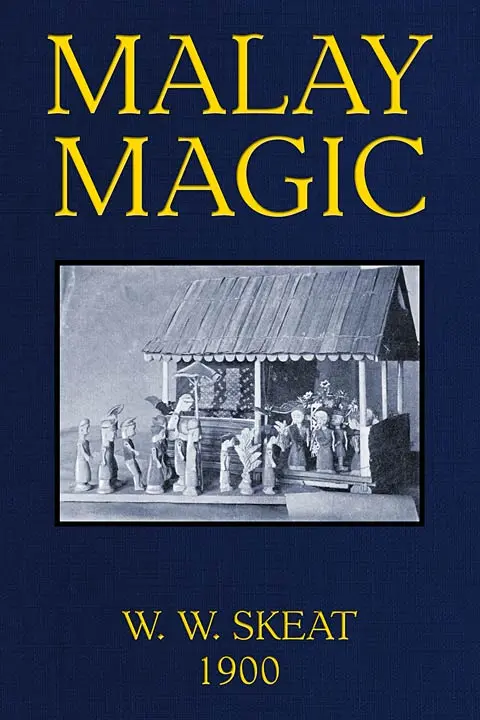
"Malay Magic" by Walter William Skeat is an introductory work on folklore and popular religion written in the late 19th century. It explores the rich tapestry of beliefs, customs, and magical practices of the Malays in the Malay Peninsula, drawing upon a variety of sources, including personal observations, native manuscripts, and published works. The book aims to document and analyze the traditional beliefs and practices that are integral to Malay culture, highlighting the complexity of their folklore intertwined with influences from Indian, Arab, and indigenous sources. The opening of the book sets the stage for a comprehensive exploration of Malay folklore, establishing the author's intent to create a representative account of Malay beliefs and magical practices. Skeat introduces the key themes such as creation myths, the understanding of nature, and the relationships between humans and the supernatural world. He reflects on the significance of various folkloric beliefs, such as the creation of the world and the role of magic in everyday life, and emphasizes the importance of these elements in understanding the Malay identity and culture. As he begins to unfold these narratives, the reader is invited into the intricate world of Malay magic, laying the foundation for the detailed studies that follow.
Introduction adapted from the source catalogue; source summaries may be automatically generated.
Free to read · English · 226,518 words · No account needed
MAKE TIME FOR A GOOD BOOK
On by default. Untick to stop anonymous reading totals. Each page counts after 10 seconds in view. How this works.
Anonymous counting is on unless you have switched it off.
This Code was probably founded on earlier regulations ascribed to Sultan Muhammad Shah, the first Muhammadan Raja of Malacca, and Sultan Mudhafar Shah, his son. Nothing is known about the laws of the last named, except that (according to the Sejarah Malayu, chap, xii.), "he ordered the Book of Institutes, or Kitab Undang-Undang, to be compiled," but the preceding chapter of the same work has a good deal to say about the laws of Sultan Muhammad Shah, and mentions that he "prohibited the ornamenting of creeses with gold, etc." See Leyden, op. cit., pp. 94, 118.
A similar prohibition occurs in section i. of Sultan Mahmud's Code, of which a translation will be found in Newbold, Malacca, vol. ii. pp. 231 seq.
[741] Newbold, op. cit. vol. ii. pp. 202-208. Vide Chap. II. p. 33,
supra.
[742] Swettenham, Malay Sketches, pp. 207, 208.
[743] Yet the act of sneezing is considered so fraught with the risk of the soul's escaping, that not unfrequently after a severer sneeze than usual, a Malay will attempt to call his soul back by ejaculating "Cluck! Soul!" (kur, semangat!) as if he were calling a chicken, and the regular use of the phrase "Al-hamdu li'llah" (Praised be God), after sneezing suggests that he may be relieved to find his soul still in his own possession.
[744] See J.R.A.S., S.B., No. 7, pp. 19, 20.
[745] J.R.A.S., S.B., No. 7, pp. 26-28. In Selangor "Kursemangat, tuboh budak ini," "My soul! the body of the boy," or some such phrase is occasionally used.
[746] J.R.A.S., S.B., No. 7, p. 27.
[747] Examples are:--(1) the burning of incense ... (vide Medicine, pp. 410 seqq. and elsewhere, passim); (2) the inspection of the water in the "Three Jars" ceremony, ibid.; (3) the scattering of parched rice, ibid.; (4) the application of the "Rice-Paste" (tepong-tawar) ceremony (vide Marriage, Fishing, etc.); (5) the sound of water struck by a canoe paddle (vide Crocodile-catching); (6) the manner of falling of the filed-off portion of a tooth (vide Adolescence); (7) the whisper of the sap in the bark of a gharu-tree, when the latter is struck by a cutlass (vide Vegetation Charms), and a host of others.
[748] My informant did not make it plain whether the same charm was repeated on each of these three occasions, or whether a different charm was used in each case. Probably the latter would be the more correct course.
[749] Swettenham, Malay Sketches, pp. 201-207.
[750] Hall.
[751] Clerk.
[752] J.R.A.S., S.B., No. 3, pp. 30, 31. Ordeals by immersion of the hands in boiling oil or molten tin are also mentioned in the old Johor Code of Laws. Vide Crawford, Dict. of Ind. Isl., s.v. Ordeal.
Your reading position is saved on this browser. Take it to another device with a library code. Reading pages adapt to text, rather than matching a printed edition.
BEHIND THE BOOK
This eBook is for the use of anyone anywhere in the United States and most other parts of the world at no cost and with almost no restrictions whatsoever. You may copy it, give it away or re-use it under the terms of the Project Gutenberg License included with this eBook or online at www.gutenberg.org. If you are not located in the United States, you will have to check the laws of the country where you are located before using this eBook. Read the source licence.
The original source file, including credits and licence, is retained by this library. Request an original-format copy at no charge. Please include the book title and Project Gutenberg identifier #47873.
KEEP YOUR CURIOSITY GOING
David Patterson (Spirit) Hatch

David Patterson (Spirit) Hatch

David Patterson (Spirit) Hatch

Maurice Baring
Francis Greenleaf Allinson & Anne C. E. (Anne Crosby Emery) Allinson

Edwin Abbott Abbott