THE CLASSIC COLLECTION✦An outlaw’s diary: the CommuneCLASSIC FREE BOOKS
An outlaw’s diary: the Commune
Cécile Tormay
THE CLASSIC COLLECTION · 1905
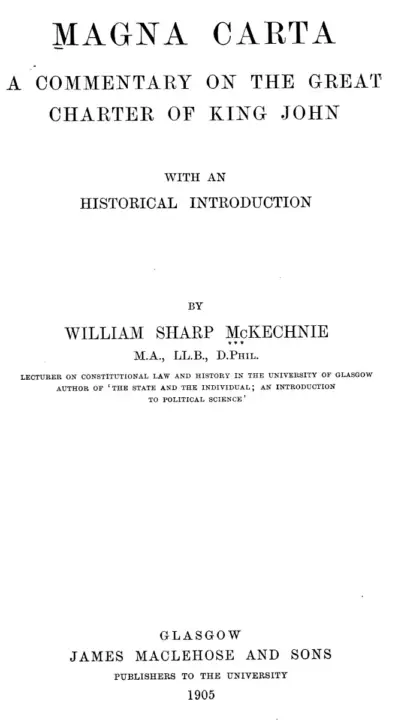
"Magna Carta: A Commentary on the Great Charter of King John" by William Sharp McKechnie is a historical account written in the early 20th century. This work delves into the significance and implications of the Magna Carta, focusing on its historical context and its role in the development of constitutional freedoms in England. The book aims to provide a fresh commentary on this pivotal document, critiquing earlier interpretations and emphasizing its relevance to the struggles for liberty. The opening of the commentary highlights that no significant modern analysis of Magna Carta has been published until now, despite the profound impact of the Great Charter on English constitutional history. McKechnie discusses the motivations behind his work, emphasizing the necessity of examining the various grievances that led to its creation and outlining the events that unfolded in the lead-up to its signing. He argues that the Magna Carta is deserving of detailed study due to its complexities and the wealth of knowledge in contemporary scholarship, setting the stage for a thorough exploration of its chapters and clauses in the remaining text.
Introduction adapted from the source catalogue; source summaries may be automatically generated.
Free to read · English · 212,300 words · No account needed
MAKE TIME FOR A GOOD BOOK
On by default. Untick to stop anonymous reading totals. Each page counts after 10 seconds in view. How this works.
Anonymous counting is on unless you have switched it off.
31. Quod mercatores habeant salvum ire et venire ad emendum vel
vendendum, sine omnibus malis toltis, per antiquas et rectas
consuetudines.
32. Ne scutagium vel auxilium ponatur in regno, nisi per commune consilium regni, nisi ad corpus regis redimendum, et primogenitum filium suum militem faciendum, et filiam suam primogenitam semel maritandam; et ad hoc fiat rationabile auxilium. Simili modo fiat de taillagiis et auxiliis de civitate Londonie, et de aliis civitatibus que inde habent libertates, et ut civitas Londonie plene habeat antiquas libertates et liberas consuetudines suas, tam per aquas, quam per terras.
33. Ut liceat unicuique exire de regno et redire, salva fide domini regis, nisi tempore werre per aliquod breve tempus propter communem utilitatem regni.
34. Si quis mutuo aliquid acceperit a Judeis plus vel minus, et moriatur antequam debitum illud solvatur, debitum non usurabit quamdiu heres fuerit infra etatem, de quocumque teneat; et si debitum illud inciderit in manum regis, rex non capiet nisi catallum quod continetur in carta.
35. Si quis moriatur et debitum debeat Judeis, uxor ejus habeat dotem suam; et si liberi remanserint, provideantur eis necessaria secundum tenementum; et de residuo solvatur debitum salvo servitio dominorum; simili modo fiat de aliis debitis; et ut custos terre reddat heredi, cum ad plenam etatem pervenerit, terram suam instauratam secundum quod rationabiliter poterit sustinere de exitibus terre ejusdem de carucis et wainnagiis.
36. Si quis tenuerit de aliqua eskaeta, sicut de honore Walingeford, Notingeham, Bononie, et Lankastrie, et de aliis eskaetis que sunt in manu regis et sunt baronie, et obierit, heres ejus non dabit aliud relevium, vel faciet regi aliud servitium quam faceret baroni; et ut rex eodem modo eam teneat quo baro eam tenuit.
37. Ut fines qui facti sunt pro dotibus, maritagiis, hereditatibus, et amerciamentis, injuste et contra legem terre, omnino condonentur; vel fiat inde per juditium, .xxv. baronum, vel per juditium majoris partis eorumdem, una cum archiepiscopo et aliis quos secum vocare voluerit ita quod, si aliquis vel aliqui de .xxv. fuerint in simili querela, amoveantur et alii loco illorum per residuos de .xxv. substituantur.
38. Quod obsides et carte reddantur, quae liberate fuerunt regi in
securitatem.
39. Ut illi qui fuerint extra forestam non veniant coram justiciariis de foresta per communes summonitiones, nisi sint in placito vel plegii fuerint; et ut prave consuetudines de forestis et de forestariis, et warenniis, et vicecomitibus, et rivariis, emendentur per .xii. milites de quolibet comitatu, qui debent eligi per probos homines ejusdem comitatus.
40. Ut rex amoveat penitus de balliva parentes et totam sequelam Gerardi de Atyes, quod de cetero balliam non habeant, scilicet Engelardum, Andream, Petrum, et Gyonem de Cancellis, Gyonem de Cygony, Matheum de Martiny, et fratres ejus; et Galfridum nepotem ejus et Philippum Mark.
Your reading position is saved on this browser. Take it to another device with a library code. Reading pages adapt to text, rather than matching a printed edition.
BEHIND THE BOOK
This eBook is for the use of anyone anywhere in the United States and most other parts of the world at no cost and with almost no restrictions whatsoever. You may copy it, give it away or re-use it under the terms of the Project Gutenberg License included with this eBook or online at www.gutenberg.org. If you are not located in the United States, you will have to check the laws of the country where you are located before using this eBook. Read the source licence.
The original source file, including credits and licence, is retained by this library. Request an original-format copy at no charge. Please include the book title and Project Gutenberg identifier #65363.
KEEP YOUR CURIOSITY GOING
Cécile Tormay

Moritz Busch
John L. Ransom
Frances Wright
Cécile Tormay

Mabel Potter Daggett