THE CLASSIC COLLECTION✦South Australia and Western AustraliaCLASSIC FREE BOOKS
South Australia and Western Australia
Anthony Trollope
THE CLASSIC COLLECTION · 1882
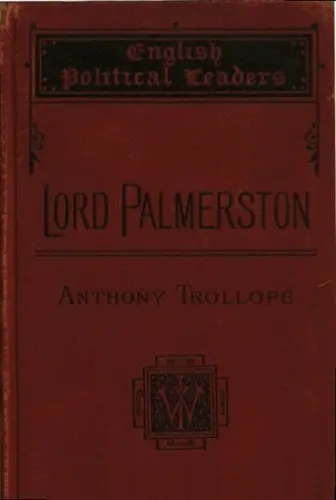
"Lord Palmerston" by Anthony Trollope is a historical account written in the late 19th century. The book provides a detailed examination of the life and political career of Henry John Temple, the 3rd Viscount Palmerston, who served as a prominent British statesman and Prime Minister during the 19th century. It covers his extensive impact on foreign and domestic policy, focusing particularly on his perception as a foreign minister and his clashes with other political figures, including the Prince Consort. The opening of "Lord Palmerston" introduces readers to the author's approach in compiling the memoir, citing various sources, including speeches and biographies. Trollope expresses his intention to navigate the complicated political landscape of Palmerston's life, emphasizing the controversies surrounding his dismissal as Foreign Minister and how he skillfully maneuvered through the political arena to regain power. The author hints at Palmerston's character, noting his determination and resilience, while also foreshadowing the key events in Palmerston’s career that would define his legacy in British politics. The initial narrative sets up a contextual framework for understanding Palmerston's role in significant historical events and debates, laying the groundwork for a deeper exploration of his life throughout the rest of the text.
Introduction adapted from the source catalogue; source summaries may be automatically generated.
Free to read · English · 65,828 words · No account needed
MAKE TIME FOR A GOOD BOOK
On by default. Untick to stop anonymous reading totals. Each page counts after 10 seconds in view. How this works.
Anonymous counting is on unless you have switched it off.
Aberdeen, Lord, succeeds Palmerston as Foreign Secretary, 81; Palmerston refers to him as an example of antiquated imbecility, 109; his attempt to avenge the insult, 113; becomes Prime Minister on Lord Derby’s resignation, 147; his timid policy on the eve of the Crimean war, 147, 153; is defeated on Mr. Roebuck’s motion for inquiry, and resigns, 162; helps Palmerston in Court difficulties, 165.
Alma, the battle of, false expectations as to the effects of, 161.
Althorp’s, Lord, elevation to the peerage, some political
consequences of, 61.
Ashburton’s, Lord, unsatisfactory treaty with America on the right of search for slavers, 85.
Austria, abdication of the Emperor of, 105;
war of Italian Independence, 97, 105-107, 188, 190;
Hungarian struggle for independence, 109;
abandons Lombardy, 99, 108;
Palmerston’s hatred of its political system, 107, 110, 189;
Palmerston’s advice to, 105.
Balance of power in Europe, the, 47, 69.
Bedchamber, Ladies of the, Government complications through, 74.
Belgium and Holland, 47;
our treaty obligations to, 104.
Bentinck, Lord George, as leader of the House of Commons, 145.
Bright, Mr., preaches peace at the Reform Club, and finds fault
with Lord Palmerston, 160;
as an orator, 210.
British Legion in Spain, the, 63.
Brocket Hall, 12, 75.
Brougham, Lord, Lamartine’s refusal to naturalize, 104.
Bulwer, Mr., ambassador at Paris, 76.
Cabinet, the English, its exceptional nature, 28.
Canning, Mr., 11, 12, 16;
his eloquence, 25;
Prime Minister on Lord Liverpool’s death, 31;
his influence on Palmerston’s character, 41, 55;
his death, 36.
Canning, Sir Stratford, “friend of the Porte,” 110.
Canning’s, Visct, severe speech in the Lords re Don Pacifico, 121; his heroism as Viceroy during the Indian Mutiny, 179.
Catholic Emancipation, 36, 43;
circumstances leading to, 38.
Cavour’s surrender of Savoy and Nice, 188.
Chartist riots, 104.
Clarence, the Duke of, Whig sympathies of, 40.
Clarendon, Lord, 8;
Foreign Secretary, 155;
declares that we drifted into the Crimean war, 170.
Cobden, Mr., attacks Lord Palmerston on his China policy, 176; and loses his seat at the ensuing election, 177.
Cockburn’s, Mr., effective speech on Mr. Roebuck’s motion, 124.
Colonels, the French, 184.
Court interference in foreign politics, Palmerston’s jealousy of, 4, 106.
Crimean War, cause of, 151;
“red tape,” 161, 165;
cost of, 169;
right and wrong of, 170.
Cumberland, the Duke of, a violent Tory, 41;
contingent heir to the throne, 74.
Dalling’s, Lord, fragmentary Memoirs of Palmerston, 34, 45.
Danish Expedition, the, the occasion of Palmerston’s maiden speech, 15.
Danubian Principalities, Russian occupation of, 151.
Davis, Lieut., shoots at Palmerston, 22.
Derby, Lord, 6;
weakness of his Ministry, 145;
resigns on Disraeli’s budget being thrown out, 147;
succeeds Lord Palmerston in office, 184;
goes out on the question of Reform, 185.
Disraeli, Mr., motion “On the State of the Nation,” 107;
member of Lord Derby’s Ministry, 145;
his budget is thrown out, 147;
strong attack on Russell’s Denmark policy, 197.
Don Pacifico’s claims for compensation, debate on, 7, 14, 83, 122;
absurdity of, 114.
Doubleday’s, Mr., Newcastle speech on Palmerston, 72.
Eldon, Lord, exclusion from Wellington’s Cabinet, 37; one of the last of the “Protestants,” 38.
Your reading position is saved on this browser. Take it to another device with a library code. Reading pages adapt to text, rather than matching a printed edition.
Anthony Trollope

Anthony Trollope

Anthony Trollope

Anthony Trollope
BEHIND THE BOOK
This eBook is for the use of anyone anywhere in the United States and most other parts of the world at no cost and with almost no restrictions whatsoever. You may copy it, give it away or re-use it under the terms of the Project Gutenberg License included with this eBook or online at www.gutenberg.org. If you are not located in the United States, you will have to check the laws of the country where you are located before using this eBook. Read the source licence.
The original source file, including credits and licence, is retained by this library. Request an original-format copy at no charge. Please include the book title and Project Gutenberg identifier #55648.
KEEP YOUR CURIOSITY GOING
Cécile Tormay

Moritz Busch
John L. Ransom
Frances Wright
Cécile Tormay

Mabel Potter Daggett