
What the White Race May Learn from the Indian
George Wharton James
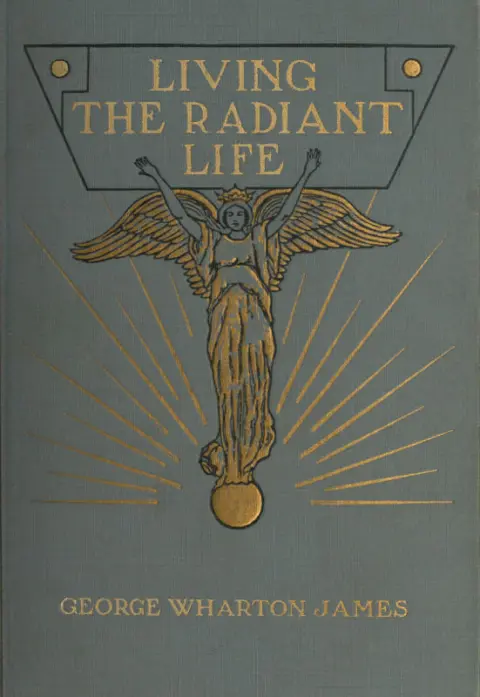
THE CLASSIC COLLECTION · 1916
"Living the Radiant Life: A Personal Narrative" by George Wharton James is a personal narrative written in the early 20th century. This work explores themes of personal growth, spirituality, and the importance of actively radiating positivity and goodness in life. Through individual reflections, James seeks to inspire readers to embrace a more vibrant and generous approach to living. The opening of the book introduces the concept of radiance, both in nature and within individuals, suggesting that everything possesses a unique aura that reflects its essence. James discusses how natural elements—like the sun, flowers, and landscapes—radiate qualities that are perceptible to the sensitive observer. He emphasizes the need for individuals to recognize their own radiancies and consciously decide what they wish to project into the world, aiming to inspire readers to engage in a life characterized by kindness, creativity, and spiritual awareness. The tone is reflective and encouraging, aiming to awaken deeper thoughts and aspirations in those who seek to live more meaningfully.
Introduction adapted from the source catalogue; source summaries may be automatically generated.
Free to read · English · 69,010 words · No account needed
MAKE TIME FOR A GOOD BOOK
On by default. Untick to stop anonymous reading totals. Each page counts after 10 seconds in view. How this works.
Anonymous counting is on unless you have switched it off.
A man may not say of a palace, a house, a garden, a yacht, a fortune, this, these, are mine, but we may each and all--the vilest drunkard, the most wretched harlot, the near-suicide, and the nigh-insane, as well as the poverty-stricken and the oppressed--say and know "the sun is mine, the stars, the rain, the sweetness of the flowers, the blessedness of God's great gift of life. Therefore, I am not poor, I am not forsaken, I am not forgotten. I own much. I will take and utilize these for my eternal blessing."
And as you utilize what you have you become both capable and worthy of larger things. Only those who use receive more. "To him that hath shall be given," and these are the things that all may have and that bless more abundantly than any other things mankind may possess.
Most of us go through life missing what Nature has for us.
In one of Sienkiewicz's books he makes one of his characters say of his
betrothed,
I gaze on Nature, too, and feel it; but she shows me things which I should not notice myself. A couple of days ago, we all went into the forest, where she showed me ferns in the sun, for instance. They are so delicate! She taught me also that the trunks of pine-trees, especially in the evening light, have a violet tone. She opens my eyes to colors which I have not seen hitherto, and, like a kind of enchantress going through the forest, discloses new worlds to me.
Reread these two sentences: "She shows me things which I should not notice myself," and "She opens my eyes and discloses new worlds to me." The world's beauty is so common to us that we forget it. Nothing is commoner than the stars, yet nothing more mysterious, wonderful, and attractive; the grass is so common that we trample it under foot, yet its beauty, its varied features will repay long hours of study, and it is a joy unspeakable to those who have learned to love it. It is in the common things that we should look for beauty, for lessons in color, in art, in criticism. One of the great students and teachers of art of our country once wrote a book entitled The Gate Beautiful. It was the result of a life of concentrated study upon true art. Whence comes true art? What is it? How shall one know it when he sees it? The result of all Dr. Stimson's study, placed in that wonderful book, summed up in short is--study Nature, and you will there learn more than all the books and teachers of art can tell you in a thousand years. The author shows by remarkable illustrations spiral vibrations made by the voice, the natural forms of mineralogy, mechanics, astronomy, seeds, fruit, vegetables, fish, reptiles, insects, birds, beasts, flowers, and humanity. He shows the exquisite beauty of snow crystals, and of the minute forms of earliest life, found in the diatoms. He sets forth the beauty of leaf and stem in the commonest trees, in shells, etc., until one wonders where his eyes have been, where his appreciation of beauty, in all the years that these things have not appealed to him. Nature is so flooded with beauty that more than one lifetime will be necessary for any one man to discover the half of it. So because of its beauty I want the men and women who come in contact with me to feel in me a pulsing, living, active, irresistible love for Nature which will draw them out into it; arouse in them an insatiable longing to see and know, to feel and comprehend more of the rich beauty so freely exposed out of doors.
Your reading position is saved on this browser. Take it to another device with a library code. Reading pages adapt to text, rather than matching a printed edition.
George Wharton James
George Wharton James
George Wharton James
George Wharton James
BEHIND THE BOOK
This eBook is for the use of anyone anywhere in the United States and most other parts of the world at no cost and with almost no restrictions whatsoever. You may copy it, give it away or re-use it under the terms of the Project Gutenberg License included with this eBook or online at www.gutenberg.org. If you are not located in the United States, you will have to check the laws of the country where you are located before using this eBook. Read the source licence.
The original source file, including credits and licence, is retained by this library. Request an original-format copy at no charge. Please include the book title and Project Gutenberg identifier #56306.
KEEP YOUR CURIOSITY GOING

David Patterson (Spirit) Hatch

David Patterson (Spirit) Hatch

David Patterson (Spirit) Hatch

Edwin Abbott Abbott

Richard Watson
T. G. (Theophilus Gould) Steward