
What the White Race May Learn from the Indian
George Wharton James
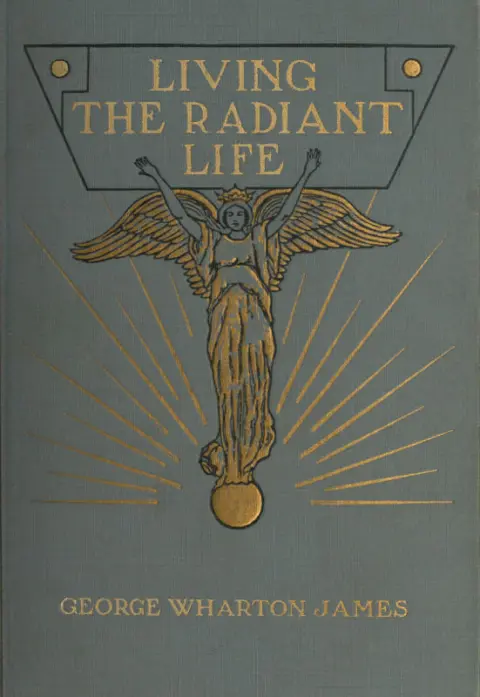
THE CLASSIC COLLECTION · 1916
"Living the Radiant Life: A Personal Narrative" by George Wharton James is a personal narrative written in the early 20th century. This work explores themes of personal growth, spirituality, and the importance of actively radiating positivity and goodness in life. Through individual reflections, James seeks to inspire readers to embrace a more vibrant and generous approach to living. The opening of the book introduces the concept of radiance, both in nature and within individuals, suggesting that everything possesses a unique aura that reflects its essence. James discusses how natural elements—like the sun, flowers, and landscapes—radiate qualities that are perceptible to the sensitive observer. He emphasizes the need for individuals to recognize their own radiancies and consciously decide what they wish to project into the world, aiming to inspire readers to engage in a life characterized by kindness, creativity, and spiritual awareness. The tone is reflective and encouraging, aiming to awaken deeper thoughts and aspirations in those who seek to live more meaningfully.
Introduction adapted from the source catalogue; source summaries may be automatically generated.
Free to read · English · 69,010 words · No account needed
MAKE TIME FOR A GOOD BOOK
On by default. Untick to stop anonymous reading totals. Each page counts after 10 seconds in view. How this works.
Anonymous counting is on unless you have switched it off.
Is there any past, any future, in our lives? If I look back upon the past, or anticipate the future, whether with joy or pleasure, do I not do it in the now? To-morrow never comes, for when it arrives it is no longer to-morrow,--it is now. Life is one eternal now. The great trouble, however, with most people, is that they have not learned that fact. They do not live in the now, they sit down and lament over the past; weep that its joys are gone, its glories faded, altogether oblivious of the resplendent beauties that now surround them, the radiant joyousnesses that environ them, NOW. Or, they sit in fond anticipation, in expectation, with impatient waiting for to-morrow, for next week, for next year, ignoring the immediate and present sweet singing of the birds, the exquisite daintiness of the flowers, their delicate fragrance, the majesty and sublimity of the snowy mountain peaks, the upright stateliness of the trees, the supernal clarity of the sky, the pellucidness of the atmosphere, the champagne-like quality of the air, NOW.
What time we lose, waste, pervert, by forgetting the duty, the joy, the delight of living in the Eternal Now. Take your joys as they come along. It is the Divine plan that every moment shall be filled with His joy--the joy of living, of being.
Eyes are given to see with now! Are you using them now? Do you gaze upon the grass, the trees, the flitting butterflies, the busy insects, the bees, the beautiful birds, the clouds, the sky, the sea, the rippling cascades, the everything of Nature, NOW, and enjoy their many-formed, many-hued, many-graced splendors.
Ears are given for hearing now!
Are yours alert for all the sweet, the pleasant, the comforting, the joyous, the sublime sounds that might come to them now? Or are you like the "fools and blind" who will sit at a Boston Symphony concert and gabble gossip or retail slander?
Palates are given to taste with now!
Are you tasting the apples, the rare lusciousness of grapes, peaches, oranges, plums, and the thousand and one delicate fruits now, or are you regretting the lost truffles, the sauces, the spices, the wines, the stimulating things of yesterday, or longing for the Lucullus repasts of to-morrow?
Oh, the content and happiness of taking joys as they come, in their simpleness and naturalness, in their every-day, common, normal order; of looking for them, expecting them, anticipating them, going out, as it were, to meet them.
Your reading position is saved on this browser. Take it to another device with a library code. Reading pages adapt to text, rather than matching a printed edition.
George Wharton James
George Wharton James
George Wharton James
George Wharton James
BEHIND THE BOOK
This eBook is for the use of anyone anywhere in the United States and most other parts of the world at no cost and with almost no restrictions whatsoever. You may copy it, give it away or re-use it under the terms of the Project Gutenberg License included with this eBook or online at www.gutenberg.org. If you are not located in the United States, you will have to check the laws of the country where you are located before using this eBook. Read the source licence.
The original source file, including credits and licence, is retained by this library. Request an original-format copy at no charge. Please include the book title and Project Gutenberg identifier #56306.
KEEP YOUR CURIOSITY GOING

David Patterson (Spirit) Hatch

David Patterson (Spirit) Hatch

David Patterson (Spirit) Hatch

Edwin Abbott Abbott

Richard Watson
T. G. (Theophilus Gould) Steward