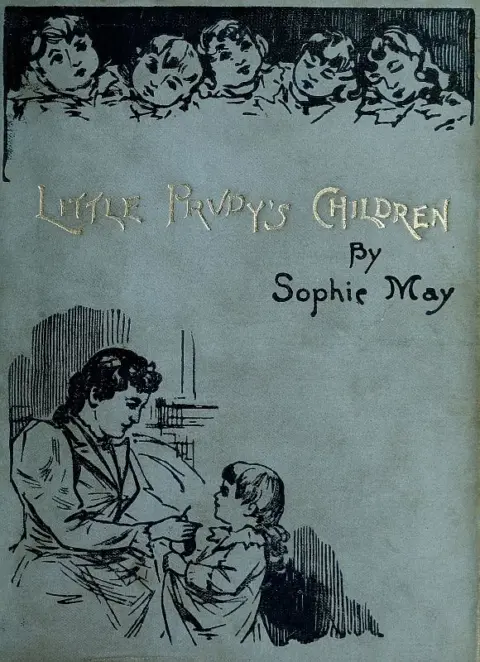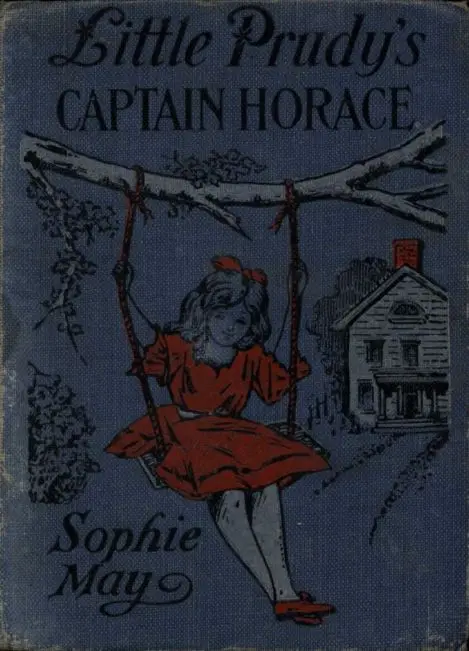
Little Prudy’s Captain Horace
Sophie May
THE CLASSIC COLLECTION · 1878
"Little Pitchers" by Sophie May is a children's novel written in the late 19th century. The story revolves around the charming and whimsical lives of young twins, Pollio and Posy Pitcher, as they navigate their early childhood experiences in a small town. The narrative captures their playful personalities and the loving dynamics within their family, highlighting themes of innocence, curiosity, and familial bonds. The opening of the book introduces Pollio and Posy, who at the beginning are four years old and full of life and imagination. The narrative provides a colorful description of their home in Rosewood and presents their contrasting characters: Pollio, who is amusingly homely and comical, and Posy, who is beautiful and sweet-natured. As the twins venture into their daily lives, readers witness their innocence and playful mischief intertwined with life lessons about obedience and kindness. The opening chapters set the stage for the twins' adventures and the heartwarming interactions with their family members, offering a glimpse into a bygone era's simplicity and charm.
Introduction adapted from the source catalogue; source summaries may be automatically generated.
Free to read · English · 26,453 words · No account needed
MAKE TIME FOR A GOOD BOOK
On by default. Untick to stop anonymous reading totals. Each page counts after 10 seconds in view. How this works.
Anonymous counting is on unless you have switched it off.
“So he does,” laughed Posy, clapping her hands. “Real cheerful! I guess he’ll get over it, don’t you? He won’t think you are a bad man now.”
Posy could not bear to have him think her father a bad man; and it was plain that he did not, for he licked the judge’s hand after finishing the steak, and looked up in his face as if he trusted him with his whole heart.
“Dogs know ’most as much as folks,” said Posy. “I’ll make a chain of flowers, and we’ll put it on his neck, and I guess he’ll like it; don’t you?”
Pollio was sure he would be charmed. And, whether Beppo enjoyed the flowers or not, he must have known he was treated uncommonly well that day; for he had a dish of cream for dessert, and was allowed to spend most of his time in the parlor.
Now, what follows is not a dream or a fairy-story, though I know it will sound very strange. It really happened that morning, while the twins and uncle Rufus were in the parlor, and Beppo was lying on the rug, watching Pollio.
There was nothing remarkable about Beppo, except that he was a large, handsome dog. His eyes just now had an asking look, as if he longed to say something: but you have seen that sort of look in any dog’s eyes; it isn’t at all uncommon.
“Beppo wants to speak, I know he does,” said Pollio to Posy.
The dog wagged his tail, as if to reply, “You understand my feelings, my dear little master.”
“Well, try it: see if you can’t speak.” Beppo raised his eyes, wagged his tail again, and, to the intense surprise of the children, said, or seemed to say, in a fine, piping voice,—
“I was w’ipped last night.”
Pollio rolled over; and Posy sprang up, exclaiming,—
“Who said that?”
“Why, who did?” cried Pollio, almost turning a somerset.
There was no person in the room but themselves and Nunky, who was too busy reading the newspaper to take any notice. Who had spoken? It couldn’t be Beppo!
“Your papa w’ipped me!” said the piping voice again, Beppo still gazing straight at Pollio.
How wonderful! It was exactly the sort of voice a dog would be likely to speak with, if he could speak at all: it was thin and babyish.
“Oh, oh!” cried Posy.
“My sakes!” cried Pollio.
They knew as well as you do that dogs are dumb animals; but here was Beppo looking right up in their faces, and talking. They were greatly excited.
Your reading position is saved on this browser. Take it to another device with a library code. Reading pages adapt to text, rather than matching a printed edition.
BEHIND THE BOOK
This eBook is for the use of anyone anywhere in the United States and most other parts of the world at no cost and with almost no restrictions whatsoever. You may copy it, give it away or re-use it under the terms of the Project Gutenberg License included with this eBook or online at www.gutenberg.org. If you are not located in the United States, you will have to check the laws of the country where you are located before using this eBook. Read the source licence.
The original source file, including credits and licence, is retained by this library. Request an original-format copy at no charge. Please include the book title and Project Gutenberg identifier #48862.
KEEP YOUR CURIOSITY GOING
Coulson Kernahan

Maurice Baring
Frances Wright
Cécile Tormay

Frederic Jesup Stimson

W. H. P. (William Henry Pope) Jarvis